What’s Observed on October 5
Born on October 5: Libra ♎
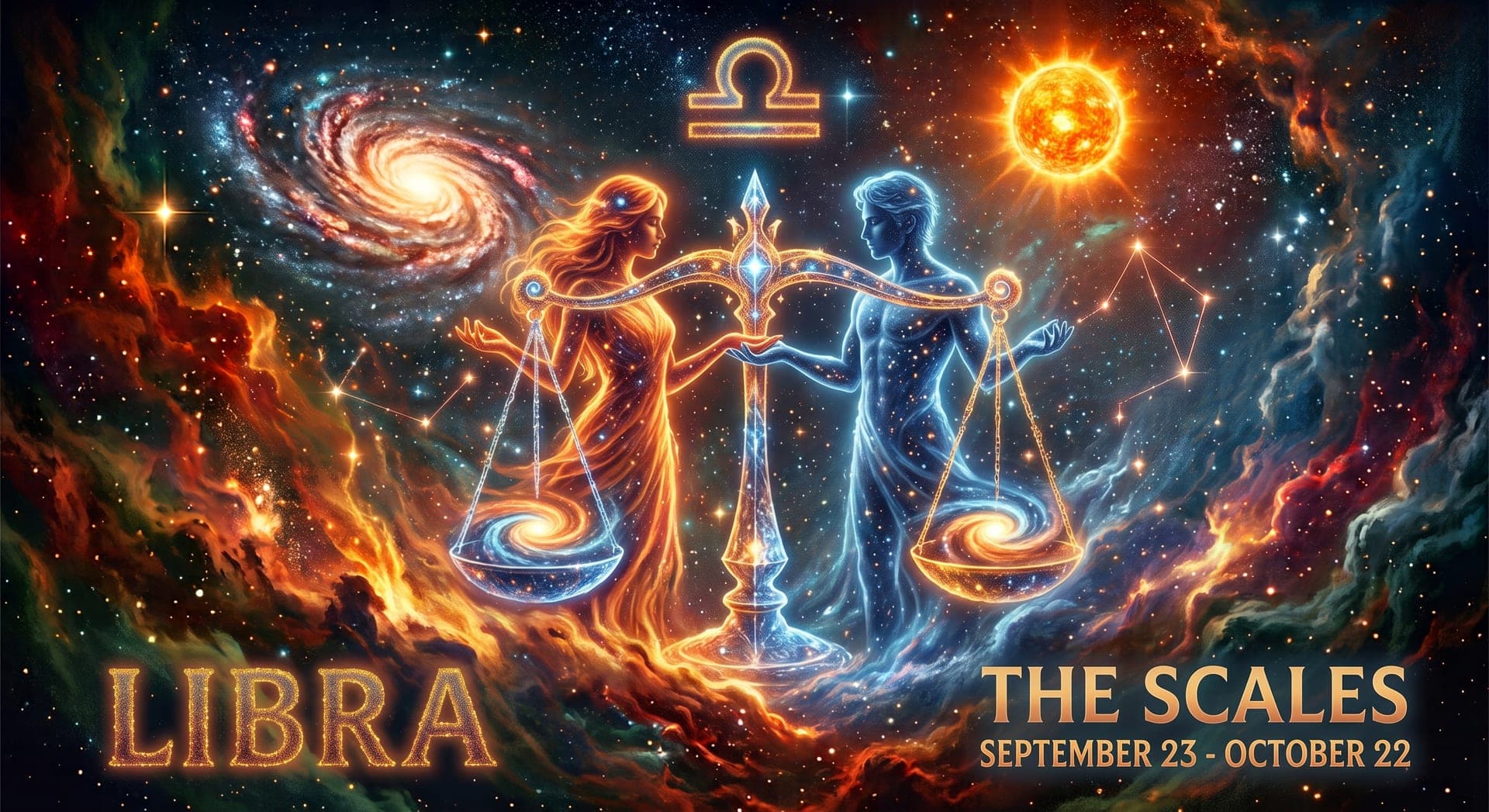
Libra, the seventh sign of the zodiac, spans September 23 to October 22 and is symbolized by the scales, the only zodiac symbol representing an inanimate object rather than a living creature, reflecting the sign's deep concern with balance, fairness, and justice. Ruled by Venus, the planet of love and beauty, Libra shares Taurus's appreciation for aesthetics and pleasure but channels it primarily through relationships, partnership, and social harmony. As an Air sign, Libra approaches the world intellectually and socially, valuing thoughtful conversation and diplomatic problem-solving over confrontation. Its Cardinal modality places it at the very start of autumn, beginning right at the equinox when day and night briefly achieve perfect balance. People born under this sign are often natural mediators, drawn to fairness and equilibrium in their relationships and surroundings, sometimes to the point of struggling to make decisions that might upset that balance. Libra's charm, diplomacy, and genuine desire to see all sides of an issue make it a valued friend and partner, even as its conflict-avoidance can occasionally leave real problems unresolved.
Personality Traits
Strengths
- Strong sense of fairness and justice
- Diplomatic peacemaker
- Charming and sociable
- Appreciates beauty and harmony
- Excellent at seeing multiple perspectives
Weaknesses
- Notoriously indecisive
- Conflict-avoidant to a fault
- Can be superficial
- People-pleasing tendencies
- Struggles with confrontation
Compatible Signs
Fun Facts
- Libra is the only zodiac sign represented by an inanimate object, the scales, rather than an animal or person.
- Libra's scales symbolize balance and justice, echoing the sign's association with fairness, harmony, and diplomacy.
- Venus, Libra's ruling planet, gives the sign its love of beauty, art, and romantic partnership, similar to Taurus but expressed through relationships rather than material comfort.
- As a Cardinal sign, Libra initiates autumn, beginning at the September equinox, when day and night are of equal length, fitting for a sign obsessed with balance.
- Notable Libras include Mahatma Gandhi, Kim Kardashian, John Lennon, and Will Smith.
Born on October 5
- 1829
Chester A. Arthur
21st President of the United States
- 1864
Louis Lumiere
French film pioneer and inventor
- 1882
Robert H. Goddard
American rocketry pioneer
- 1902
Ray Kroc
American businessman who expanded McDonald's into a global chain
- 1919
Donald Pleasence
English actor known for portraying Dr. Sam Loomis in the Halloween film series and Ernst Stavro Blofeld in the James Bond film You Only Live Twice.
- 1922
Jock Stein
Scottish footballer and manager who led Celtic to victory in the 1967 European Cup, becoming the first British manager to win the competition.
- 1923
Glynis Johns
British actress and singer best remembered for playing Mrs. Banks in Walt Disney's Mary Poppins and for originating "Send in the Clowns" on Broadway.
- 1936
Vaclav Havel
Playwright and first President of the Czech Republic
- 1943
Michael Morpurgo
English author of children's fiction, best known for War Horse, and a former Children's Laureate.
- 1947
Brian Johnson
English singer who became the frontman of the rock band AC/DC following the death of Bon Scott.
- 1952
Clive Barker
English author and filmmaker known for horror fiction and films including Hellraiser, which he also directed.
- 1963
Laura Davies
English professional golfer who won more than 20 LPGA Tour titles and was inducted into the World Golf Hall of Fame.
- 1965
Mario Lemieux
Canadian professional ice hockey player
- 1975
Kate Winslet
English actress celebrated for roles in Titanic, Sense and Sensibility and The Reader, for which she won an Academy Award.
- 1983
Jesse Eisenberg
American actor
On This Day in History
- 610
Heraclius arrives at Constantinople, kills Byzantine Emperor Phocas, and becomes emperor.
Heraclius, exarch of Byzantine North Africa, sailed to Constantinople to overthrow the deeply unpopular Emperor Phocas, whose brutal and incompetent rule had brought the empire to the brink of collapse amid external invasions. Heraclius personally executed Phocas and assumed the throne, going on to lead a remarkable military recovery that reclaimed vast territories the empire had lost during the preceding crisis.
- 816
Louis the Pious is crowned emperor of the Holy Roman Empire by the Pope.
Louis, son of Charlemagne, received the imperial crown from the pope, continuing the Carolingian dynasty's claim to a revived Western Roman imperial title first established by his father. Louis's reign, though pious and well-intentioned, was ultimately marked by civil conflict among his own sons over the empire's succession, foreshadowing its eventual fragmentation.
- 1143
Portugal gains recognition as an independent kingdom through the Treaty of Zamora.
Following decades of struggle to establish Portugal as independent from the Kingdom of Leon, the Treaty of Zamora formally recognized Portuguese sovereignty under Afonso Henriques, who became the country's first king. The treaty established Portugal's status as one of Europe's oldest continuously existing nation-states, with borders that have remained remarkably stable for centuries since.
- 1789
The Women's March on Versailles escalates the French Revolution, effectively ending royal authority.
A crowd of Parisian market women, angered by bread shortages and high prices, marched to the palace at Versailles and forced King Louis XVI and the royal family to relocate to Paris, placing them under closer public and revolutionary oversight. The march marked a dramatic escalation of the French Revolution, effectively ending any illusion of the king's continued independent authority.
- 1813
American forces defeated a combined British and Native Canadian force at the Battle of the Thames in Upper Canada, ending the threat to Detroit.
The battle broke British and Indigenous resistance in the Michigan Territory during the War of 1812 and resulted in the death of the Shawnee leader Tecumseh, who had led a major Indigenous confederacy allied with Britain. The defeat undermined Britain's Indigenous alliance system in the region and marked a turning point in the war's western theatre.
- 1877
The Nez Perce War comes to an end in the northwestern United States.
The Nez Perce War concluded with Chief Joseph's surrender near the Canadian border after a grueling 1,170-mile fighting retreat pursued by U.S. Army forces, undertaken by the Nez Perce in an attempt to escape forced relocation to a reservation. Chief Joseph's reported surrender speech, including the phrase "I will fight no more forever," became one of the most poignant statements associated with Native American resistance.
- 1900
A peace congress in Paris passed a resolution condemning British policy in South Africa during the Second Boer War.
The gathering reflected widespread European sympathy for the Boer republics and unease at Britain's use of scorched-earth tactics and concentration camps against Boer civilians. International criticism of British conduct in the war damaged Britain's global reputation even as it ultimately secured victory and annexed the Boer republics in 1902.
- 1910
Portugal's monarchy is overthrown and a republic is declared.
A military-led revolution overthrew Portugal's centuries-old monarchy, forcing King Manuel II into exile and establishing the First Portuguese Republic amid widespread public discontent with the monarchy's declining authority and financial troubles. The new republic faced significant political instability over subsequent years before eventually giving way to a long-lasting authoritarian regime in the 1930s.
- 1930
The British airship R101 crashes in France en route to India on its maiden voyage, killing 48 people.
The British-built R101 airship, intended to demonstrate imperial air travel capability connecting Britain with its colonies, crashed into a French hillside during severe weather on its maiden overseas voyage, killing 48 of the 54 people aboard. The disaster effectively ended British government investment in large rigid airships as a viable form of long-distance passenger transportation.
- 1930
The British airship R101 crashed in France on its maiden overseas voyage, killing 48 of the 54 people aboard.
Built as the flagship of Britain's ambitious imperial airship programme intended to link Britain with India and other distant parts of the Empire, R101 struck a hillside near Beauvais in poor weather and burst into flames. The disaster, which killed several senior aviation officials, effectively ended British investment in large passenger airships.
- 1936
Around 200 unemployed men set off from Jarrow on a march to London to protest mass unemployment and industrial decline in north-east England.
Organised after the closure of the town's main shipyard left roughly seven in ten Jarrow workers without jobs, the marchers walked some 300 miles to petition Parliament, though the government offered little immediate response. The Jarrow March became one of the most enduring symbols of hardship during Britain's interwar Depression and of working-class protest.
- 1962
The James Bond film franchise launches with the release of "Dr. No" in Britain.
Sean Connery debuted as British secret agent James Bond in "Dr. No," based on Ian Fleming's novels, launching what became one of cinema's longest-running and most commercially successful film franchises. The film established many hallmarks of the series, including elaborate action sequences, exotic locations, and a suave, resourceful protagonist that shaped decades of subsequent spy fiction.
- 1962
Dr. No, the first James Bond film, premiered in Britain.
Adapted from Ian Fleming's novels and starring Sean Connery as the suave British secret agent, the film launched what became the longest continuously running film franchise in history. Its success established the template for the spy-thriller genre and turned Bond into an enduring symbol of British popular culture worldwide.
- 1962
The Beatles released their debut single, "Love Me Do," in Britain.
Recorded at EMI's Abbey Road Studios, the modestly charting single marked the first commercial release by the Liverpool group that would go on to transform popular music. Its release is often cited as the starting point of Beatlemania and Britain's dominance of 1960s global pop culture.
- 1968
A civil rights march in Derry, Northern Ireland, was violently broken up by the Royal Ulster Constabulary.
Police baton-charged marchers protesting discrimination against the Catholic minority in housing, employment and voting rights, and television footage of the violence shocked audiences across the UK and Ireland. The events in Derry are widely seen as a catalyst for the outbreak of the Troubles, the three-decade conflict that followed in Northern Ireland.
- 1970
British trade commissioner James Cross was kidnapped by militants in Montreal, triggering Canada's October Crisis.
The kidnapping was carried out by the Front de liberation du Quebec, a militant Quebec separatist group, which demanded the release of imprisoned members and broadcast of its manifesto in exchange for Cross's release. The crisis led Canada's federal government to invoke the War Measures Act, and Cross was eventually freed unharmed after 60 days in captivity.
- 1974
The Provisional IRA bombed two pubs in Guildford, England, killing four off-duty soldiers and a civilian.
The attacks targeted pubs frequented by British Army personnel as part of the IRA's bombing campaign in England during the Troubles. The wrongful convictions of the "Guildford Four" for the bombings, later overturned in 1989 after it emerged evidence had been fabricated, became one of the most notorious miscarriages of justice in British legal history.
- 1988
A Chilean opposition coalition defeats Augusto Pinochet in a national plebiscite on his continued rule.
In a stunning upset that defied Pinochet's expectations, Chilean voters rejected the military dictator's bid to extend his rule for another eight years in a national plebiscite, a decisive step toward restoring democratic governance after 15 years of authoritarian rule following the 1973 coup. Pinochet remained in power for another year and a half before formally transferring authority to a democratically elected government.
- 1999
Two trains collided near Ladbroke Grove in west London, killing 31 people.
A Thames Trains commuter service passed a red signal and collided head-on with a First Great Western express, causing a fireball that devastated both trains. The crash prompted a public inquiry that led to major reforms in British railway safety, including the accelerated rollout of automatic train protection systems.
- 2000
Serbian leader Slobodan Milosevic resigns following mass demonstrations.
Following a disputed presidential election that Milosevic attempted to nullify, hundreds of thousands of Serbian citizens took to the streets in mass protests, ultimately storming the parliament building and forcing Milosevic to concede defeat and resign. His downfall ended over a decade of nationalist rule marked by brutal wars during Yugoslavia's violent dissolution, and he was later extradited to face war crimes charges.