
What’s Observed on October 31
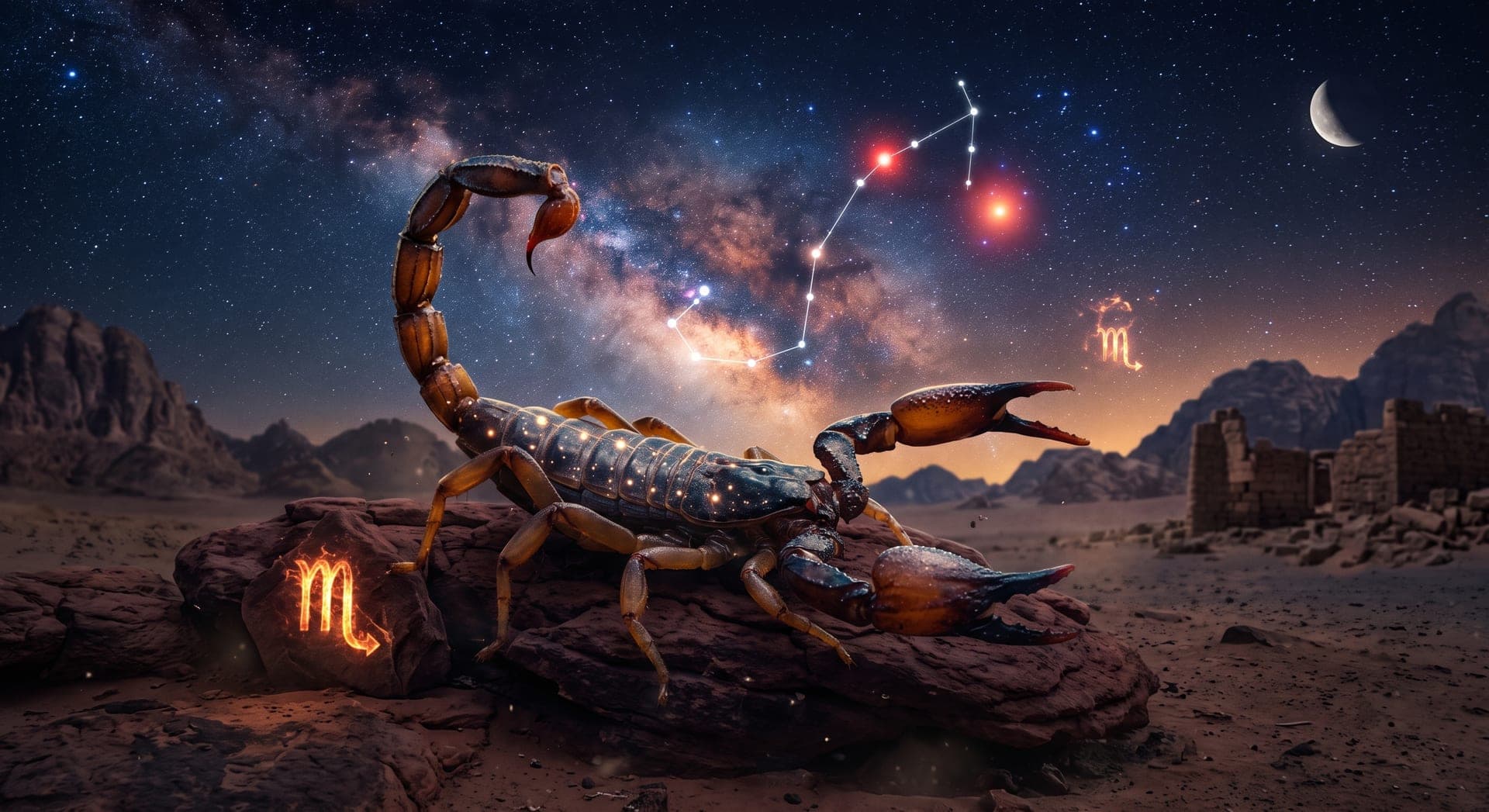
Born on October 31: Scorpio ♏
Scorpio, the eighth sign of the zodiac, spans October 23 to November 21 and is symbolized by the scorpion, a creature known for its defensive intensity and the sting it delivers when provoked. Traditionally ruled by Mars and, in modern astrology, by Pluto, the planet of transformation and the underworld, Scorpio carries a reputation as one of the most intense and emotionally powerful signs of the zodiac. As a Water sign, Scorpio experiences the world through deep, often hidden, emotion, guarding its inner life carefully while remaining acutely perceptive of others. Its Fixed modality gives Scorpio remarkable determination and resilience, able to endure hardship and pursue long-term goals with singular focus. People born under this sign are often drawn to work involving psychology, investigation, transformation, or anything requiring the ability to see beneath the surface. Scorpio's loyalty and passion run deep for those it trusts, but that same intensity can curdle into jealousy, suspicion, or an unwillingness to forgive when trust is broken.
Personality Traits
Strengths
- Deeply passionate and determined
- Fiercely loyal to those they trust
- Resourceful and strategic
- Highly perceptive
- Emotionally resilient
Weaknesses
- Prone to jealousy and possessiveness
- Secretive and guarded
- Can be vindictive when wronged
- Distrustful of others
- Prone to obsessiveness
Compatible Signs
Fun Facts
- Scorpio's scorpion symbol connects to the Greek myth of the scorpion sent by Gaia to kill the hunter Orion, with both later placed among the stars.
- Scorpio has two ruling planets: Mars in traditional astrology, and Pluto, discovered in 1930, in the modern system.
- Scorpio is often mistakenly grouped with the Fire signs due to its intensity, but it is actually a Water sign, driven by deep emotion rather than raw aggression.
- Notable Scorpios include Pablo Picasso, Marie Curie, Leonardo DiCaprio, and Hillary Clinton.
- Some astrological traditions associate Scorpio with a secondary, more elevated symbol, the eagle or phoenix, representing transformation and rebirth.
Born on October 31
- 1620
John Evelyn
English writer and diarist whose detailed journals offer a vivid account of 17th-century life, including the Great Plague and the Great Fire of London.
- 1632
Johannes Vermeer
Dutch Baroque painter
- 1760
Katsushika Hokusai
Japanese ukiyo-e artist known for "The Great Wave"
- 1795
John Keats
English Romantic poet celebrated for works including Ode to a Nightingale and To Autumn.
- 1887
Chiang Kai-shek
President of the Republic of China
- 1920
Dick Francis
Welsh jockey who became a bestselling author of thrillers set in the world of horse racing after his riding career ended.
- 1931
Dan Rather
American broadcast journalist
- 1935
David Harvey
English geographer and academic known for his influential Marxist analyses of urbanisation and capitalism.
- 1936
Michael Landon
American actor known for "Little House on the Prairie"
- 1946
Stephen Rea
Northern Irish actor known for his role in the film The Crying Game.
- 1961
Peter Jackson
New Zealand filmmaker known for "The Lord of the Rings"
- 1963
Johnny Marr
English guitarist and songwriter best known as a member of the rock band The Smiths.
- 1988
Lizzy Yarnold
British skeleton racer who won Olympic gold medals at the 2014 and 2018 Winter Olympics.
- 1997
Marcus Rashford
English footballer for Manchester United and the national team, also known for his campaigning against child food poverty.
- 2000
Willow Smith
American singer and actress

On This Day in History
- 475
Romulus Augustulus is proclaimed Western Roman Emperor, the last person to hold that title.
Following the deposition of the child emperor by Germanic general Odoacer, Romulus Augustulus's brief and largely powerless reign, traditionally regarded as the final chapter of the Western Roman Empire, came to an inconsequential end, with Odoacer sparing the young former emperor's life and sending him into quiet retirement.
- 1517
Martin Luther posts his Ninety-Five Theses on a church door in Wittenberg, sparking the Protestant Reformation.
German monk and theologian Martin Luther nailed a document listing 95 objections to Catholic Church practices, particularly the sale of indulgences, to the door of Wittenberg's Castle Church, an act traditionally regarded as the spark that ignited the Protestant Reformation and permanently fractured Western Christianity.
- 1517
Martin Luther posts his Ninety-Five Theses on the door of All Saints' Church in Wittenberg, challenging the Catholic Church's sale of indulgences.
Luther's theses attacked the practice of selling indulgences as a means of reducing punishment for sin, arguing that salvation could not be purchased. Circulated widely thanks to the printing press, the document ignited a theological controversy that split Western Christianity and launched the Protestant Reformation, reshaping the religious and political map of Europe for centuries afterward.
- 1863
British forces under General Duncan Cameron begin the invasion of the Waikato region of New Zealand, reigniting the New Zealand Wars.
The campaign aimed to crush the Kingitanga, or Maori King Movement, which the colonial government saw as a challenge to British sovereignty in the North Island. Cameron's roughly 18,000 imperial and colonial troops eventually overwhelmed Waikato Maori defenders, and the subsequent confiscation of vast tracts of tribal land left a legacy of grievance that persisted for generations.
- 1864
Nevada achieves statehood as the 36th U.S. state.
Nevada was rushed into statehood as the 36th U.S. state just days before a presidential election, driven partly by political considerations to secure additional electoral votes and Republican Senate seats supporting the Union war effort and the proposed constitutional amendment abolishing slavery.
- 1913
The Lincoln Highway, America's first transcontinental automobile route, is formally dedicated.
The Lincoln Highway, conceived as America's first road specifically designed for coast-to-coast automobile travel, was formally dedicated, stretching from New York to San Francisco and helping to spur the broader development of a national highway infrastructure in the early automobile era.
- 1917
The Battle of Beersheba occurs, featuring what is often described as the last successful large-scale cavalry charge in military history.
British and allied forces launched a surprise cavalry assault against Ottoman defenses at Beersheba in Palestine during World War I, successfully capturing the strategically vital town and its water wells in an engagement often cited as history's last successful large-scale mounted cavalry charge against fortified positions.
- 1917
Mounted Australian and New Zealand troops of the British Egyptian Expeditionary Force stage a celebrated cavalry charge at the Battle of Beersheba.
Charging directly into Ottoman rifle and artillery fire, the Australian Light Horse overran Turkish trenches and captured the town's crucial wells intact, breaking the Gaza-Beersheba defensive line. Fought under British commander General Edmund Allenby, the action is often remembered as history's last successful large-scale cavalry charge and opened the way for the Allied advance into Palestine.
- 1922
Benito Mussolini is appointed Prime Minister of Italy by King Victor Emmanuel III, days after his Fascist Blackshirts marched on Rome.
Facing the threat of tens of thousands of armed Fascist supporters converging on the capital, the king declined to declare martial law and instead invited Mussolini to form a government, hoping to co-opt rather than confront the movement. Mussolini used the position to dismantle Italy's democratic institutions over the following years, establishing one of Europe's first fascist dictatorships.
- 1940
The Battle of Britain concludes, forcing Germany to abandon its planned invasion of the British Isles.
Germany's failure to achieve air superiority over Britain during months of intense aerial combat forced Hitler to indefinitely postpone Operation Sea Lion, the planned invasion of the British Isles, marking a significant strategic setback for Nazi Germany early in World War II.
- 1940
The Battle of Britain formally ends as the Royal Air Force's defence of British skies forces Nazi Germany to abandon its invasion plan, Operation Sea Lion.
Over nearly four months, RAF Fighter Command withstood sustained Luftwaffe attacks on airfields, radar stations and later British cities, inflicting losses Germany could not sustain while defending its own bomber fleets. Winston Churchill's tribute that never had so much been owed by so many to so few captured the scale of the RAF's achievement, which denied Hitler the air superiority needed to invade Britain.
- 1941
Mount Rushmore is completed after fourteen years of sculpting work.
After fourteen years of sculpting work led by Gutzon Borglum and later his son Lincoln, the massive carved likenesses of four American presidents on Mount Rushmore in South Dakota were declared complete, though Borglum's original, more ambitious design had included additional detail never fully realized due to funding constraints.
- 1956
The United Kingdom and France begin bombing Egyptian airfields to force the reopening of the Suez Canal after its nationalisation by President Nasser.
The bombing campaign opened the military phase of the Suez Crisis, coordinated in secret with Israel's earlier invasion of the Sinai Peninsula. Intense pressure from the United States and the Soviet Union forced Britain and France to withdraw within weeks, a humiliating outcome that badly damaged British prestige and hastened the end of the country's role as a leading global imperial power.
- 1973
Three IRA prisoners escape from Dublin's Mountjoy Prison after a hijacked helicopter lands in the exercise yard and picks them up.
The daring daylight escape, orchestrated with the help of an accomplice posing as a photographer to hire the helicopter, embarrassed Irish security forces and made international headlines during the height of the Troubles in Northern Ireland. All three men, senior Provisional IRA figures, evaded recapture for months afterward, and the episode remains one of the most audacious prison breaks in Irish history.
- 1984
Indian Prime Minister Indira Gandhi is assassinated by her own security guards, triggering deadly anti-Sikh riots.
Indian Prime Minister Indira Gandhi was assassinated by two of her own Sikh bodyguards in apparent retaliation for a military operation she had ordered against a Sikh holy site months earlier, an assassination that triggered devastating anti-Sikh riots across India in the days that followed.
- 1984
Indian Prime Minister Indira Gandhi is assassinated by two of her Sikh bodyguards in New Delhi, triggering days of violent anti-Sikh riots.
The killing came months after Gandhi had ordered a military assault on the Golden Temple in Amritsar to remove armed Sikh separatists, an operation deeply resented by many Sikhs. Her assassination unleashed mob violence against Sikh communities across India that killed an estimated three thousand people, and her son Rajiv Gandhi succeeded her as prime minister.
- 2000
Soyuz TM-31 launches the first permanent crew to the International Space Station.
A Russian Soyuz spacecraft launched carrying the first crew to begin permanent, continuous human habitation of the International Space Station, marking the start of an unbroken presence in low Earth orbit that has continued for decades since, representing sustained international cooperation in space exploration.
- 2011
The global human population reaches an estimated seven billion people, marked by the United Nations as the symbolic Day of Seven Billion.
The United Nations marked the symbolic milestone of global human population reaching an estimated seven billion people, a figure reflecting dramatic population growth over the preceding century and prompting renewed international discussion regarding resource sustainability, development, and long-term demographic trends worldwide.
- 2011
The world's population is officially recognised by the United Nations as having reached seven billion people.
The symbolic milestone, marked by the UN as the 'Day of Seven Billion,' reflected a doubling of world population in less than fifty years, driven by declining mortality and continued high birth rates in developing regions. Demographers noted the estimate carried significant uncertainty, since no precise census of the entire global population exists, but it drew attention to pressures on resources and development.
- 2015
A bomb hidden aboard Metrojet Flight 9268 destroys the airliner over Egypt's Sinai Peninsula, killing all 224 people aboard.
The Russian charter flight, carrying holidaymakers home from Sharm el-Sheikh to St Petersburg, broke apart in mid-air after an explosive device concealed in the cargo hold detonated. An Islamic State affiliate in Sinai claimed responsibility, and the attack, one of the deadliest against civil aviation in decades, led numerous countries to suspend flights to the Egyptian resort region.