
What’s Observed on October 24
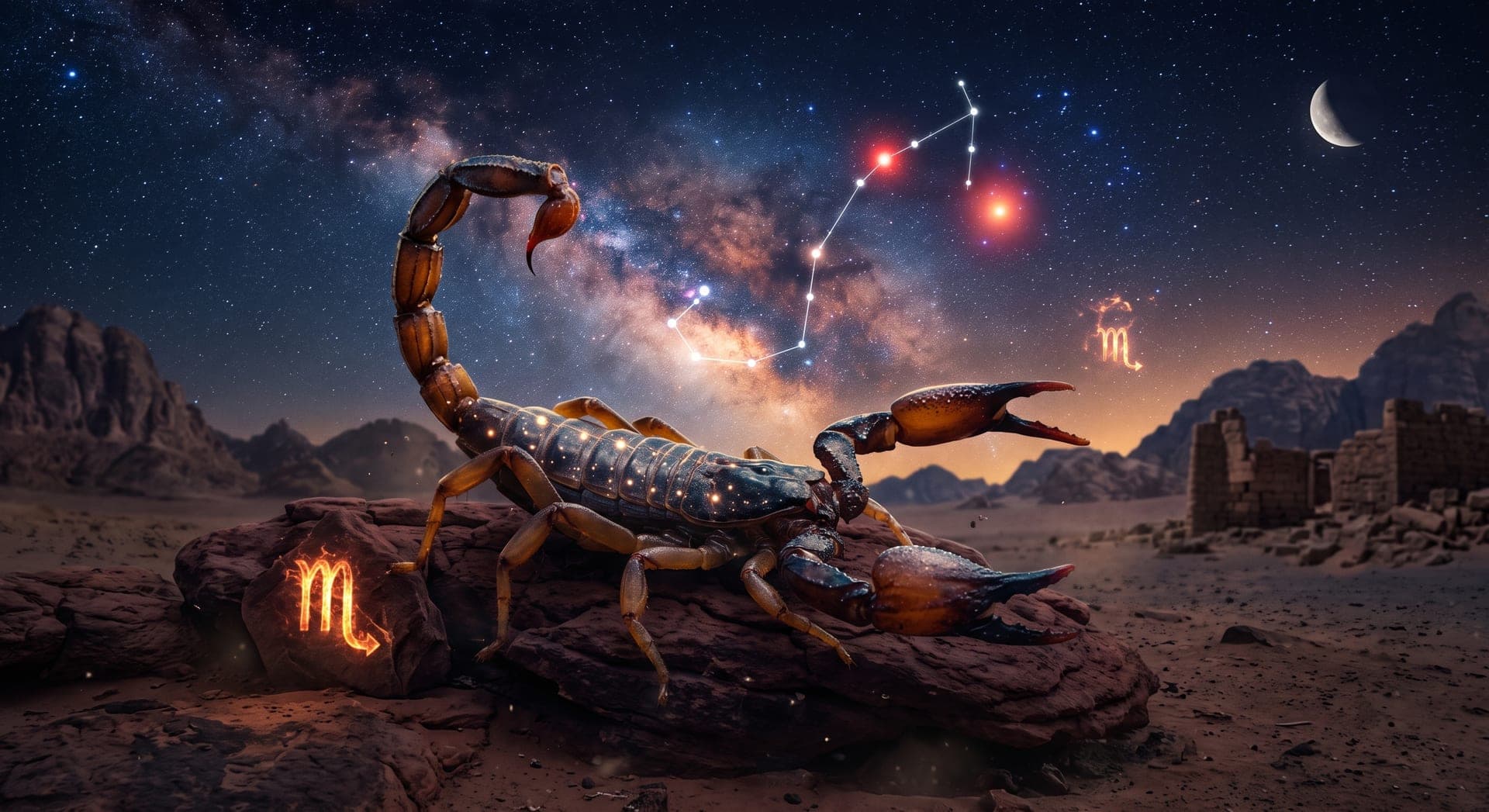
Born on October 24: Scorpio ♏
Scorpio, the eighth sign of the zodiac, spans October 23 to November 21 and is symbolized by the scorpion, a creature known for its defensive intensity and the sting it delivers when provoked. Traditionally ruled by Mars and, in modern astrology, by Pluto, the planet of transformation and the underworld, Scorpio carries a reputation as one of the most intense and emotionally powerful signs of the zodiac. As a Water sign, Scorpio experiences the world through deep, often hidden, emotion, guarding its inner life carefully while remaining acutely perceptive of others. Its Fixed modality gives Scorpio remarkable determination and resilience, able to endure hardship and pursue long-term goals with singular focus. People born under this sign are often drawn to work involving psychology, investigation, transformation, or anything requiring the ability to see beneath the surface. Scorpio's loyalty and passion run deep for those it trusts, but that same intensity can curdle into jealousy, suspicion, or an unwillingness to forgive when trust is broken.
Personality Traits
Strengths
- Deeply passionate and determined
- Fiercely loyal to those they trust
- Resourceful and strategic
- Highly perceptive
- Emotionally resilient
Weaknesses
- Prone to jealousy and possessiveness
- Secretive and guarded
- Can be vindictive when wronged
- Distrustful of others
- Prone to obsessiveness
Compatible Signs
Fun Facts
- Scorpio's scorpion symbol connects to the Greek myth of the scorpion sent by Gaia to kill the hunter Orion, with both later placed among the stars.
- Scorpio has two ruling planets: Mars in traditional astrology, and Pluto, discovered in 1930, in the modern system.
- Scorpio is often mistakenly grouped with the Fire signs due to its intensity, but it is actually a Water sign, driven by deep emotion rather than raw aggression.
- Notable Scorpios include Pablo Picasso, Marie Curie, Leonardo DiCaprio, and Hillary Clinton.
- Some astrological traditions associate Scorpio with a secondary, more elevated symbol, the eagle or phoenix, representing transformation and rebirth.
Born on October 24
- 1632
Antonie van Leeuwenhoek
Dutch pioneer of microscopy
- 1784
Moses Montefiore
British philanthropist
- 1855
James S. Sherman
27th Vice President of the United States
- 1873
E. T. Whittaker
English mathematician known for his work on mathematical physics and analytical dynamics
- 1882
Sybil Thorndike
English actress regarded as one of the finest classical stage performers of her generation
- 1895
Jack Warner
English actor best remembered for playing PC George Dixon in the television series Dixon of Dock Green
- 1915
Bob Kane
American co-creator of Batman
- 1933
Reginald Kray
English gangster who, with his twin brother, led one of London's most notorious organised crime gangs
- 1933
Ronald Kray
English gangster who ran the Kray twins' East End criminal empire alongside his brother Reginald
- 1936
Bill Wyman
English musician who played bass for the Rolling Stones for three decades
- 1947
Kevin Kline
American actor
- 1948
Phil Bennett
Welsh rugby union fly-half and British and Irish Lions captain
- 1985
Wayne Rooney
English footballer and former record goalscorer for both Manchester United and the England national team
- 1986
Drake
Canadian rapper

On This Day in History
- 69
Forces loyal to Vespasian defeat those of Emperor Vitellius at the Second Battle of Bedriacum.
Forces loyal to Vespasian decisively defeated the army of the reigning Emperor Vitellius at the Second Battle of Bedriacum in northern Italy, a pivotal victory during Rome's chaotic "Year of the Four Emperors" that paved the way for Vespasian's ascension and the founding of the stable Flavian dynasty.
- 1260
Chartres Cathedral is dedicated in the presence of King Louis IX of France.
Chartres Cathedral, renowned for its exceptional Gothic architecture and stained glass windows, was formally dedicated in a ceremony attended by King Louis IX, celebrating the completion of a rebuilding effort following a fire that had destroyed much of the earlier structure decades before.
- 1260
Baybars ascends to the Egyptian throne as the fourth sultan of the Mamluk Sultanate.
Baybars, a formidable military commander who had helped defeat both Crusader and Mongol forces, seized the Egyptian throne to become the fourth sultan of the Mamluk Sultanate, going on to significantly expand Mamluk territory and power during his subsequent seventeen-year reign.
- 1360
The Treaty of Bretigny is ratified, concluding the first phase of the Hundred Years' War.
England and France ratified the Treaty of Bretigny, temporarily concluding the first major phase of the Hundred Years' War with significant territorial concessions to England, though renewed conflict erupted again roughly a decade later, continuing the broader dynastic struggle for another century.
- 1590
English colonial governor John White arrives back in England after his search for the missing Roanoke colonists ends in failure.
White had returned to the Roanoke Island settlement off the coast of present-day North Carolina to find it abandoned, its inhabitants including his own daughter and granddaughter, Virginia Dare, vanished without trace apart from the cryptic word 'CROATOAN' carved into a post. War with Spain had delayed his relief voyage for three years. The fate of the 'Lost Colony' remains one of the enduring mysteries of early English colonisation in America.
- 1596
A Spanish naval armada is destroyed by storms off Cape Finisterre, forcing a retreat.
A powerful storm off Spain's northwestern coast destroyed a large portion of a Spanish naval armada that had been assembling for a planned invasion of England, a disaster that further weakened Spanish naval ambitions following the earlier catastrophic defeat of the original Spanish Armada.
- 1648
The Peace of Westphalia is signed, ending the Thirty Years' War and the Eighty Years' War.
Delegates concluded years of negotiations with the signing of the Peace of Westphalia, ending both the devastating Thirty Years' War in the Holy Roman Empire and the separate Eighty Years' War between Spain and the Dutch Republic, establishing foundational principles of state sovereignty still influential in international relations today.
- 1857
Sheffield Football Club is founded in England, becoming the oldest association football club in the world still in existence.
Founded by former pupils of Sheffield Collegiate School, the club developed its own set of playing rules, the 'Sheffield Rules,' which influenced the laws later codified by the Football Association. Still competing today at a non-league level, Sheffield F.C. is recognised by FIFA as the world's oldest football club, a foundational institution in the sport's development in Victorian England.
- 1860
Britain, France, and Qing China sign the Convention of Peking, ending the Second Opium War and ceding Kowloon to Britain.
The treaty followed the Anglo-French occupation of Beijing and the burning of the Old Summer Palace, and it forced China to open further treaty ports, legalise the opium trade, and pay a large indemnity. Britain's acquisition of the Kowloon Peninsula, added to Hong Kong Island ceded in 1842, expanded its colonial foothold on the Chinese coast and shaped the territory's borders for more than a century.
- 1861
The first transcontinental telegraph line across the United States is completed.
The completion of a telegraph line spanning the continental United States enabled near-instantaneous long-distance communication for the first time, rendering the famous but short-lived Pony Express obsolete almost overnight and dramatically accelerating the pace of information exchange across the growing nation.
- 1929
A sudden, sharp sell-off on the New York Stock Exchange marks the beginning of the crash that would trigger the Great Depression.
Panic selling on what became known as Black Thursday saw the market lose a substantial share of its value within hours, though a consortium of bankers briefly stabilised prices by buying shares later that day. The respite proved temporary, as the following Black Monday and Black Tuesday brought further catastrophic losses, ultimately wiping out billions of dollars in wealth and ushering in a decade of global economic depression.
- 1931
The George Washington Bridge opens to public traffic over the Hudson River.
The George Washington Bridge officially opened to public traffic, connecting Fort Lee, New Jersey, and Manhattan across the Hudson River as, at the time of its completion, the longest main suspension bridge span in the world. Designed by engineer Othmar Ammann, the landmark structure significantly eased regional transportation between New Jersey and New York City and remains one of the world's busiest motor vehicle bridges.
- 1931
The George Washington Bridge opens to traffic, connecting New York City and New Jersey across the Hudson River.
At the time of its completion, the bridge's main span was the longest of any suspension bridge in the world, nearly double the length of the previous record holder. Designed by engineer Othmar Ammann, it became a vital commuter link between Manhattan and New Jersey and remains one of the busiest motor vehicle bridges in the world.
- 1945
The United Nations Charter comes into effect, formally establishing the international organization.
Following ratification by the required majority of signatory nations, including all five permanent Security Council members, the United Nations Charter formally took effect, officially establishing the international organization intended to prevent future large-scale conflicts and foster diplomatic cooperation among nations in the immediate aftermath of World War II's unprecedented devastation and loss of life.
- 1945
The United Nations Charter comes into force, formally establishing the United Nations as an international organisation.
Ratified by a majority of its 51 founding members, including the five permanent members of the new Security Council, the charter set out the organisation's goals of maintaining international peace, developing friendly relations between nations, and promoting human rights. The date of the charter's entry into force is now marked annually as United Nations Day.
- 1964
Northern Rhodesia gains independence from Britain, becoming the Republic of Zambia under President Kenneth Kaunda.
The transition ended more than seven decades of British colonial administration, first under the British South Africa Company and later as a protectorate. Zambia's independence came amid a wave of African decolonisation and followed the earlier breakup of the Central African Federation, which had linked the territory with Southern Rhodesia and Nyasaland. Kaunda would go on to lead the country for the next 27 years.
- 1986
Jordanian militant Nezar Hindawi is sentenced to 45 years in prison by a British court for attempting to bomb an El Al flight.
Hindawi had tricked his pregnant Irish girlfriend into unknowingly carrying an explosive device onto an El Al flight departing London's Heathrow Airport, planning to detonate it mid-air. Security staff discovered the bomb before boarding was complete. The trial exposed direct involvement by Syrian intelligence, prompting Britain to break off diplomatic relations with Syria, and Hindawi received one of the longest sentences handed down by a British court up to that time.
- 2003
Concorde makes its final commercial flight, ending the era of supersonic passenger air travel.
The supersonic Concorde jet completed its final scheduled commercial passenger flight, concluding an era of ultra-fast transatlantic air travel that had begun in 1976, with the aircraft ultimately retired due to high operating costs, noise concerns, and declining passenger demand following a fatal 2000 crash.
- 2003
Concorde makes its final commercial flight, bringing an end to twenty-seven years of supersonic passenger air travel.
Jointly developed by Britain's BAC and France's Aérospatiale, Concorde had entered service in 1976 and could cross the Atlantic in under three and a half hours at twice the speed of sound. Rising maintenance costs, falling passenger numbers after the 2000 Air France crash, and the broader downturn in aviation following the September 11 attacks led British Airways and Air France to retire their fleets, ending the only sustained era of supersonic commercial flight.
- 2004
Arsenal's 49-match unbeaten run in the English Premier League is ended by Manchester United at Old Trafford.
Arsenal's 'Invincibles' side, managed by Arsène Wenger, had gone unbeaten through the entirety of the previous season and into the new campaign before losing 2-1 in a controversial and ill-tempered match dubbed the 'Battle of the Buffet.' The result ended the longest unbeaten run in the history of English top-flight football, a record that still stood decades later.