
What’s Observed on October 20
Born on October 20: Libra ♎
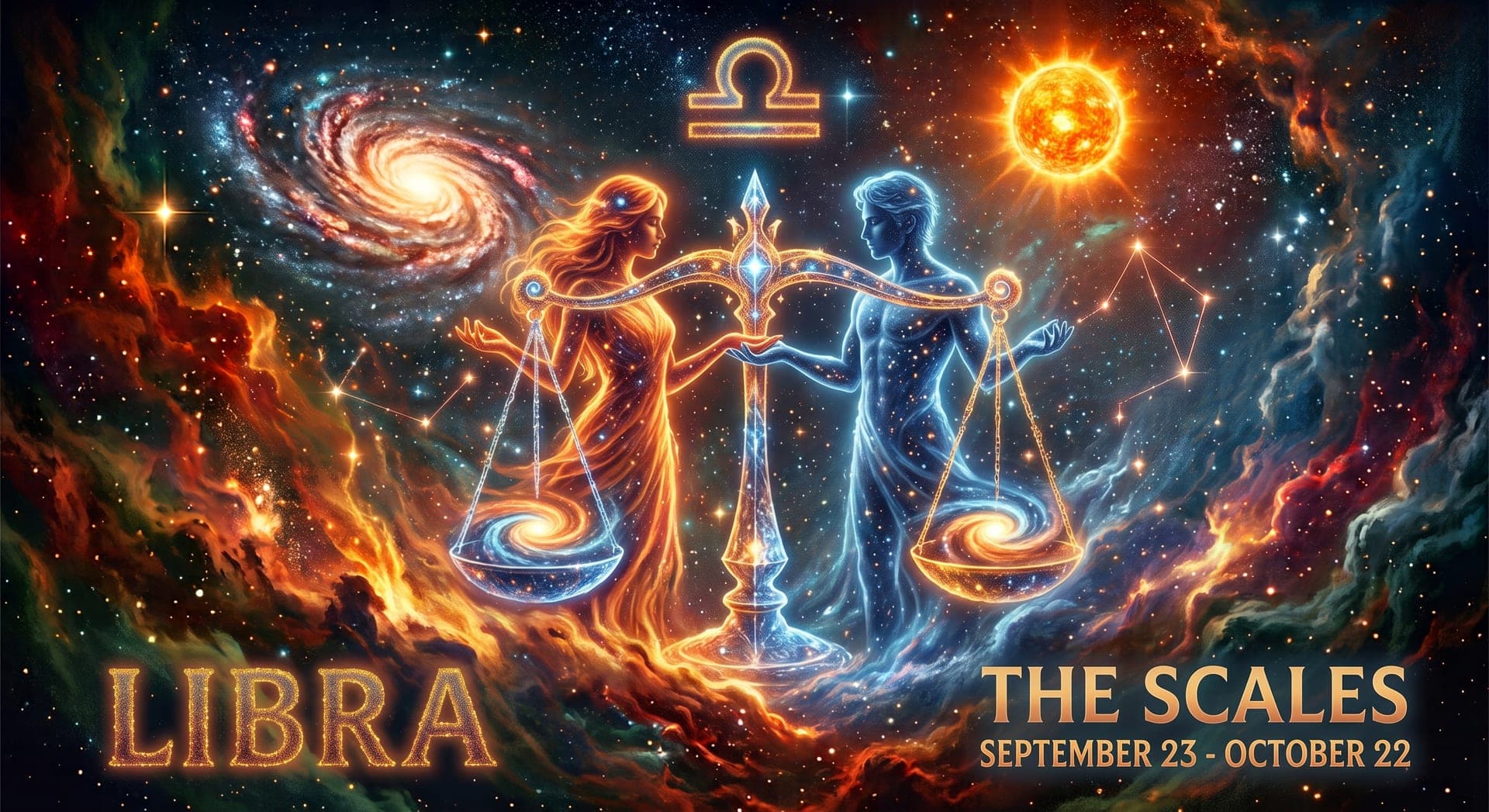
Libra, the seventh sign of the zodiac, spans September 23 to October 22 and is symbolized by the scales, the only zodiac symbol representing an inanimate object rather than a living creature, reflecting the sign's deep concern with balance, fairness, and justice. Ruled by Venus, the planet of love and beauty, Libra shares Taurus's appreciation for aesthetics and pleasure but channels it primarily through relationships, partnership, and social harmony. As an Air sign, Libra approaches the world intellectually and socially, valuing thoughtful conversation and diplomatic problem-solving over confrontation. Its Cardinal modality places it at the very start of autumn, beginning right at the equinox when day and night briefly achieve perfect balance. People born under this sign are often natural mediators, drawn to fairness and equilibrium in their relationships and surroundings, sometimes to the point of struggling to make decisions that might upset that balance. Libra's charm, diplomacy, and genuine desire to see all sides of an issue make it a valued friend and partner, even as its conflict-avoidance can occasionally leave real problems unresolved.
Personality Traits
Strengths
- Strong sense of fairness and justice
- Diplomatic peacemaker
- Charming and sociable
- Appreciates beauty and harmony
- Excellent at seeing multiple perspectives
Weaknesses
- Notoriously indecisive
- Conflict-avoidant to a fault
- Can be superficial
- People-pleasing tendencies
- Struggles with confrontation
Compatible Signs
Fun Facts
- Libra is the only zodiac sign represented by an inanimate object, the scales, rather than an animal or person.
- Libra's scales symbolize balance and justice, echoing the sign's association with fairness, harmony, and diplomacy.
- Venus, Libra's ruling planet, gives the sign its love of beauty, art, and romantic partnership, similar to Taurus but expressed through relationships rather than material comfort.
- As a Cardinal sign, Libra initiates autumn, beginning at the September equinox, when day and night are of equal length, fitting for a sign obsessed with balance.
- Notable Libras include Mahatma Gandhi, Kim Kardashian, John Lennon, and Will Smith.
Born on October 20
- 1784
Henry John Temple, 3rd Viscount Palmerston
British statesman who twice served as Prime Minister during the Victorian era
- 1790
Patrick Matthew
Scottish farmer and naturalist who outlined a theory of natural selection decades before Darwin
- 1854
Arthur Rimbaud
French poet
- 1859
John Dewey
American philosopher and education reformer
- 1874
Charles Ives
American composer
- 1882
Bela Lugosi
Hungarian-American actor known for playing Dracula
- 1891
James Chadwick
English physicist who discovered the neutron, winning the 1935 Nobel Prize in Physics
- 1934
Timothy West
English actor known for a long career on stage and television
- 1950
Tom Petty
American singer-songwriter
- 1956
Danny Boyle
English film director behind Trainspotting and Slumdog Millionaire
- 1961
Ian Rush
Welsh footballer and Liverpool's all-time record goalscorer
- 1961
Kate Mosse
English novelist best known for the Languedoc trilogy beginning with Labyrinth
- 1964
Kamala Harris
Vice President of the United States
- 1971
Snoop Dogg
American rapper

On This Day in History
- 1740
Major European powers reject the Pragmatic Sanction, helping trigger the War of the Austrian Succession.
Major European powers, having earlier pledged support for the Pragmatic Sanction guaranteeing Maria Theresa's succession to the Habsburg territories, reneged on their commitments following Emperor Charles VI's death, triggering the broad multi-national conflict known as the War of the Austrian Succession.
- 1774
The First Continental Congress adopts the Continental Association, establishing trade restrictions against Britain.
Delegates to the First Continental Congress adopted a formal agreement establishing coordinated colonial boycotts of British goods, creating enforcement committees in each colony to ensure compliance and representing an important early step toward unified colonial resistance against British trade and taxation policies.
- 1774
The First Continental Congress adopts the Continental Association, organizing a colonial boycott of British trade in protest at Parliament's Intolerable Acts.
Meeting in Philadelphia, delegates from twelve American colonies agreed to halt imports from and exports to Britain and Ireland in response to punitive legislation passed after the Boston Tea Party. The Association established local committees to enforce the boycott and marked a significant escalation in colonial resistance to British rule, laying groundwork for the armed conflict that would break out the following spring.
- 1803
The U.S. Senate ratifies the Louisiana Purchase, vastly expanding American territory.
The United States Senate ratified the treaty finalizing the Louisiana Purchase from France, a massive land acquisition that roughly doubled the size of the young nation and opened vast new territories for American westward expansion and settlement over subsequent decades.
- 1803
The United States Senate ratifies the Louisiana Purchase, doubling the size of the country at a stroke.
The treaty, negotiated with Napoleonic France, transferred roughly 828,000 square miles of territory to the United States for $15 million. It opened the American West to settlement and removed France as a major territorial power in North America. The purchase is regarded as one of the most consequential land acquisitions in world history, reshaping the young republic's geography and future.
- 1818
The Convention of 1818 establishes the U.S.-Canada border along the 49th parallel.
British and American negotiators agreed to establish the 49th parallel as the boundary between the United States and British-controlled Canadian territory west of the Great Lakes, a diplomatic settlement that avoided armed conflict and established one of the longest peaceful international borders in the world.
- 1818
Britain and the United States sign the Convention of 1818, fixing the boundary between the United States and British North America along the 49th parallel.
Negotiated in London, the treaty settled a long-running dispute over the border west of the Great Lakes and established joint British-American occupation of the Oregon Country for ten years. Acting on behalf of its Canadian colonies, Britain agreed to the 49th parallel as the dividing line from Lake of the Woods to the Rocky Mountains, a boundary that still largely defines the US-Canada border today.
- 1827
Combined British, French, and Russian naval forces defeat a Turkish-Egyptian fleet at the Battle of Navarino.
An allied fleet from Britain, France, and Russia, intervening to support Greek independence, decisively destroyed a much larger Ottoman-Egyptian naval force at Navarino Bay off Greece's western coast during the Greek War of Independence. The battle, one of the last major fleet engagements fought entirely under sail, significantly weakened Ottoman naval power and proved pivotal in securing Greek independence a few years later.
- 1827
An allied fleet from Britain, France, and Russia annihilates the Ottoman-Egyptian navy at the Battle of Navarino, the last major naval battle fought entirely under sail.
The battle was fought in Navarino Bay off southwestern Greece during the Greek War of Independence. British, French, and Russian squadrons, sent to enforce a ceasefire, destroyed most of the Ottoman-Egyptian fleet after fighting broke out. The Royal Navy, under Vice-Admiral Sir Edward Codrington, played the leading role. The victory crippled Ottoman naval power and proved decisive in securing Greek independence, though it was controversial in Britain as an unsanctioned act of war.
- 1910
The RMS Olympic, sister ship to the Titanic, is successfully launched in Belfast.
The RMS Olympic, designed as the lead ship of the same class as the ill-fated Titanic, was successfully launched from the Harland and Wolff shipyard in Belfast, going on to enjoy a long and largely successful career, unlike its more famous sister ship.
- 1910
The RMS Olympic, sister ship to the ill-fated Titanic, is launched from the Harland & Wolff shipyard in Belfast.
Built for Britain's White Star Line, the Olympic was the lead vessel of the Olympic-class ocean liners, a trio that also included Titanic and Britannic. Its launch at the Harland & Wolff yards in Belfast drew huge crowds and showcased British shipbuilding prowess. Unlike her sister Titanic, the Olympic enjoyed a long and successful career spanning 24 years, including service as a troop transport in the First World War, before being retired and scrapped in the 1930s.
- 1935
The Long March, a defining strategic retreat by Chinese Communist forces, concludes after roughly a year.
Communist forces under Mao Zedong completed their grueling year-long strategic retreat across difficult terrain to escape Nationalist encirclement, an ordeal that, despite enormous losses along the way, ultimately consolidated Mao's leadership and became a foundational legend of Chinese Communist Party history.
- 1948
A KLM Royal Dutch Airlines aircraft crashes near Glasgow, Scotland, killing 40 of the 44 people on board.
The Douglas DC-3 was attempting to land at Prestwick Airport in poor weather when it struck high ground near Glasgow. The disaster remains one of the deadliest aviation accidents to have occurred on Scottish soil. Prestwick, on Scotland's west coast, was at the time an important transatlantic staging post, and the crash prompted renewed scrutiny of instrument landing procedures used at British airports during low visibility.
- 1973
President Nixon orders the dismissal of key Justice Department officials in the Watergate scandal's "Saturday Night Massacre."
Amid the escalating Watergate scandal, President Nixon ordered the dismissal of the special prosecutor investigating him, prompting the resignation of the attorney general and deputy attorney general rather than carry out the order, a crisis that significantly accelerated public and congressional momentum toward Nixon's eventual impeachment proceedings and resignation.
- 1973
The Sydney Opera House officially opens after fourteen years of construction.
Sydney's iconic performing arts venue, designed by Danish architect Jorn Utzon with its distinctive sail-like roof shells, officially opened after a construction process plagued by delays, cost overruns, and the architect's own resignation partway through, eventually becoming one of the most recognizable buildings in the world.
- 1973
The Sydney Opera House officially opens after fourteen years of construction, becoming one of the most recognisable buildings in the world.
Designed by Danish architect Jørn Utzon, the building's sail-like shells made it an engineering challenge that pushed construction years behind schedule and vastly over budget. Queen Elizabeth II presided over the opening ceremony. Decades later the Opera House would be named a UNESCO World Heritage Site, celebrated as a masterpiece of twentieth-century architecture and a defining symbol of Australia.
- 2002
The relaunched motoring show Top Gear premieres on BBC Two, beginning what would become one of Britain's most widely exported television programmes.
Originally a straightforward car-review programme dating to 1977, Top Gear was reinvented in 2002 with a new format built around studio banter, challenges, and a resident 'Stig' test driver. Hosted initially by Jeremy Clarkson, Richard Hammond, and James May, the show became a global hit, sold to more than 200 territories and spawning numerous international versions, cementing its place as a flagship BBC export.
- 2011
Libyan leader Muammar Gaddafi is captured and killed near his hometown of Sirte, marking the effective end of the Libyan Civil War.
Gaddafi, who had ruled Libya for 42 years, was found hiding in a drainage pipe after NATO airstrikes struck his convoy as it tried to flee Sirte, the last major stronghold of his loyalist forces. His death, along with that of one of his sons, was captured on video and broadcast worldwide, prompting the National Transitional Council to declare the country's liberation days later.
- 2022
Liz Truss resigns as British Prime Minister after just 49 days, the shortest tenure in British history.
Facing a rapidly collapsing economy following disastrous unfunded tax cut proposals that spooked financial markets and sent government borrowing costs soaring, Liz Truss resigned as British Prime Minister after just 49 days in office. Her brief, chaotic tenure, the shortest of any British prime minister in history, was widely mocked in the British press, including one tabloid's stunt comparing her survival in office to a head of lettuce.
- 2022
Liz Truss announces her resignation as British Prime Minister after just 49 days in office, the shortest tenure in the country's history.
Truss's premiership collapsed following the fallout from her government's September 2022 mini-budget, which triggered turmoil in financial markets, a sharp fall in the pound, and a spike in mortgage rates. Facing the resignation of key ministers and a loss of confidence within her own Conservative Party, she stepped down after weeks of political chaos. She was succeeded by Rishi Sunak, who became prime minister without a general election.