What’s Observed on October 18
Born on October 18: Libra ♎
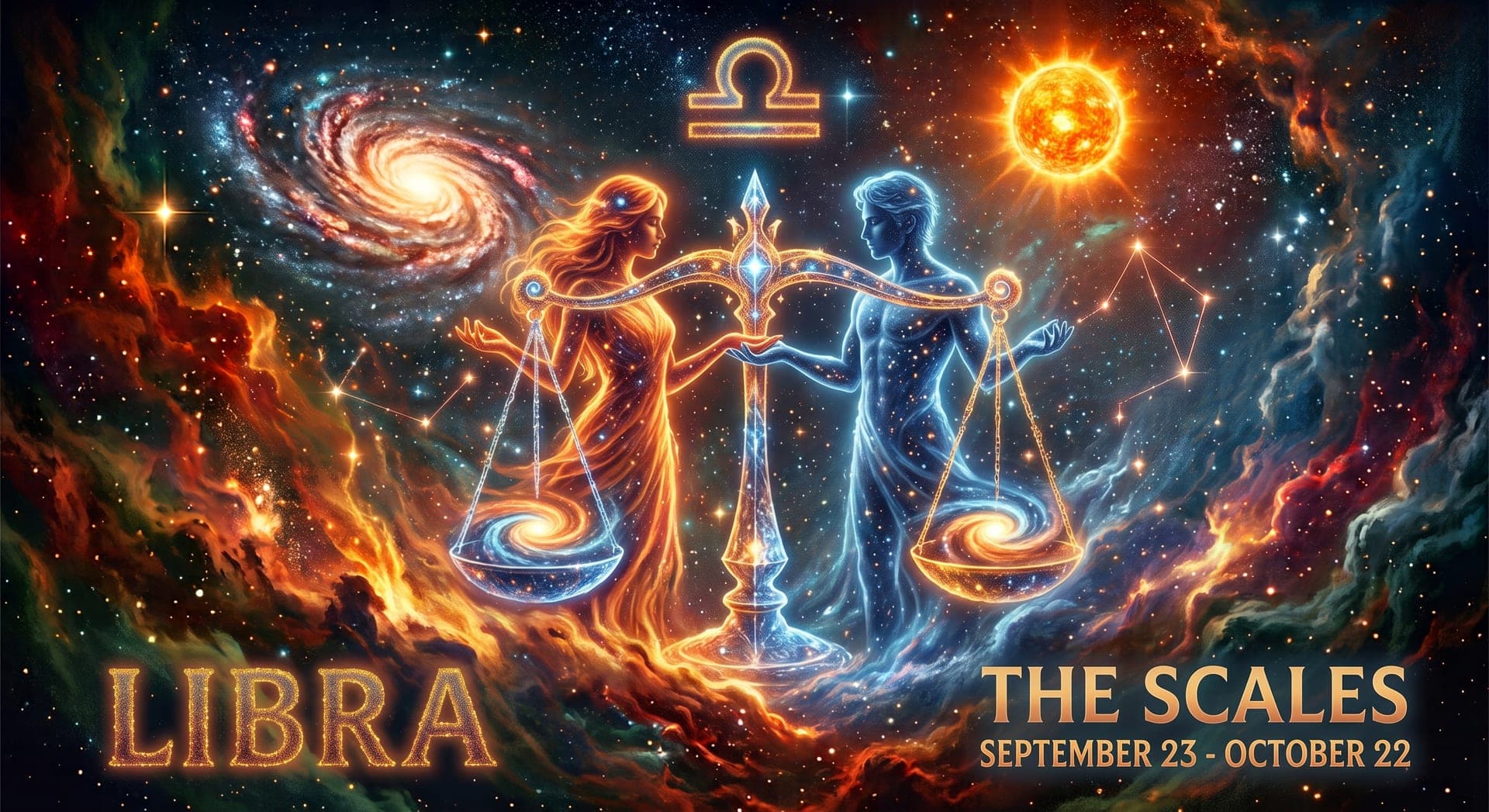
Libra, the seventh sign of the zodiac, spans September 23 to October 22 and is symbolized by the scales, the only zodiac symbol representing an inanimate object rather than a living creature, reflecting the sign's deep concern with balance, fairness, and justice. Ruled by Venus, the planet of love and beauty, Libra shares Taurus's appreciation for aesthetics and pleasure but channels it primarily through relationships, partnership, and social harmony. As an Air sign, Libra approaches the world intellectually and socially, valuing thoughtful conversation and diplomatic problem-solving over confrontation. Its Cardinal modality places it at the very start of autumn, beginning right at the equinox when day and night briefly achieve perfect balance. People born under this sign are often natural mediators, drawn to fairness and equilibrium in their relationships and surroundings, sometimes to the point of struggling to make decisions that might upset that balance. Libra's charm, diplomacy, and genuine desire to see all sides of an issue make it a valued friend and partner, even as its conflict-avoidance can occasionally leave real problems unresolved.
Personality Traits
Strengths
- Strong sense of fairness and justice
- Diplomatic peacemaker
- Charming and sociable
- Appreciates beauty and harmony
- Excellent at seeing multiple perspectives
Weaknesses
- Notoriously indecisive
- Conflict-avoidant to a fault
- Can be superficial
- People-pleasing tendencies
- Struggles with confrontation
Compatible Signs
Fun Facts
- Libra is the only zodiac sign represented by an inanimate object, the scales, rather than an animal or person.
- Libra's scales symbolize balance and justice, echoing the sign's association with fairness, harmony, and diplomacy.
- Venus, Libra's ruling planet, gives the sign its love of beauty, art, and romantic partnership, similar to Taurus but expressed through relationships rather than material comfort.
- As a Cardinal sign, Libra initiates autumn, beginning at the September equinox, when day and night are of equal length, fitting for a sign obsessed with balance.
- Notable Libras include Mahatma Gandhi, Kim Kardashian, John Lennon, and Will Smith.
Born on October 18
- 1616
Nicholas Culpeper
English botanist, herbalist, and physician whose Complete Herbal became one of the most widely used guides to medicinal plants in the English language.
- 1662
Matthew Henry
Welsh Nonconformist minister whose multi-volume commentary on the Bible remains one of the most influential works of its kind in the English-speaking world.
- 1785
Thomas Love Peacock
English novelist and poet known for satirical novels blending witty dialogue with social and philosophical commentary.
- 1831
Frederick III, German Emperor
Emperor of Germany
- 1859
Henri Bergson
French philosopher and Nobel laureate
- 1919
Pierre Trudeau
Prime Minister of Canada
- 1926
Chuck Berry
American rock and roll pioneer
- 1956
Martina Navratilova
Czech-American tennis champion
- 1960
Jean-Claude Van Damme
Belgian actor and martial artist
- 1961
Wynton Marsalis
American jazz trumpeter and composer
- 1964
Charles Stross
English science fiction and fantasy author known for novels including the Laundry Files series and Accelerando.
- 1968
Rhod Gilbert
Welsh stand-up comedian and television presenter known for his energetic live shows and BBC panel show appearances.
- 1974
Robbie Savage
Welsh footballer who played in the Premier League for over a decade and later became a prominent television and radio pundit.
- 1978
Mike Tindall
English rugby union player who won the 2003 Rugby World Cup with England and later became a television personality.
- 1987
Zac Efron
American actor
On This Day in History
- 1009
The Church of the Holy Sepulchre in Jerusalem is completely destroyed on the orders of Fatimid Caliph Al-Hakim.
On the orders of the unstable Fatimid Caliph Al-Hakim bi-Amr Allah, workers systematically demolished the Church of the Holy Sepulchre in Jerusalem, one of Christianity's holiest sites believed to mark the location of Jesus's crucifixion and burial, an act of religious persecution that later contributed to growing European hostility that helped spark the Crusades.
- 1016
Danish forces under Cnut defeat the English at the Battle of Assandun.
Danish forces under the future King Cnut the Great decisively defeated English defenders led by King Edmund Ironside at the Battle of Assandun in Essex, a victory achieved partly through the treachery of an English commander who withdrew his forces mid-battle. The triumph led directly to Cnut's subsequent conquest and rule over England, establishing a short-lived North Sea empire spanning Denmark, Norway, and England.
- 1016
A Danish army under Cnut the Great defeats the English at the Battle of Assandun, securing Danish control of England.
Fought in Essex, the battle was the decisive engagement of Cnut's campaign to seize the English throne from Edmund Ironside. English losses were heavy, including several prominent nobles, and the defeat forced Edmund to agree to divide the kingdom with Cnut. Edmund's death weeks later left Cnut as sole king of England, founding a North Sea empire spanning England, Denmark, and Norway.
- 1356
A powerful earthquake devastates Basel, Switzerland, one of the most destructive quakes recorded north of the Alps.
A major earthquake, estimated at magnitude 6.6 to 7.1, struck the city of Basel and the surrounding region of Switzerland, causing widespread destruction of buildings, castles, and church structures, followed by fires that compounded the damage. The quake remains recognized as one of the most damaging earthquakes ever recorded in Central Europe, a region not typically associated with major seismic activity given its distance from active tectonic plate boundaries.
- 1540
Spanish conquistador Hernando de Soto's forces destroy the fortified town of Mabila in present-day Alabama.
Spanish explorer Hernando de Soto's expedition, seeking gold and engaging in often brutal conflict with Indigenous peoples during its extensive trek through the American Southeast, destroyed the fortified town of Mabila after a fierce battle with Chief Tuscaloosa's forces, resulting in devastating losses on both sides.
- 1597
Another Spanish invasion fleet sent against England is scattered by storms before it can reach English shores.
Following the failure of the 1588 Armada, Philip II of Spain launched a further invasion fleet aiming to land troops in England and support rebellion in Ireland. As before, violent Atlantic storms off the English coast wrecked and scattered the ships before battle could be joined. The failed invasion further drained Spanish resources in the long Anglo-Spanish War.
- 1748
The Treaty of Aix-la-Chapelle is signed, concluding the War of the Austrian Succession.
European powers signed the Treaty of Aix-la-Chapelle, concluding the sprawling War of the Austrian Succession that had drawn in most major European powers, largely restoring prewar territorial boundaries while leaving many of the underlying dynastic and territorial disputes unresolved for future conflicts.
- 1775
Royal Navy ships bombard and burn the town of Falmouth, Massachusetts, during the American Revolutionary War.
Acting on orders to punish rebellious colonial towns, a British naval squadron under Captain Henry Mowat shelled the town and landed parties to set fire to what remained. Much of Falmouth, now Portland, Maine, was destroyed. The harsh reprisal, intended to intimidate the colonies into submission, instead outraged American opinion and strengthened support for independence.
- 1779
British defenders repel a Franco-American assault on Savannah, Georgia, forcing the besieging forces to withdraw.
American and French troops attempted to retake the city after over a month of siege, but a costly frontal assault on British fortifications failed with heavy allied casualties. The successful defense allowed Britain to retain control of Savannah for another two years and marked one of the deadliest engagements of the American Revolutionary War for the attacking side.
- 1851
Herman Melville's novel "Moby-Dick" is first published in London under the title "The Whale."
Herman Melville's now-classic novel about Captain Ahab's obsessive pursuit of a great white whale was first published in London under a different title than its later American edition, initially receiving mixed critical reception and only achieving its now-legendary literary reputation decades after Melville's death.
- 1851
Herman Melville's novel Moby-Dick is first published in London, under the title The Whale, ahead of its American release.
British publisher Richard Bentley issued the three-volume London edition weeks before the American publication in New York, though it omitted the epilogue and several passages the publisher considered risky. The novel sold poorly and was largely dismissed by critics in its own time. It was only rediscovered and celebrated as a masterpiece of world literature decades after Melville's death.
- 1860
Britain and China sign the Convention of Peking, formally ending the Second Opium War.
The agreement, forced on the defeated Qing government after British and French troops occupied Beijing and burned the Old Summer Palace, opened additional Chinese ports to foreign trade and legalized the opium trade. It also ceded the Kowloon Peninsula to Britain, expanding the colony of Hong Kong. The convention marked a low point of Chinese sovereignty during the era of unequal treaties with Western powers.
- 1867
The United States completes its acquisition of Alaska from Russia, formally raising the American flag over the territory.
American officials formally took possession of Alaska from Russia in a ceremony at Sitka, completing the purchase negotiated by Secretary of State William Seward for $7.2 million, a transaction initially mocked by critics but later recognized as a remarkably valuable acquisition following subsequent gold and oil discoveries.
- 1867
The United States formally takes possession of Alaska from Russia in a ceremony at Sitka.
The transfer followed the earlier purchase agreement, under which the U.S. paid Russia about 7.2 million dollars for the territory. Many Americans mocked the deal as "Seward's Folly," after Secretary of State William Seward who negotiated it, doubting the value of the remote, largely unmapped land. The discovery of gold and later oil would prove the purchase to be one of the most consequential land deals in American history.
- 1922
The British Broadcasting Company is established, laying groundwork for the modern BBC.
The British Broadcasting Company was formed by a consortium of radio equipment manufacturers to provide a national broadcasting service, later reorganized as a public corporation that became the BBC, establishing a model of public service broadcasting influential in many countries worldwide.
- 1922
The British Broadcasting Company is founded in London, laying the foundation for what would become the BBC.
Formed by a consortium of leading wireless manufacturers to provide a national radio service, the company began daily broadcasts from London in the weeks that followed, under its first general manager, John Reith. It was reconstituted as the publicly owned British Broadcasting Corporation in 1927. The BBC grew into one of the world's most influential broadcasters, shaping British public life and setting standards for public-service media internationally.
- 1929
Britain's Judicial Committee of the Privy Council rules that women qualify as "persons" eligible to sit in the Canadian Senate.
The ruling overturned a Supreme Court of Canada decision and came after a group of Canadian women activists, the "Famous Five," petitioned London's highest court of appeal for the British Empire. Since Canada's constitution then allowed final appeals to the Privy Council in Westminster, the London-based judges settled the matter, opening the Senate to women and becoming a landmark moment for women's legal rights across the Commonwealth.
- 1945
German-born physicist Klaus Fuchs, working within Britain's atomic programme, passes plutonium bomb design details to Soviet intelligence.
Fuchs had fled to Britain as a refugee from Nazi Germany and became a trusted theoretical physicist on the wartime Manhattan Project before returning to work on the United Kingdom's own nuclear weapons research. His espionage, undetected for years, gave Moscow a significant head start on developing its own atomic bomb. Fuchs was arrested and convicted in Britain in 1950, becoming one of the most damaging spies of the Cold War.
- 1989
Space Shuttle Atlantis launches carrying the Galileo spacecraft on its mission to study Jupiter.
Space Shuttle Atlantis launched from Kennedy Space Center carrying the Galileo spacecraft, which used a powerful inertial upper-stage rocket booster released from the shuttle's cargo bay to begin its six-year journey to Jupiter via gravity-assist flybys of Venus and Earth. Galileo eventually became the first spacecraft to orbit the giant planet, studying its atmosphere, moons, and powerful magnetic field in unprecedented detail.
- 2019
NASA astronauts Jessica Meir and Christina Koch conduct the first all-female spacewalk from the International Space Station.
NASA astronauts Jessica Meir and Christina Koch ventured outside the International Space Station together to replace a faulty power component, the first spacewalk conducted entirely by a team of women, a milestone that came decades after the first spacewalk due to historical limitations on spacesuit availability and astronaut selection.