What’s Observed on October 17
Born on October 17: Libra ♎
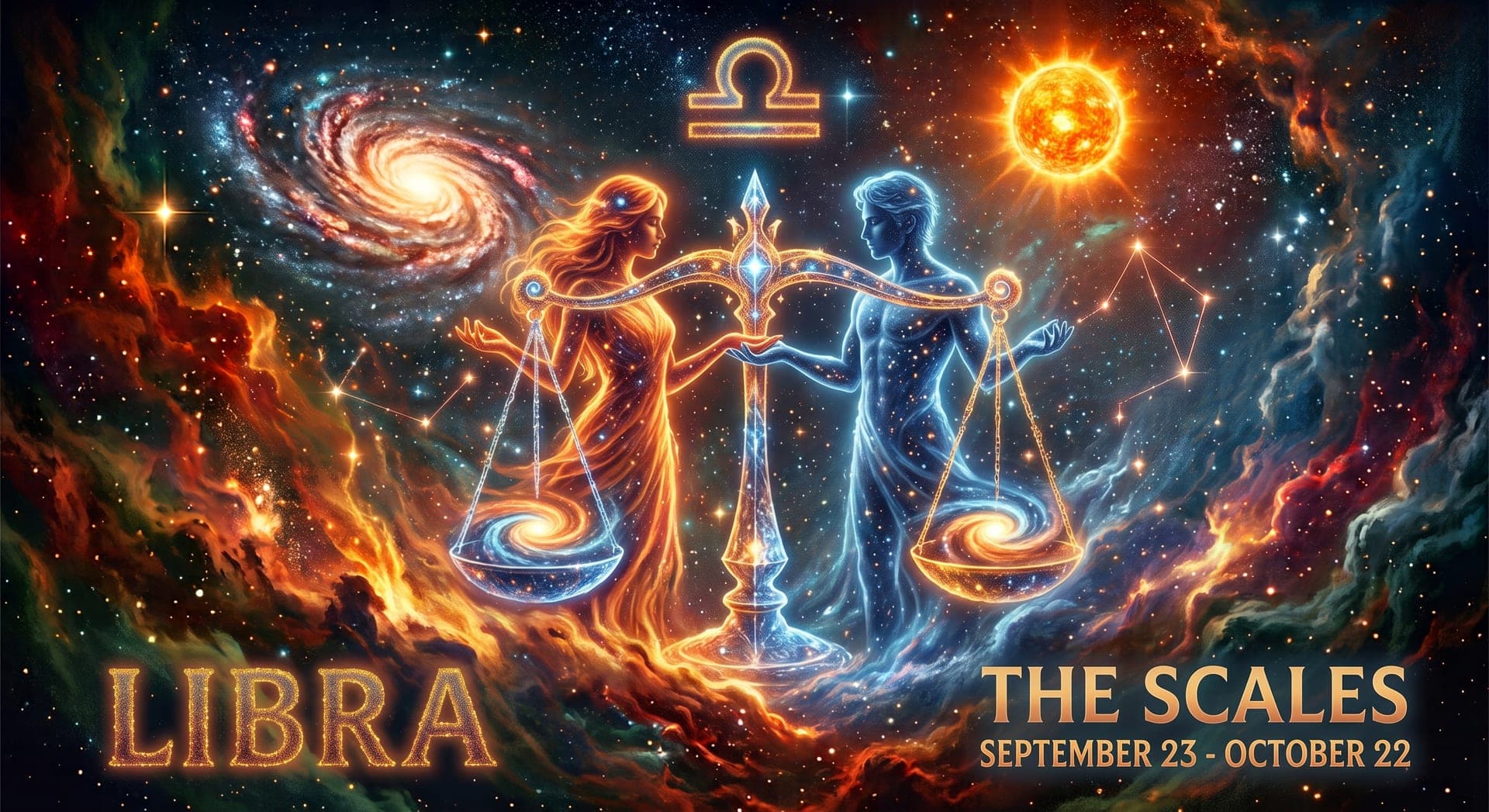
Libra, the seventh sign of the zodiac, spans September 23 to October 22 and is symbolized by the scales, the only zodiac symbol representing an inanimate object rather than a living creature, reflecting the sign's deep concern with balance, fairness, and justice. Ruled by Venus, the planet of love and beauty, Libra shares Taurus's appreciation for aesthetics and pleasure but channels it primarily through relationships, partnership, and social harmony. As an Air sign, Libra approaches the world intellectually and socially, valuing thoughtful conversation and diplomatic problem-solving over confrontation. Its Cardinal modality places it at the very start of autumn, beginning right at the equinox when day and night briefly achieve perfect balance. People born under this sign are often natural mediators, drawn to fairness and equilibrium in their relationships and surroundings, sometimes to the point of struggling to make decisions that might upset that balance. Libra's charm, diplomacy, and genuine desire to see all sides of an issue make it a valued friend and partner, even as its conflict-avoidance can occasionally leave real problems unresolved.
Personality Traits
Strengths
- Strong sense of fairness and justice
- Diplomatic peacemaker
- Charming and sociable
- Appreciates beauty and harmony
- Excellent at seeing multiple perspectives
Weaknesses
- Notoriously indecisive
- Conflict-avoidant to a fault
- Can be superficial
- People-pleasing tendencies
- Struggles with confrontation
Compatible Signs
Fun Facts
- Libra is the only zodiac sign represented by an inanimate object, the scales, rather than an animal or person.
- Libra's scales symbolize balance and justice, echoing the sign's association with fairness, harmony, and diplomacy.
- Venus, Libra's ruling planet, gives the sign its love of beauty, art, and romantic partnership, similar to Taurus but expressed through relationships rather than material comfort.
- As a Cardinal sign, Libra initiates autumn, beginning at the September equinox, when day and night are of equal length, fitting for a sign obsessed with balance.
- Notable Libras include Mahatma Gandhi, Kim Kardashian, John Lennon, and Will Smith.
Born on October 17
- 1725
John Wilkes
English journalist and radical politician whose battles with the government over press freedom and parliamentary reform made him a popular hero.
- 1821
Alexander Gardner
Scottish-born photographer who emigrated to the United States and became one of the most important documentarians of the American Civil War.
- 1912
Pope John Paul I
Head of the Catholic Church
- 1915
Arthur Miller
American playwright known for "Death of a Salesman"
- 1918
Rita Hayworth
American actress
- 1920
Montgomery Clift
American actor
- 1921
George Mackay Brown
Scottish poet, novelist, and playwright celebrated for evoking the landscape and folklore of his native Orkney Islands.
- 1935
Michael Eavis
English dairy farmer who founded the Glastonbury Festival on his farm in Somerset, turning it into one of the world's largest music festivals.
- 1938
Evel Knievel
American stunt performer
- 1956
Mae Jemison
American astronaut, first Black woman in space
- 1957
Pino Palladino
Welsh session bassist renowned for his fretless bass work and collaborations with artists including The Who and John Mayer.
- 1966
Mark Gatiss
English actor, writer, and producer known for co-creating Sherlock and for his roles in The League of Gentlemen and Doctor Who.
- 1969
Wyclef Jean
Haitian-American musician
- 1972
Eminem
American rapper
- 1974
Matthew Macfadyen
English actor known for roles including Tom Wambsgans in Succession and Mr. Darcy in Pride & Prejudice.
On This Day in History
- 1091
A powerful tornado strikes London, among the strongest ever recorded in England.
An extraordinarily powerful tornado tore through London, with contemporary chronicles describing widespread destruction of buildings and the collapse of a church roof, an event that modern meteorologists analyzing historical records have estimated reached an intensity rarely if ever matched by British tornadoes since.
- 1091
A powerful tornado tears through London, destroying houses and churches and severely damaging the wooden London Bridge.
The storm, one of the earliest tornadoes recorded in English history, ripped roofs from around 600 houses and drove rafters into the ground so deep that only a few feet remained visible. It also badly damaged the church of St Mary-le-Bow and the original timber London Bridge. Contemporary chronicles treated the event as an extraordinary and frightening natural disaster for the medieval city.
- 1346
English forces capture King David II of Scotland at the Battle of Neville's Cross.
English forces defeated an invading Scottish army and captured King David II during his raid into northern England while Edward III campaigned in France, a significant setback for Scotland that resulted in David's eleven-year imprisonment before an eventual ransom secured his release.
- 1346
English forces defeat a Scottish invasion and capture King David II of Scotland at the Battle of Neville's Cross.
David II had invaded northern England while Edward III campaigned in France, hoping to support the French under the Auld Alliance. An English army raised in the north routed the Scots near Durham, and the wounded David II was taken prisoner. He remained a captive in England for eleven years before being ransomed, a major setback for Scotland during the Second War of Scottish Independence.
- 1448
An Ottoman army defeats Hungarian forces at the Second Battle of Kosovo.
An Ottoman army under Sultan Murad II decisively defeated a Hungarian-led Christian coalition force led by John Hunyadi at the Second Battle of Kosovo, avenging an earlier Hungarian incursion into Ottoman-controlled territory. The victory effectively ended significant organized Christian resistance to continued Ottoman expansion into the Balkans for the remainder of the fifteenth century, securing Ottoman dominance over the region for generations to come.
- 1660
Nine of the men who signed King Charles I's death warrant are executed in London following the Restoration of the monarchy.
After Charles II returned to the throne in 1660, surviving regicides who had condemned his father to death in 1649 were hunted down and tried for treason. Those captured, including several who had signed the death warrant, were publicly hanged, drawn, and quartered as a brutal warning. The executions marked the restored monarchy's determination to punish those responsible for the king's execution eleven years earlier.
- 1662
King Charles II sells the English-held port of Dunkirk to France for around 375,000 pounds.
Dunkirk had been captured by Oliver Cromwell's forces in 1658 and held by England as a valuable Channel garrison, but it cost the Treasury a fortune to maintain. Charles II, short of funds, agreed to sell it to Louis XIV of France. The sale proved deeply unpopular in England, seen by critics as a shortsighted surrender of a hard-won strategic asset.
- 1777
British General John Burgoyne surrenders his army to American forces at Saratoga, a turning point in the Revolutionary War.
British General John Burgoyne surrendered his entire army of nearly 6,000 troops to American forces following his failed campaign to split the colonies along the Hudson River, a stunning victory that proved decisive in convincing France to formally ally with the American cause.
- 1781
British General Lord Cornwallis surrenders at Yorktown, effectively ending major fighting in the American Revolution.
British General Lord Cornwallis, besieged and cut off from reinforcement by combined American and French land and naval forces, formally surrendered his army at Yorktown, Virginia, in a ceremony where British troops reportedly marched out playing a tune titled "The World Turned Upside Down." The surrender effectively ended major military operations of the Revolutionary War, leading directly to peace negotiations recognizing American independence.
- 1814
Eight people die when a burst vat at a London brewery unleashes over a million litres of beer through the streets of St Giles.
A giant fermentation vessel at the Meux and Company brewery ruptured, setting off a chain reaction that destroyed several other vats and sent a wave of porter crashing through nearby slum housing. The flood swept away walls and flooded basement homes, drowning several residents. Despite the bizarre and grim nature of the disaster, the brewery was cleared of blame at the subsequent inquest.
- 1860
The inaugural Open Championship golf tournament takes place in Prestwick, Scotland.
Golfers competed in the first Open Championship, held at Prestwick Golf Club on Scotland's western coast, with only eight competitors playing three rounds of a twelve-hole course in a single day. Willie Park Sr. won the inaugural event, establishing what became one of golf's four major championships and the oldest of the sport's professional tournaments still contested annually today.
- 1860
The first Open Championship, golf's oldest major tournament, is held at Prestwick Golf Club in Scotland.
Eight professional golfers competed in three rounds over Prestwick's twelve-hole links course, with Willie Park Sr. emerging as the inaugural champion. Organized after the death of prominent golfer Allan Robertson left no clear successor as the game's best player, the tournament grew into one of golf's most prestigious events and the only major played outside the United States.
- 1907
Guglielmo Marconi's company begins the first commercial transatlantic wireless telegraph service, linking Britain and Canada.
The service connected a station at Clifden, Ireland, with one at Glace Bay, Nova Scotia, allowing paying customers to send telegrams across the Atlantic without undersea cables for the first time. Marconi had built his pioneering wireless company in Britain, and the achievement marked a major milestone in global communications, challenging the dominance of the transatlantic cable industry.
- 1931
Notorious gangster Al Capone is convicted of federal income tax evasion.
Notorious Chicago gangster Al Capone, who had evaded prosecution for numerous violent crimes, was ultimately convicted and imprisoned on federal tax evasion charges, illustrating how financial crimes proved more prosecutable than the organized crime and violence for which he was actually infamous.
- 1956
Queen Elizabeth II officially opens the world's first commercial nuclear power station at Sellafield, England.
Queen Elizabeth II officially inaugurated Calder Hall at Sellafield, the world's first nuclear power station to supply electricity commercially to a national grid, marking a significant milestone in the peaceful civilian application of nuclear technology following its earlier military development.
- 1956
Queen Elizabeth II opens Calder Hall in Sellafield, England, the world's first commercial-scale nuclear power station.
The plant fed electricity into the national grid, marking Britain's early lead in civil nuclear power generation. Built partly to produce plutonium for the country's nuclear weapons programme alongside electricity, Calder Hall symbolized Britain's ambitions in the atomic age. It operated for nearly half a century before finally closing in 2003.
- 1973
OPEC announces an oil embargo against nations supporting Israel during the Yom Kippur War.
In retaliation for Western support of Israel during the Yom Kippur War, Arab oil-producing nations announced an embargo restricting petroleum exports, triggering a severe global energy crisis marked by fuel shortages, rationing, and dramatically increased prices that reshaped international energy policy for decades.
- 1980
Queen Elizabeth II makes the first state visit by a reigning British monarch to the Vatican.
The visit to Pope John Paul II was a historic moment given the centuries of estrangement between the Church of England and the Roman Catholic Church since the English Reformation. As head of the Church of England, the Queen's meeting with the Pope symbolized improving relations between the two churches and closer British engagement with the Holy See.
- 2000
A high-speed train derails at Hatfield, England, after a rail cracked from metal fatigue, killing four passengers.
The express derailed at high speed when a length of track shattered beneath it, an accident later traced to widespread poor maintenance across Britain's privatized rail network. The crash triggered an emergency nationwide inspection and replacement of thousands of rail sections, causing months of disruption, and led directly to the collapse of network operator Railtrack.
- 2018
Canada legalizes recreational cannabis use nationwide, becoming one of the first major nations to do so.
Canada became one of the first major nations to legalize recreational cannabis use nationwide, establishing a regulated legal market intended to reduce criminal enterprise involvement while raising tax revenue, a policy shift closely watched internationally as other jurisdictions debated similar reforms.