What’s Observed on October 12
Born on October 12: Libra ♎
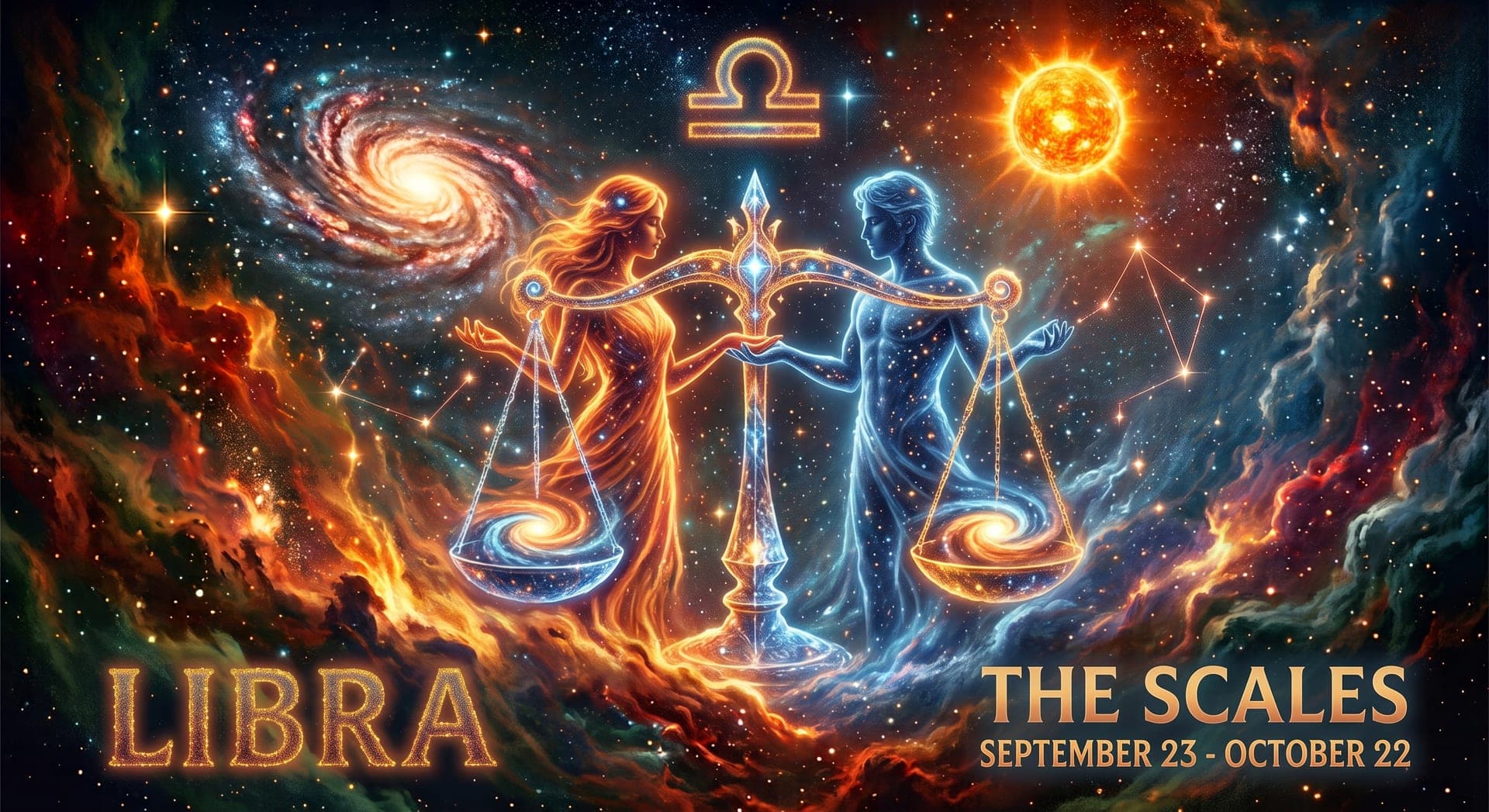
Libra, the seventh sign of the zodiac, spans September 23 to October 22 and is symbolized by the scales, the only zodiac symbol representing an inanimate object rather than a living creature, reflecting the sign's deep concern with balance, fairness, and justice. Ruled by Venus, the planet of love and beauty, Libra shares Taurus's appreciation for aesthetics and pleasure but channels it primarily through relationships, partnership, and social harmony. As an Air sign, Libra approaches the world intellectually and socially, valuing thoughtful conversation and diplomatic problem-solving over confrontation. Its Cardinal modality places it at the very start of autumn, beginning right at the equinox when day and night briefly achieve perfect balance. People born under this sign are often natural mediators, drawn to fairness and equilibrium in their relationships and surroundings, sometimes to the point of struggling to make decisions that might upset that balance. Libra's charm, diplomacy, and genuine desire to see all sides of an issue make it a valued friend and partner, even as its conflict-avoidance can occasionally leave real problems unresolved.
Personality Traits
Strengths
- Strong sense of fairness and justice
- Diplomatic peacemaker
- Charming and sociable
- Appreciates beauty and harmony
- Excellent at seeing multiple perspectives
Weaknesses
- Notoriously indecisive
- Conflict-avoidant to a fault
- Can be superficial
- People-pleasing tendencies
- Struggles with confrontation
Compatible Signs
Fun Facts
- Libra is the only zodiac sign represented by an inanimate object, the scales, rather than an animal or person.
- Libra's scales symbolize balance and justice, echoing the sign's association with fairness, harmony, and diplomacy.
- Venus, Libra's ruling planet, gives the sign its love of beauty, art, and romantic partnership, similar to Taurus but expressed through relationships rather than material comfort.
- As a Cardinal sign, Libra initiates autumn, beginning at the September equinox, when day and night are of equal length, fitting for a sign obsessed with balance.
- Notable Libras include Mahatma Gandhi, Kim Kardashian, John Lennon, and Will Smith.
Born on October 12
- 1537
Edward VI
King of England from 1547 until his death in 1553, the son of Henry VIII who oversaw the English Reformation's Protestant turn
- 1865
Arthur Harden
English biochemist who won the Nobel Prize in Chemistry for his research into sugar fermentation and enzymes
- 1866
Ramsay MacDonald
Scottish politician who became the first Labour Party Prime Minister of the United Kingdom
- 1872
Ralph Vaughan Williams
English composer known for works including The Lark Ascending and his symphonies drawing on English folk music
- 1875
Aleister Crowley
English occultist, writer, and mountaineer who founded the religious philosophy of Thelema
- 1932
Dick Gregory
American comedian and civil rights activist
- 1935
Luciano Pavarotti
Italian operatic tenor
- 1944
Angela Rippon
English journalist and broadcaster who became one of the first women to regularly read the news on British television
- 1948
Rick Parfitt
English guitarist and songwriter, a longtime member of the rock band Status Quo
- 1966
Brian Kennedy
Northern Irish singer-songwriter known for his soulful vocals across pop, folk, and traditional Irish music
- 1968
Hugh Jackman
Australian actor known for playing Wolverine
- 1975
Marion Jones
American track and field athlete
- 1992
Josh Hutcherson
American actor known for "The Hunger Games"

On This Day in History
- 539 BCE
The army of Cyrus the Great of Persia conquers Babylon, ending the Neo-Babylonian Empire.
Persian forces under Cyrus the Great captured the ancient and heavily fortified city of Babylon, reportedly diverting the Euphrates River to allow troops to enter along the riverbed, a conquest that ended the Neo-Babylonian Empire and, according to biblical tradition, led Cyrus to permit exiled Jewish captives to return to their homeland.
- 633
King Edwin of Northumbria is defeated and killed at the Battle of Hatfield Chase.
King Edwin of Northumbria, an early convert to Christianity credited with significant missionary success in his kingdom, was killed in battle against an alliance of Welsh and Mercian forces, a defeat that temporarily reversed Christian influence in Northumbria until later rulers restored and expanded the faith's presence.
- 633
King Edwin of Northumbria is defeated and killed at the Battle of Hatfield Chase by an alliance of Mercian and Welsh forces.
Edwin, one of the most powerful early English kings and a convert to Christianity who had brought much of Northumbria under his rule, was overthrown by Penda of Mercia allied with the British king Cadwallon of Gwynedd. His death plunged Northumbria into a period of instability and briefly reversed the spread of Christianity in the kingdom. The battle is a key episode in the fractured politics of early Anglo-Saxon England.
- 1492
Christopher Columbus's expedition makes landfall on an island in the Caribbean, land he names San Salvador.
After a roughly ten-week Atlantic crossing, lookout Rodrigo de Triana sighted land from the Pinta, and Columbus's expedition made its historic first landfall in the Americas at an island in the present-day Bahamas, an event that opened the era of sustained European contact, exploration, and colonization of the Western Hemisphere.
- 1492
Christopher Columbus's expedition makes landfall on an island in the Caribbean, likely present-day San Salvador, initiating sustained European contact with the Americas.
Columbus had sailed west from Spain seeking a new route to Asia, and his crew sighted land after more than two months at sea, ending a voyage marked by dwindling supplies and near-mutiny. The landing opened the way for widespread European colonization of the Americas, with profound and often catastrophic consequences for its indigenous peoples. The date is still commemorated, and contested, as Columbus Day in various countries.
- 1654
A massive gunpowder explosion devastates the Dutch city of Delft, killing over a hundred residents.
A gunpowder magazine explosion obliterated a substantial portion of the Dutch city of Delft, killing over a hundred people including the celebrated painter Carel Fabritius, a promising student of Rembrandt whose death in the blast cut short a career that might otherwise have rivaled his teacher's.
- 1692
Massachusetts Governor William Phips effectively ends the Salem witch trials by letter.
Facing widespread public skepticism and declining support for the ongoing witch trial prosecutions, Massachusetts Governor William Phips issued an order effectively halting further trials and prosecutions related to the Salem witch hysteria, which had already resulted in twenty executions and the imprisonment of many more.
- 1748
A British naval squadron wins a tactical victory over a Spanish squadron off Havana during the War of Jenkins' Ear.
The conflict, named for a British sea captain who claimed Spanish coast guards had severed his ear, was fought largely over trade rights and smuggling in the Caribbean and eventually merged into the wider War of the Austrian Succession. British naval actions around Cuba aimed to disrupt Spanish treasure shipping and colonial trade. The war ended inconclusively in 1748 with the Treaty of Aix-la-Chapelle, though tensions between Britain and Spain in the Americas persisted for decades.
- 1810
Munich citizens hold the first Oktoberfest, celebrating a royal marriage.
Munich residents gathered for a horse race and public celebration honoring the marriage of Crown Prince Ludwig, an event so popular that it was repeated annually and gradually expanded into the massive beer festival now recognized worldwide as Oktoberfest, drawing millions of visitors to Bavaria each autumn.
- 1871
The British colonial government in India enacts the Criminal Tribes Act, branding entire communities as hereditarily criminal.
The law allowed authorities to register whole tribes and castes as habitual criminals, subjecting hundreds of thousands of people to surveillance, forced settlement, and restricted movement without individual evidence of wrongdoing. It targeted groups often associated with nomadic or itinerant trades, entrenching lasting social stigma. The act remained in force until independent India repealed it in 1952, though its legacy of discrimination against so-called denotified tribes persists today.
- 1901
President Theodore Roosevelt officially renames the Executive Mansion the White House.
President Theodore Roosevelt issued an executive order officially adopting "the White House" as the formal name for the presidential residence, replacing the more formal but cumbersome "Executive Mansion" designation that had been used in official correspondence since the building's construction.
- 1915
British nurse Edith Cavell is executed by German firing squad in occupied Belgium for helping Allied soldiers escape.
Cavell, who ran a nursing school in Brussels, used her position to help around 200 Allied soldiers and Belgian, French, and British men of military age flee to the neutral Netherlands during the German occupation. Arrested and convicted by a German military court, she was shot despite international pleas for clemency. Her death became a powerful piece of Allied wartime propaganda and cemented her lasting reputation as a symbol of wartime humanitarian courage.
- 1917
The First Battle of Passchendaele results in the largest single-day loss of life in New Zealand's military history.
Fought as part of the broader Third Battle of Ypres, the attack sent New Zealand and Australian troops of the British Empire forces against heavily fortified German positions across mud-choked ground made nearly impassable by autumn rains. New Zealand suffered around 850 men killed in a matter of hours, an enormous toll for so small a nation. The failed assault highlighted the grinding, costly nature of trench warfare on the Western Front.
- 1962
The Columbus Day Storm strikes the Pacific Northwest with record wind speeds, causing widespread destruction.
An intense extratropical cyclone, remnants of a former Pacific typhoon, struck the Pacific Northwest with wind gusts exceeding 150 miles per hour in some areas, killing dozens of people and causing extensive property damage across Oregon and Washington in one of the most powerful windstorms in the region's recorded history.
- 1984
The Provisional IRA detonates a bomb at a Brighton hotel in a failed attempt to assassinate Prime Minister Margaret Thatcher.
The bomb exploded in the early hours during the Conservative Party's annual conference at the Grand Hotel, where Thatcher and much of her cabinet were staying. Five people were killed and more than thirty injured, though Thatcher herself escaped harm and insisted the conference proceed later that morning. The attack, one of the most significant of the Troubles, underscored the IRA's reach and Thatcher's defiant public response to it.
- 2000
Al-Qaeda suicide bombers badly damage the destroyer USS Cole in a small boat attack while it refuels in Yemen's Aden harbor.
The bombers approached the warship in an explosives-laden boat and detonated their charge alongside its hull, killing 17 American sailors and wounding dozens more. The attack, carried out under the direction of al-Qaeda leadership, exposed vulnerabilities in the security of US naval vessels during port visits. It came less than a year before the September 11 attacks and was later cited as an early warning sign of al-Qaeda's growing ambitions.
- 2002
Terrorists detonate bombs at two nightclubs in Bali, Indonesia, killing 202 people.
Coordinated bombings targeting two nightclubs popular with foreign tourists in Bali killed 202 people, mostly Australian and Indonesian nationals, in an attack carried out by militants linked to the regional terrorist network Jemaah Islamiyah, becoming one of the deadliest terrorist attacks in Southeast Asian history.
- 2002
Terrorists detonate bombs at two nightclubs in Kuta, Bali, killing 202 people and wounding hundreds more.
The attacks, carried out by militants linked to the regional extremist group Jemaah Islamiyah, targeted venues popular with foreign tourists on the Indonesian resort island. Victims came from more than twenty countries, with Australians and Indonesians accounting for the largest numbers of the dead. The bombings prompted a major overhaul of Indonesian counterterrorism policy and led to the arrest, trial, and execution of several of the plot's organizers.
- 2018
Princess Eugenie of York marries Jack Brooksbank at St George's Chapel, Windsor Castle, in a royal wedding broadcast worldwide.
Eugenie, a granddaughter of Queen Elizabeth II and daughter of Prince Andrew, married the wine merchant in the same chapel that had hosted the wedding of her cousin Prince Harry to Meghan Markle just months earlier. The ceremony drew a mix of royalty, celebrities, and public well-wishers lining the streets of Windsor. It was one of several high-profile royal weddings held in the chapel that decade.
- 2019
Eliud Kipchoge becomes the first person to run a marathon distance in under two hours, finishing in 1:59:40.
Kenyan runner Eliud Kipchoge completed a specially organized marathon attempt in Vienna, using a rotating team of pacers and other optimal conditions not permitted in official competition, becoming the first person to run the 26.2-mile distance in under two hours, though the achievement was not recognized as an official world record.