What’s Observed on October 11
Born on October 11: Libra ♎
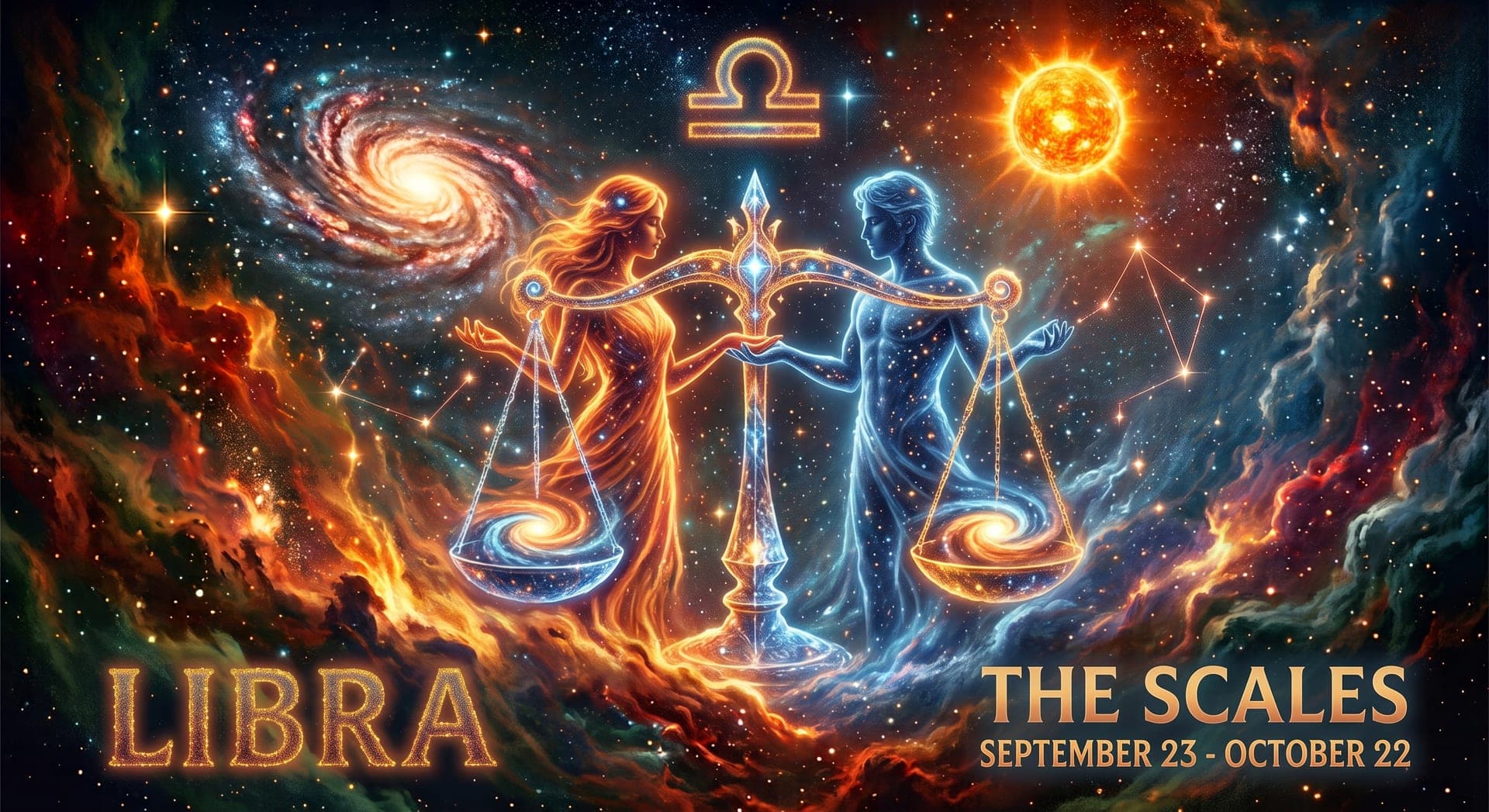
Libra, the seventh sign of the zodiac, spans September 23 to October 22 and is symbolized by the scales, the only zodiac symbol representing an inanimate object rather than a living creature, reflecting the sign's deep concern with balance, fairness, and justice. Ruled by Venus, the planet of love and beauty, Libra shares Taurus's appreciation for aesthetics and pleasure but channels it primarily through relationships, partnership, and social harmony. As an Air sign, Libra approaches the world intellectually and socially, valuing thoughtful conversation and diplomatic problem-solving over confrontation. Its Cardinal modality places it at the very start of autumn, beginning right at the equinox when day and night briefly achieve perfect balance. People born under this sign are often natural mediators, drawn to fairness and equilibrium in their relationships and surroundings, sometimes to the point of struggling to make decisions that might upset that balance. Libra's charm, diplomacy, and genuine desire to see all sides of an issue make it a valued friend and partner, even as its conflict-avoidance can occasionally leave real problems unresolved.
Personality Traits
Strengths
- Strong sense of fairness and justice
- Diplomatic peacemaker
- Charming and sociable
- Appreciates beauty and harmony
- Excellent at seeing multiple perspectives
Weaknesses
- Notoriously indecisive
- Conflict-avoidant to a fault
- Can be superficial
- People-pleasing tendencies
- Struggles with confrontation
Compatible Signs
Fun Facts
- Libra is the only zodiac sign represented by an inanimate object, the scales, rather than an animal or person.
- Libra's scales symbolize balance and justice, echoing the sign's association with fairness, harmony, and diplomacy.
- Venus, Libra's ruling planet, gives the sign its love of beauty, art, and romantic partnership, similar to Taurus but expressed through relationships rather than material comfort.
- As a Cardinal sign, Libra initiates autumn, beginning at the September equinox, when day and night are of equal length, fitting for a sign obsessed with balance.
- Notable Libras include Mahatma Gandhi, Kim Kardashian, John Lennon, and Will Smith.
Born on October 11
- 1675
Samuel Clarke
English philosopher and Anglican clergyman known for his work on metaphysics and natural theology
- 1738
Arthur Phillip
English admiral who led the First Fleet to Australia and became the first Governor of New South Wales
- 1821
George Williams
English philanthropist who founded the YMCA to support young men moving into industrial cities
- 1872
Emily Davison
English suffragette who died after stepping in front of the King's horse at the 1913 Epsom Derby in protest for women's voting rights
- 1884
Eleanor Roosevelt
American First Lady and human rights advocate
- 1884
Henry J. Heinz
American founder of the H. J. Heinz Company
- 1885
Francois Mauriac
French novelist and Nobel laureate
- 1919
Art Blakey
American jazz drummer and bandleader
- 1937
Bobby Charlton
English footballer who won the 1966 World Cup and starred for Manchester United across two decades
- 1942
Amitabh Bachchan
Indian actor
- 1942
Richard Wilson, Baron Wilson of Dinton
Welsh academic and civil servant who served as Cabinet Secretary and Head of the Home Civil Service
- 1943
John Nettles
English actor best known for starring in the detective dramas Bergerac and Midsomer Murders
- 1946
Daryl Hall
American singer of Hall & Oates
- 1957
Dawn French
Welsh-English actress and comedian known for The Vicar of Dibley and the sketch duo French and Saunders
- 1992
Cardi B
American rapper
On This Day in History
- 1138
A catastrophic earthquake devastates Aleppo, ranking among the most destructive earthquakes in recorded history.
A massive earthquake struck the Syrian city of Aleppo and surrounding regions, part of a broader series of catastrophic seismic events during this period, killing tens of thousands of people and severely damaging the city's fortifications and infrastructure, with contemporary chroniclers describing devastation across a wide swath of the eastern Mediterranean.
- 1138
A massive earthquake strikes the city of Aleppo in present-day Syria, becoming one of the most destructive quakes in recorded history.
The earthquake struck a region already unsettled by conflict between Crusader states and local Muslim rulers, compounding the devastation as fortresses and city walls collapsed. Estimates of the death toll, though difficult to verify from medieval sources, run into the tens of thousands, ranking it among the deadliest earthquakes ever recorded. It was part of a wider sequence of tremors that struck the region over the following months.
- 1311
English nobility and clergy impose limits on royal authority through the Ordinances of 1311.
Facing mounting frustration over King Edward II's unpopular favorites and military failures, English barons and clergy compelled the king to accept a set of reform ordinances significantly curtailing royal authority over finances, appointments, and warfare, an early assertion of the principle that the monarch's power should be subject to institutional checks.
- 1311
English barons and clergy force King Edward II to accept the Ordinances of 1311, sharply limiting royal authority.
The Ordinances were drafted by a group of powerful nobles, the Lords Ordainers, frustrated by Edward's reliance on his favorite Piers Gaveston and by military failures against Scotland. The document required the king to seek baronial consent for major appointments, taxation, and declarations of war, and banished Gaveston from the realm. It marked an important step in the long medieval struggle to constrain English royal power, building on the precedent of Magna Carta.
- 1634
The Burchardi flood kills an estimated 15,000 people across North Friesland along the North Sea coast.
A powerful storm surge breached coastal dikes in North Friesland along the North Sea, flooding vast areas of low-lying land and killing an estimated 15,000 people in one of the deadliest storm surge disasters in European history, permanently altering the region's coastline and geography.
- 1649
Oliver Cromwell's forces sack Wexford, Ireland, resulting in thousands of casualties.
During Oliver Cromwell's brutal military campaign to subdue Ireland following the English Civil War, his forces stormed the town of Wexford after negotiations broke down, resulting in a massacre of both soldiers and civilians that became one of the most infamous and controversial episodes of the Cromwellian conquest of Ireland.
- 1649
Oliver Cromwell's New Model Army storms the Irish town of Wexford, killing thousands of Irish Confederate soldiers and civilians.
The assault came during Cromwell's brutal campaign to reconquer Ireland for the English Commonwealth after the execution of Charles I. Negotiations for the town's surrender broke down, and English troops stormed the walls, killing an estimated 2,000 soldiers and around 1,500 townspeople in the ensuing massacre. Along with the earlier sack of Drogheda, the Wexford massacre became one of the most notorious episodes of the Cromwellian conquest of Ireland.
- 1776
American Revolutionary forces suffer defeat at the Battle of Valcour Island on Lake Champlain.
American forces under Benedict Arnold, not yet having turned traitor, suffered a tactical defeat in a naval engagement on Lake Champlain, though the delay their resistance imposed on British forces proved strategically valuable, buying crucial time that contributed to the following year's pivotal American victory at Saratoga.
- 1776
American forces are defeated on Lake Champlain, but the battle delays a British invasion from Canada until the following year.
Benedict Arnold assembled a hastily built fleet to block a much stronger British force sailing south from Quebec toward the Hudson Valley. Though nearly all of Arnold's ships were destroyed or captured near Valcour Island, the fighting and pursuit consumed enough of the campaigning season that British commander Guy Carleton withdrew to Canada for the winter. The delay gave the Continental Army crucial time to prepare, contributing to Britain's defeat at Saratoga in 1777.
- 1797
The Royal Navy defeats the Batavian Navy at the Battle of Camperdown during the French Revolutionary Wars.
A British fleet decisively defeated the Dutch Batavian Navy off the coast of the Netherlands during the French Revolutionary Wars, a victory that further solidified British naval dominance and effectively neutralized the Dutch fleet as a significant threat for the remainder of the conflict.
- 1797
The Royal Navy defeats the Batavian Republic's fleet at the Battle of Camperdown off the Dutch coast.
Admiral Adam Duncan's fleet intercepted the Dutch force, which was allied with revolutionary France, as it attempted to break out of port. The hard-fought battle, one of the largest fleet actions of the French Revolutionary Wars, ended in a decisive British victory that captured numerous Dutch ships. It removed the immediate threat of a Franco-Dutch invasion fleet and cemented British naval dominance in the North Sea.
- 1852
The University of Sydney, Australia's oldest university, is formally inaugurated.
The University of Sydney was formally established as Australia's first university, created to provide higher education opportunities within the colony rather than requiring students to travel to Britain, and it grew into one of the most respected research institutions in the Southern Hemisphere.
- 1865
Hundreds of black Jamaicans march on the courthouse at Morant Bay, launching a rebellion against colonial rule and racial injustice.
The uprising, led by Paul Bogle, erupted amid grievances over land access, poverty, and unequal treatment under British colonial administration decades after the abolition of slavery. Colonial forces under Governor Edward Eyre suppressed the revolt with extreme brutality, killing hundreds and executing Bogle along with the reformist assemblyman George William Gordon. The harsh crackdown sparked a fierce public debate in Britain over colonial governance and led to Jamaica becoming a direct Crown colony.
- 1890
The Daughters of the American Revolution is founded in Washington, D.C.
A group of women seeking to honor their revolutionary-era ancestors and promote patriotic education founded the Daughters of the American Revolution in Washington, D.C., an organization that grew into one of the most prominent hereditary and historical preservation societies in the United States.
- 1899
The Second Boer War erupts between British forces and Boer republics in South Africa.
Long-simmering tensions between British colonial authorities and the independent Boer republics of South Africa erupted into open warfare, a conflict noted for early use of concentration camps interning Boer civilians and for galvanizing significant international criticism of British wartime conduct despite Britain's eventual victory.
- 1899
The Second Boer War erupts in South Africa as the Boer republics declare war on the British Empire.
Tensions between Britain and the Boer republics of the Transvaal and Orange Free State had built for years over British expansionism and the discovery of gold on Boer land, which drew waves of British migrant workers. The war, which introduced the world to British concentration camps and Boer guerrilla tactics, dragged on until 1902. Britain's eventual victory came at a heavy cost in lives and international reputation.
- 1906
San Francisco's segregation of Japanese schoolchildren triggers a diplomatic crisis between the United States and Japan.
San Francisco's school board decision to segregate Japanese immigrant children into separate schools alongside Chinese students provoked outrage in Japan and strained diplomatic relations with the United States, ultimately prompting President Theodore Roosevelt to negotiate the "Gentlemen's Agreement" restricting Japanese immigration in exchange for the segregation order's reversal.
- 1937
The former King Edward VIII, now Duke of Windsor, and his wife Wallis Simpson begin a twelve-day tour of Nazi Germany.
The visit came less than a year after Edward's abdication over his marriage to the twice-divorced American Simpson, and included a much-publicized meeting with Adolf Hitler on October 22. The tour, undertaken without the British government's blessing, fueled lasting controversy over the couple's sympathies toward the Nazi regime. It remains one of the more troubling footnotes in the history of the British monarchy in the years before World War II.
- 1962
The Second Vatican Council opens in Rome, the first ecumenical council of the Roman Catholic Church in over ninety years.
Convened by Pope John XXIII, the council brought together bishops from around the world to modernize Catholic worship, doctrine, and the Church's relationship with the modern world. Its reforms included permitting Mass in local languages rather than only Latin and encouraging closer dialogue with other Christian denominations and faiths. The council's sessions ran until 1965 and reshaped Catholic practice for decades afterward.
- 1968
NASA launches Apollo 7, the first crewed mission of the Apollo program, testing the command and service module in Earth orbit.
The eleven-day flight, crewed by Wally Schirra, Donn Eisele, and Walter Cunningham, came twenty months after the fatal Apollo 1 fire had grounded the program for a redesign of the spacecraft. Apollo 7 successfully tested the redesigned capsule's systems in orbit, restoring confidence in the program. Its success cleared the way for the more ambitious lunar missions that followed, including Apollo 8's flight around the Moon later that same year.