
What’s Observed on September 24
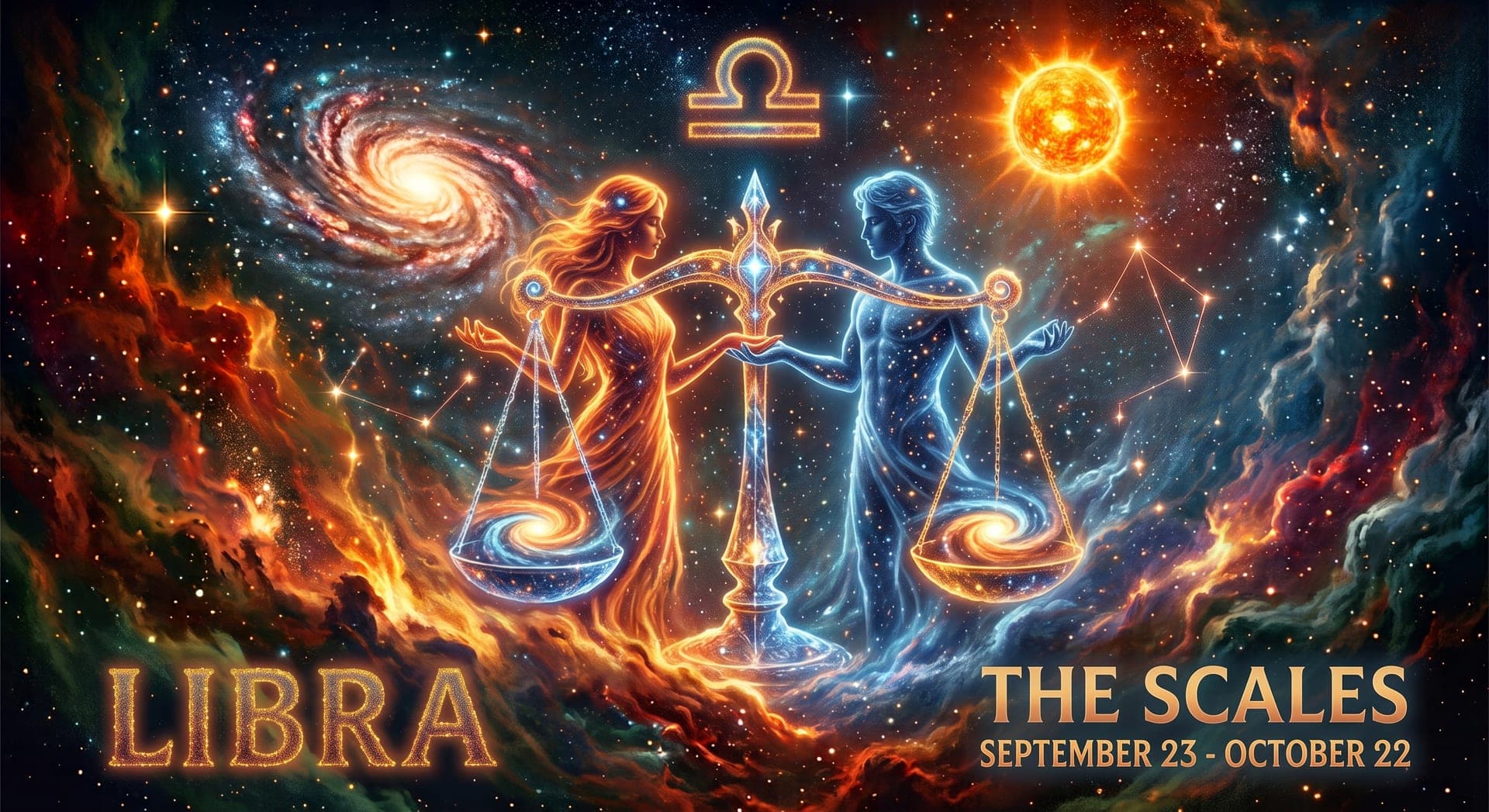
Born on September 24: Libra ♎
Libra, the seventh sign of the zodiac, spans September 23 to October 22 and is symbolized by the scales, the only zodiac symbol representing an inanimate object rather than a living creature, reflecting the sign's deep concern with balance, fairness, and justice. Ruled by Venus, the planet of love and beauty, Libra shares Taurus's appreciation for aesthetics and pleasure but channels it primarily through relationships, partnership, and social harmony. As an Air sign, Libra approaches the world intellectually and socially, valuing thoughtful conversation and diplomatic problem-solving over confrontation. Its Cardinal modality places it at the very start of autumn, beginning right at the equinox when day and night briefly achieve perfect balance. People born under this sign are often natural mediators, drawn to fairness and equilibrium in their relationships and surroundings, sometimes to the point of struggling to make decisions that might upset that balance. Libra's charm, diplomacy, and genuine desire to see all sides of an issue make it a valued friend and partner, even as its conflict-avoidance can occasionally leave real problems unresolved.
Personality Traits
Strengths
- Strong sense of fairness and justice
- Diplomatic peacemaker
- Charming and sociable
- Appreciates beauty and harmony
- Excellent at seeing multiple perspectives
Weaknesses
- Notoriously indecisive
- Conflict-avoidant to a fault
- Can be superficial
- People-pleasing tendencies
- Struggles with confrontation
Compatible Signs
Fun Facts
- Libra is the only zodiac sign represented by an inanimate object, the scales, rather than an animal or person.
- Libra's scales symbolize balance and justice, echoing the sign's association with fairness, harmony, and diplomacy.
- Venus, Libra's ruling planet, gives the sign its love of beauty, art, and romantic partnership, similar to Taurus but expressed through relationships rather than material comfort.
- As a Cardinal sign, Libra initiates autumn, beginning at the September equinox, when day and night are of equal length, fitting for a sign obsessed with balance.
- Notable Libras include Mahatma Gandhi, Kim Kardashian, John Lennon, and Will Smith.
Born on September 24
- 1717
Horace Walpole
English writer and Whig politician regarded as the father of the Gothic novel for The Castle of Otranto
- 1871
Lottie Dod
English sportswoman who won five Wimbledon tennis titles and also excelled at golf and archery
- 1896
F. Scott Fitzgerald
American novelist known for "The Great Gatsby"
- 1898
Howard Florey
Australian pharmacologist and Nobel laureate for penicillin development
- 1931
Anthony Newley
English actor, singer, and songwriter known for stage musicals and hit songs of the 1960s
- 1936
Jim Henson
American puppeteer who created the Muppets
- 1941
Linda McCartney
American photographer and musician in the band Wings
- 1942
Gerry Marsden
English singer-songwriter and frontman of Gerry and the Pacemakers
- 1945
John Rutter
English composer and conductor best known for his choral and Christmas music
- 1950
Harriet Walter
English actress known for acclaimed stage work and television roles including Succession
- 1958
Kevin Sorbo
American actor known for "Hercules"
- 1962
Ally McCoist
Scottish footballer and manager, record goal-scorer for Rangers
- 1965
Robert Irvine
English chef and television personality
- 1980
Victoria Pendleton
English track cyclist and double Olympic champion
- 1989
Pia Wurtzbach
Filipina model and Miss Universe 2015
- 1993
Ben Platt
American actor and singer
On This Day in History
- 1568
Spanish forces defeat an English fleet under John Hawkins at the Battle of San Juan de Ulua near Veracruz.
Spanish naval forces intercepted and destroyed an English fleet led by privateer John Hawkins at San Juan de Ulua near Veracruz, a battle that soured English-Spanish relations and helped inspire subsequent English privateering raids against Spanish colonial shipping, including those led by Francis Drake.
- 1568
A Spanish fleet defeats an English fleet under John Hawkins and Francis Drake at San Juan de Ulúa in Mexico, ending Hawkins's slave-trading voyage in disaster.
Hawkins's ships, sheltering at the port after storm damage, were ambushed by a larger Spanish force despite an earlier truce agreement, and most of the English fleet was destroyed or captured. The betrayal embittered Drake in particular and helped fuel decades of English hostility toward Spain that culminated in the Spanish Armada two decades later.
- 1645
Parliamentarian forces defeat King Charles I's Royalist army at the Battle of Rowton Heath.
Parliamentarian cavalry decisively defeated King Charles I's Royalist forces at Rowton Heath near Chester during the First English Civil War, a significant defeat that further weakened the king's already precarious military position. The loss contributed to the broader collapse of Royalist resistance in the following months, setting the stage for Charles's eventual capture and trial.
- 1645
Parliamentarian forces defeat King Charles I's Royalist army at the Battle of Rowton Heath near Chester during the English Civil War.
Charles I personally watched the battle from the city walls of Chester as his relief force, attempting to break the Parliamentarian siege of the city, was routed. The defeat was another serious blow to the king's already weakening military position, coming weeks after the disaster at Naseby, and Chester itself surrendered to Parliament early the following year.
- 1789
Congress passes the Judiciary Act of 1789, establishing the federal court system and the office of Attorney General.
Congress established the federal judiciary system through the Judiciary Act, creating the Supreme Court alongside a network of lower federal courts and the office of Attorney General, foundational legislation that shaped the structure of American federal law for generations to come.
- 1841
The Sultanate of Brunei cedes the territory of Sarawak to the British adventurer James Brooke, who becomes its first 'White Rajah'.
Brooke had helped the Sultan of Brunei suppress a local rebellion and was rewarded with governorship of Sarawak, which he turned into his own personal kingdom on the island of Borneo. His descendants ruled Sarawak as a hereditary British-linked dynasty for a century, until it became a British Crown Colony after the Second World War and later joined Malaysia.
- 1846
General Zachary Taylor captures Monterrey during the Mexican-American War.
American General Zachary Taylor's forces captured the fortified Mexican city of Monterrey after several days of intense urban combat, an important early victory during the Mexican-American War that boosted Taylor's national reputation and later helped propel him to the presidency.
- 1869
Gold prices collapse on "Black Friday" after President Grant orders Treasury gold sales to disrupt market manipulation.
In an event that became known as "Black Friday," the price of gold collapsed after President Grant ordered the Treasury to sell government gold reserves, foiling a market manipulation scheme by financiers Jay Gould and James Fisk and triggering a broader financial panic.
- 1877
Imperial Japanese forces decisively defeat the Satsuma Rebellion at the Battle of Shiroyama.
Imperial Japanese forces decisively crushed the last remnants of the Satsuma Rebellion at Shiroyama, killing rebel leader Saigo Takamori and ending the final major armed challenge to Japan's modernizing Meiji government by traditionalist samurai forces. The rebellion's defeat effectively marked the end of the samurai class as a distinct military and political force in Japanese society.
- 1906
President Theodore Roosevelt designates Devils Tower as the first U.S. National Monument.
President Theodore Roosevelt used his newly granted authority under the recently passed Antiquities Act to designate Devils Tower in Wyoming as the first National Monument in the United States, protecting the distinctive volcanic rock formation from potential commercial exploitation. The designation established an important precedent for using executive authority to preserve significant natural and cultural landmarks.
- 1911
Britain's first rigid airship, His Majesty's Airship No. 1, nicknamed Mayfly, breaks apart in high winds at Barrow-in-Furness before ever completing a flight.
The airship, built for the Royal Navy, was being walked out of its shed when a gust of wind snapped its hull, ending the project before it could be tested in the air. The failure was a costly setback for British efforts to develop rigid airships to rival Germany's Zeppelins, delaying the Royal Navy's airship program by several years.
- 1932
Mahatma Gandhi and B. R. Ambedkar sign the Poona Pact, an agreement on reserved legislative seats for depressed classes in British India.
The pact was negotiated while Gandhi was on a hunger strike in a British-run prison, protesting a separate electorate for so-called untouchables proposed by the colonial government. The compromise gave reserved seats within the general electorate instead of a fully separate one, a settlement that shaped the political representation of Dalits in India for decades afterward.
- 1946
Cathay Pacific Airways is founded in the British colony of Hong Kong.
Established by an American and an Australian in the aftermath of the Second World War, the airline began with a single converted military aircraft flying regional routes. Operating out of British Hong Kong, Cathay Pacific grew over the following decades into one of the world's major international carriers and remained closely tied to the territory even after its 1997 handover to China.
- 1954
The AEC Routemaster double-decker bus enters service in London, becoming an enduring icon of the city's streets.
Designed jointly by London Transport and AEC, the Routemaster combined a lightweight aluminum body with independent suspension and power steering, features unusual for buses of the era. Despite being officially withdrawn from regular service in 2005, the distinctive red double-decker remained so beloved that a modern version was later introduced to preserve its open-platform design on selected routes.
- 1957
President Eisenhower deploys the 101st Airborne Division to Little Rock to enforce school integration.
President Eisenhower ordered elements of the 101st Airborne Division to Little Rock, Arkansas, to ensure the safety of Black students integrating Central High School after local authorities and the state's governor failed to control violent mobs opposing court-ordered desegregation. The federal intervention marked a significant assertion of national authority over state resistance to civil rights enforcement.
- 1973
Guinea-Bissau declares independence from Portugal.
The West African nation of Guinea-Bissau unilaterally declared independence from Portuguese colonial rule following a prolonged and costly armed liberation struggle led by revolutionary leader Amilcar Cabral, who was assassinated shortly before independence was achieved. Portugal formally recognized the new nation's sovereignty the following year, after its own domestic political revolution ended decades of colonial-era authoritarian rule.
- 1975
A British expedition led by Chris Bonington reaches the summit of Mount Everest via the previously unclimbed Southwest Face.
Climbers Doug Scott and Dougal Haston completed the ascent up the notoriously difficult route and were forced to bivouac overnight near the summit without oxygen or shelter, surviving the ordeal. The climb was hailed as one of the great achievements in mountaineering history and cemented Bonington's reputation as one of Britain's leading expedition leaders.
- 1996
Representatives from 71 nations sign the Comprehensive Nuclear-Test-Ban Treaty at the United Nations, banning all nuclear explosions.
The treaty aimed to end nuclear weapons testing worldwide, building on earlier partial test-ban agreements from the Cold War era. Although signed by most major powers, including Britain, France, Russia, and China, the treaty has never formally entered into force because several key states, including the United States, have not ratified it.
- 2014
India's Mars Orbiter Mission successfully reaches Mars orbit, making India the first Asian nation to do so on its first attempt.
India's Mars Orbiter Mission successfully entered orbit around Mars on its very first attempt, making India the first Asian nation to reach the Red Planet and doing so at a remarkably low cost compared to other nations' Mars missions, a fraction of the budget of comparable American and European projects. The achievement significantly boosted India's international standing in space exploration.
- 2014
India's Mars Orbiter Mission successfully enters orbit around Mars, making India the first Asian nation to reach the planet.
Nicknamed Mangalyaan, the probe was built and launched on a remarkably low budget compared to other interplanetary missions, showcasing the growing sophistication of India's space program. Its successful arrival also made India the first country in the world to reach Mars orbit on its very first attempt, a feat that had eluded other established space agencies.