What’s Observed on August 9
Born on August 9: Leo ♌
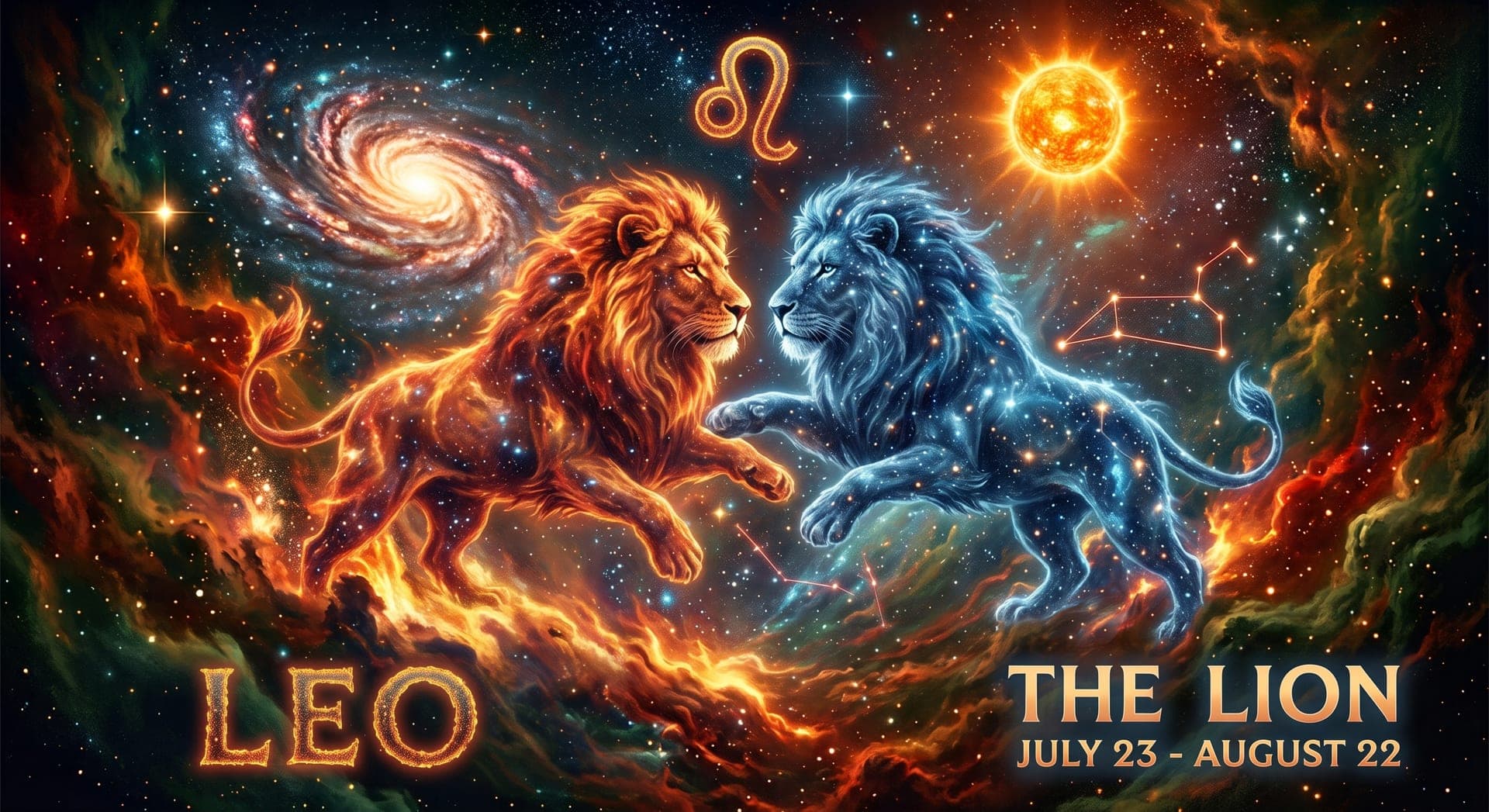
Leo, the fifth sign of the zodiac, spans July 23 to August 22 and is symbolized by the lion, an animal long associated with courage, pride, and natural leadership. Ruled by the Sun, the center of the solar system and the source of light and life, Leo is widely regarded as one of the most confident, warm, and charismatic signs of the zodiac, naturally drawn to the spotlight. As a Fire sign, Leo approaches life with passion, enthusiasm, and a flair for the dramatic, rarely content to blend quietly into the background. Its Fixed modality gives Leo a strong sense of loyalty and consistency, along with a stubborn streak once its mind is made up. People born under this sign are often natural performers, leaders, or creatives who thrive when appreciated and celebrated by those around them. Leo's generosity and warmth make it a beloved friend and steadfast ally, though its genuine need for recognition and admiration can tip into vanity or a demand for center stage if left unchecked.
Personality Traits
Strengths
- Naturally charismatic leader
- Generous and warm-hearted
- Confident and self-assured
- Creative and expressive
- Loyal to friends and family
Weaknesses
- Prone to arrogance
- Craves attention and validation
- Stubborn once decided
- Can be domineering
- Sensitive to criticism of their ego
Compatible Signs
Fun Facts
- Leo's lion symbol connects to the Greek myth of the Nemean Lion, slain by Hercules as the first of his twelve labors.
- Leo is ruled by the Sun, the only zodiac sign ruled directly by a star rather than a planet or moon.
- As a Fixed Fire sign, Leo season falls at the height of summer, when the sun's warmth and intensity are strongest in the Northern Hemisphere.
- Notable Leos include Barack Obama, Madonna, Jennifer Lawrence, and Napoleon Bonaparte.
- Leo rules the heart in traditional medical astrology, reflecting the sign's association with vitality, courage, and life force.
Born on August 9
- 1593
Izaak Walton
English writer best known for The Compleat Angler, a celebrated meditation on fishing first published in 1653.
- 1757
Thomas Telford
Scottish civil engineer nicknamed the 'Colossus of Roads,' renowned for his bridges, canals, and roads including the Menai Suspension Bridge.
- 1805
Joseph Locke
English railway engineer and politician who built major lines including the Grand Junction Railway and the London and Southampton Railway.
- 1896
Jean Piaget
Swiss developmental psychologist
- 1911
William Alfred Fowler
American astrophysicist and Nobel laureate
- 1922
Philip Larkin
English poet and novelist whose spare, melancholic verse in collections like The Whitsun Weddings made him one of the most admired British poets of the 20th century.
- 1927
Robert Shaw
English actor and novelist celebrated for his role as shark hunter Quint in Jaws and for playing Henry VIII in A Man for All Seasons.
- 1938
Rod Laver
Australian tennis player who achieved the calendar Grand Slam twice
- 1947
Roy Hodgson
English football manager who led teams including Fulham, West Bromwich Albion, and the England national team.
- 1951
James Naughtie
Scottish broadcaster and journalist, long-time presenter of BBC Radio 4's Today programme.
- 1963
Whitney Houston
American singer and actress
- 1964
Brett Hull
Canadian-American NHL hockey player
- 1968
Eric Bana
Australian actor
- 1968
Gillian Anderson
American-British actress best known for playing FBI Agent Dana Scully in "The X-Files" and Margaret Thatcher in "The Crown"
- 1985
Anna Kendrick
American actress and singer
- 2000
Arlo Parks
English singer-songwriter and poet whose debut album Collapsed in Sunbeams won the 2021 Mercury Prize.
On This Day in History
- 48 BCE
Julius Caesar decisively defeats Pompey at the Battle of Pharsalus, forcing his rival to flee to Egypt.
In one of the decisive battles of Caesar's civil war, his numerically inferior but battle-hardened legions outmaneuvered and routed Pompey's larger army in Thessaly, Greece. Pompey fled to Egypt seeking refuge but was assassinated shortly after arrival, leaving Caesar as the dominant power in Rome and paving his path toward eventual dictatorship.
- 378
Visigothic forces inflict a devastating defeat on the Roman army at the Battle of Adrianople, killing Emperor Valens.
Roman Emperor Valens, attempting to defeat a Gothic force before reinforcements from the western empire arrived, led his army into a disastrous engagement near Adrianople in which he and roughly two-thirds of his forces were killed. The catastrophic defeat is often cited by historians as marking the beginning of the Western Roman Empire's long decline.
- 1173
Construction begins on the campanile of Pisa's cathedral, later known as the Leaning Tower of Pisa.
Construction began on the bell tower for Pisa's cathedral complex, a project that would take nearly two centuries to complete due to funding interruptions and, famously, the building's ongoing struggle with unstable foundation soil. That instability produced the tower's iconic tilt, transforming what was intended as a straightforward structure into one of the world's most recognizable architectural curiosities.
- 1610
The First Anglo-Powhatan War begins in colonial Virginia between English settlers and Indigenous peoples.
Tensions between English colonists at Jamestown and the neighboring Powhatan Confederacy, strained by competition over land and resources, escalated into open warfare after years of uneasy coexistence. The conflict, marked by raids and reprisals on both sides, continued intermittently for several years before a truce was eventually reached through a diplomatic marriage.
- 1610
The First Anglo-Powhatan War begins between English colonists and the Powhatan Confederacy in Virginia.
Tensions between the Jamestown settlers and the Powhatan Confederacy, simmering since the colony's founding in 1607, erupted into open warfare after the 'Starving Time' famine of 1609-1610. English forces under governors Thomas Gates and Thomas West raided Powhatan villages and crops. The conflict dragged on until 1614, when it ended with the marriage of Pocahontas to colonist John Rolfe.
- 1842
The Webster-Ashburton Treaty is signed, settling the disputed border between the United States and British North America.
Negotiated by US Secretary of State Daniel Webster and British diplomat Alexander Baring, Lord Ashburton, the treaty fixed the boundary between Maine and New Brunswick and clarified the frontier around the Great Lakes. It defused years of tension, including the near-conflict known as the Aroostook War, and marked a rare moment of amicable Anglo-American diplomacy in the mid-19th century.
- 1854
Henry David Thoreau publishes "Walden," his influential reflection on simple living and transcendentalist philosophy.
Reflecting on his two-year experiment living simply in a small cabin near Walden Pond in Massachusetts, Thoreau published his influential meditation on self-reliance, nature, and resistance to societal conformity. Though it sold modestly during his lifetime, "Walden" later became a foundational text of American transcendentalist philosophy and environmental thought.
- 1855
A Royal Navy and French fleet begin a bombardment of the Russian fortress of Suomenlinna during the Crimean War.
As part of the Baltic campaign of the Crimean War, allied British and French warships shelled the Sveaborg (Suomenlinna) fortress guarding Helsinki, hoping to destroy its Russian garrison and shipyards. Despite firing thousands of rounds over roughly forty-five hours, the bombardment failed to force a surrender, though it inflicted heavy damage on the fortress and its stores.
- 1902
Edward VII and Alexandra are crowned King and Queen of the United Kingdom at Westminster Abbey.
The coronation had originally been set for June but was postponed after Edward underwent emergency surgery for appendicitis just days beforehand. When the ceremony finally took place, it was deliberately scaled back from earlier Victorian pageantry, reflecting Edward's preference for a shorter service. It marked the formal start of the Edwardian era following Queen Victoria's death in 1901.
- 1907
The first Boy Scout encampment concludes on Brownsea Island, Dorset, marking the practical launch of the Scouting movement.
Robert Baden-Powell, a British Army officer and hero of the Siege of Mafeking, had gathered around twenty boys of mixed social backgrounds for an experimental camp testing his ideas on outdoor skills, teamwork, and citizenship. The camp's success led him to publish Scouting for Boys the following year, spawning a movement that spread within a few years to millions of young people worldwide.
- 1925
Indian revolutionaries rob a train carrying British government funds near Kakori, in colonial India.
Members of the Hindustan Republican Association, including Ram Prasad Bismil and Ashfaqulla Khan, stopped a train travelling from Shahjahanpur to Lucknow and seized cash belonging to the British colonial treasury to fund their campaign against imperial rule. The ensuing British crackdown led to the arrest, trial, and execution of several of the plotters, turning them into martyrs of the Indian independence movement.
- 1945
The United States drops an atomic bomb on Nagasaki, Japan, killing tens of thousands of people.
Three days after the Hiroshima bombing, and while Japanese leadership still deliberated its response, the United States dropped a second atomic bomb, "Fat Man," on the city of Nagasaki, killing tens of thousands of people. The bombing accelerated Japan's decision to surrender, formally ending World War II days later.
- 1945
Soviet forces invade Japanese-occupied Manchuria, opening a new front in the war's final days.
As part of its declaration of war against Japan, the Soviet Union launched a massive combined-arms offensive into Japanese-occupied Manchuria, rapidly overwhelming the depleted Japanese Kwantung Army. The swift Soviet advance added further pressure on Japan's already crumbling military position in the war's concluding days.
- 1945
The United States drops an atomic bomb on the Japanese city of Nagasaki, three days after Hiroshima.
The bomb, nicknamed 'Fat Man,' detonated over the Urakami valley, killing tens of thousands of people instantly and many more in the following months from injuries and radiation sickness. Combined with the Soviet declaration of war and invasion of Manchuria the same week, the bombing hastened Japan's surrender, which came just days later, bringing the Second World War to a close.
- 1971
The British Army launches Operation Demetrius, interning suspected republican paramilitaries without trial across Northern Ireland.
Acting on intelligence that proved badly flawed, troops arrested hundreds of men suspected of IRA involvement in dawn raids, detaining them without charge or trial. The operation overwhelmingly targeted the Catholic nationalist community, provoked several days of rioting, and is widely seen as a turning point that hardened opposition to British rule and fuelled recruitment into paramilitary groups during the Troubles.
- 1974
Richard Nixon resigns the presidency, becoming the first U.S. president to do so.
Facing near-certain impeachment and removal from office over his role in covering up the Watergate break-in and subsequent scandal, Richard Nixon formally resigned the presidency, becoming the only U.S. president in history to do so. His resignation speech, delivered the previous evening, marked the culmination of a two-year constitutional crisis.
- 1974
Richard Nixon resigns as President of the United States following the Watergate scandal.
Facing near-certain impeachment after the release of tape recordings implicating him in the cover-up of the Watergate break-in, Nixon became the first American president to resign from office. Vice President Gerald Ford was sworn in hours later, famously declaring 'our long national nightmare is over.' The scandal profoundly damaged public trust in the presidency for a generation.
- 2006
British police arrest 21 suspects in a plot to smuggle liquid explosives onto transatlantic airliners.
Acting on months of surveillance, British security services uncovered a plan by Islamist extremists to detonate homemade liquid explosives disguised as soft drinks aboard multiple flights bound from London to the United States and Canada. The arrests triggered an immediate worldwide ban on carrying liquids in aircraft cabins, a security measure that reshaped airport screening procedures for years afterward.
- 2014
Michael Brown is fatally shot by police in Ferguson, Missouri, sparking widespread protests over policing and racial justice.
The fatal shooting of unarmed Black teenager Michael Brown by a white police officer in the St. Louis suburb of Ferguson ignited weeks of protests and unrest, drawing national attention to issues of policing, race, and use of force. The events helped galvanize the broader Black Lives Matter movement in subsequent years.
- 2024
Voepass Linhas Aereas Flight 2283 crashes near Sao Paulo, Brazil, killing all 62 people aboard.
A regional passenger flight operated by the Brazilian airline crashed near Sao Paulo after reportedly encountering severe icing conditions that caused the aircraft to enter an uncontrolled spin. All 62 people aboard were killed, and the disaster prompted renewed scrutiny of aircraft de-icing procedures and regional airline safety standards in Brazil.