What’s Observed on May 28
Born on May 28: Gemini ♊
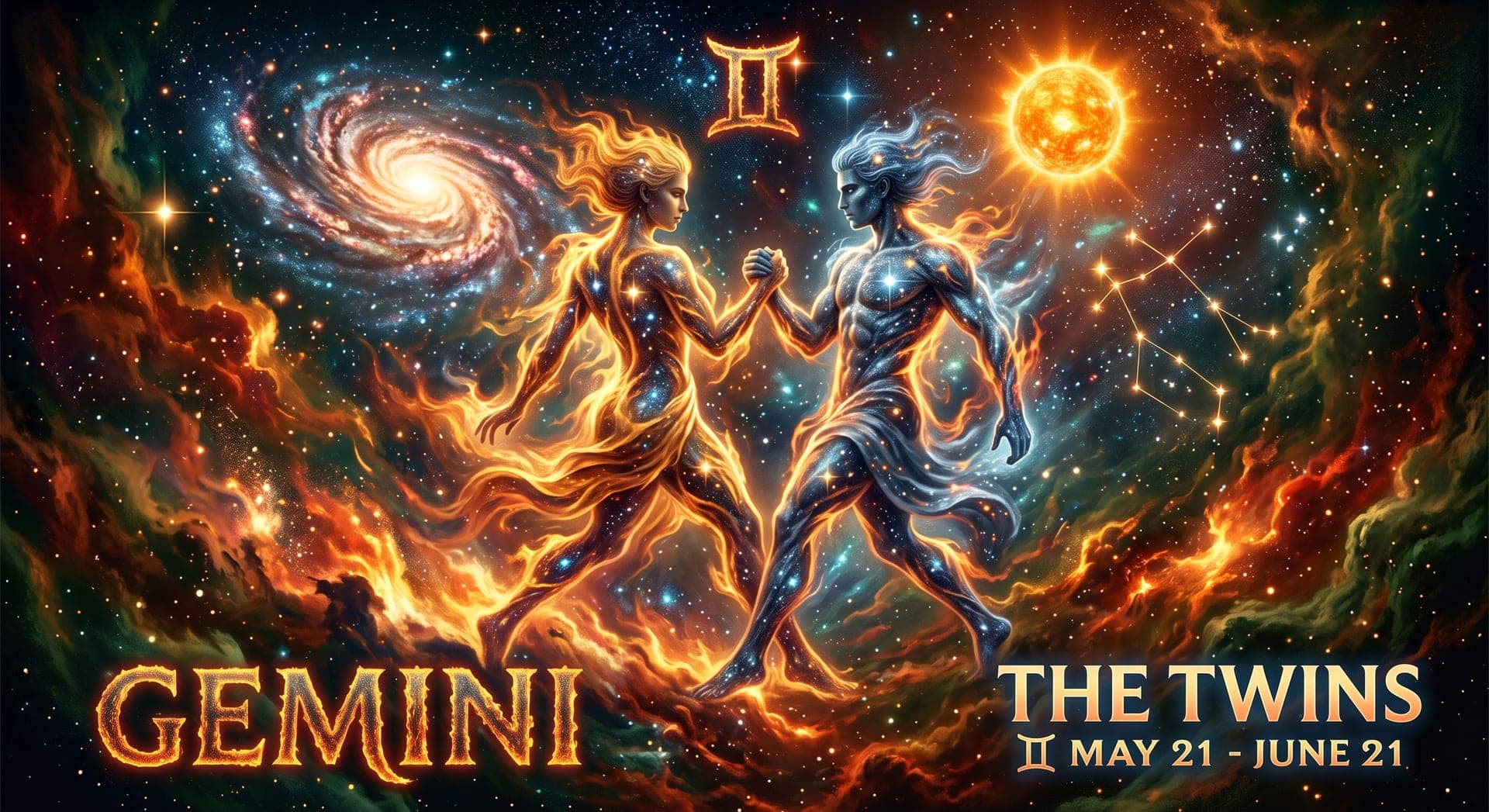
Gemini, the third sign of the zodiac, spans May 21 to June 20 and is symbolized by twins, representing the sign's dual nature and its ability to see multiple sides of any situation at once. Ruled by Mercury, the planet of communication and intellect, Gemini is widely regarded as one of the most talkative, curious, and quick-witted signs of the zodiac, constantly gathering new information and ideas. As an Air sign, Gemini approaches the world primarily through thought and conversation, thriving on mental stimulation and social interaction. Its Mutable modality reflects a restless adaptability, since Gemini tends to resist routine and prefers variety, novelty, and the freedom to change course whenever something more interesting comes along. People born under this sign are often skilled communicators, natural storytellers, and quick learners who can hold their own in nearly any conversation. That same adaptability can also come across as inconsistency, and Gemini's dual nature sometimes earns an unfair reputation for being two-faced, when in reality it simply reflects genuine curiosity about every side of a story.
Personality Traits
Strengths
- Quick-witted and intelligent
- Excellent communicator
- Adaptable to new situations
- Curious and eager to learn
- Charming and sociable
Weaknesses
- Prone to inconsistency
- Can be superficial
- Easily bored
- Indecisive
- Tendency to gossip
Compatible Signs
Fun Facts
- Gemini's twin symbol traces back to the Greek myth of Castor and Pollux, twin brothers placed among the stars as the constellation Gemini.
- Mercury, Gemini's ruling planet, was the swift Roman messenger god, reflecting the sign's associations with communication and quick thinking.
- Gemini is one of only a few zodiac signs represented by human figures rather than animals or objects.
- Notable Geminis include Marilyn Monroe, Kanye West, Angelina Jolie, and John F. Kennedy.
- Gemini season overlaps with the transition from spring to summer in the Northern Hemisphere, reflecting the sign's changeable, in-between nature.
Born on May 28
- 1759
William Pitt the Younger
English politician who became Britain's youngest Prime Minister at 24 and led the country through the French Revolutionary Wars.
- 1888
Jim Thorpe
American Olympic athlete and professional football player
- 1908
Ian Fleming
English author and former naval intelligence officer who created the James Bond spy novels.
- 1910
Rachel Kempson
English actress on stage and screen, and matriarch of the Redgrave acting dynasty.
- 1911
Thora Hird
English actress known for decades of film, stage, and television work including Last of the Summer Wine.
- 1912
Patrick White
Australian novelist and Nobel Prize laureate in Literature
- 1938
Jerry West
American basketball Hall of Famer and NBA logo inspiration
- 1944
Patricia Quinn
Northern Irish actress and singer best known for playing Magenta in The Rocky Horror Picture Show.
- 1960
Mary Portas
English retail consultant, broadcaster, and author known for television programmes on reviving struggling businesses.
- 1968
Kylie Minogue
Australian singer and actress
- 2000
Phil Foden
English footballer who came through Manchester City's academy to become a regular for club and country.

On This Day in History
- 585 BCE
A solar eclipse predicted by the philosopher Thales occurs during a battle between Lydia and Media, prompting the combatants to declare peace.
A total solar eclipse occurred during a pitched battle between the warring Lydian and Median armies along a river in Asia Minor, an eclipse the Greek philosopher Thales of Miletus is said to have accurately predicted; the sudden, unexpected darkness reportedly so unnerved both sides that they immediately halted fighting and negotiated a lasting peace.
- 934
King Æthelstan of England launches an invasion of Scotland by land and sea.
The campaign followed a broken peace agreement with the Scottish king Constantine II. Æthelstan's army marched deep into Scotland while a supporting fleet raided the coast further north. Though the campaign produced no decisive battle, it demonstrated the growing power of Æthelstan, the first king to claim overlordship of all Britain.
- 1533
Archbishop Thomas Cranmer declares King Henry VIII's marriage to Anne Boleyn valid, formalizing the break with the Catholic Church.
Archbishop Thomas Cranmer, having already annulled Henry VIII's first marriage days earlier, formally declared the king's secret marriage to the already-pregnant Anne Boleyn valid, a ruling that further solidified and legally cemented England's dramatic break from the authority of the Roman Catholic Church.
- 1533
Archbishop Thomas Cranmer declares the marriage of Henry VIII and Anne Boleyn valid.
The ruling came days after Cranmer had annulled Henry's marriage to Catherine of Aragon, formalizing a break with Rome since the Pope had refused to grant the annulment. The decision cleared the way for Anne's coronation as queen the following week and accelerated the English Reformation.
- 1588
The Spanish Armada departs Lisbon with over 130 ships, bound for an invasion of England.
The Spanish Armada, a massive fleet of over 130 ships carrying tens of thousands of soldiers and sailors under the command of the Duke of Medina Sidonia, departed Lisbon bound for an ambitious invasion of Protestant England, an expedition that would end in catastrophic failure amid storms and English naval resistance.
- 1588
The Spanish Armada sets sail from Lisbon bound for England.
The fleet of roughly 130 ships and 30,000 men, assembled by Philip II of Spain, aimed to overthrow Elizabeth I and end English support for Dutch Protestant rebels. Storms and English naval tactics in the Channel eventually scattered and destroyed much of the Armada, making its failure one of the most celebrated English victories of the era.
- 1644
Royalist troops under James Stanley, 7th Earl of Derby, storm Bolton and kill hundreds of its defenders during the English Civil War.
Bolton was a strongly Parliamentarian town, and after Royalist forces breached its defenses, several hundred soldiers and townspeople were killed in the ensuing violence, later remembered as the 'Bolton Massacre.' The episode became notorious as one of the bloodiest atrocities of the Civil War and was cited when Stanley himself was executed in the town five years later.
- 1754
A young George Washington leads a militia force to victory at the Battle of Jumonville Glen, the opening engagement of the French and Indian War.
A young Lieutenant Colonel George Washington, then just twenty-two years old, led a small colonial militia force in a brief but bloody skirmish at Jumonville Glen that killed a French officer, an engagement widely regarded by historians as the opening shots of the broader French and Indian War.
- 1754
Virginia militia under George Washington ambush a French force at the Battle of Jumonville Glen.
The skirmish in the Ohio Country, fought while Washington served as a young officer in British colonial forces, killed French commander Joseph Coulon de Jumonville and about a dozen of his men. The clash helped ignite the French and Indian War, the North American theater of the wider global conflict between Britain and France.
- 1871
The Paris Commune collapses after French government troops crush the radical socialist government during a brutal final week of fighting.
French government troops under Adolphe Thiers crushed the last remaining pockets of resistance from the radical socialist Paris Commune after a brutal week of intense street fighting and mass executions known as "Bloody Week," ending the roughly two-month experiment in revolutionary municipal self-government.
- 1905
Japan's navy under Admiral Togo Heihachiro annihilates Russia's Baltic Fleet at the Battle of Tsushima.
Japan's Combined Fleet under Admiral Togo Heihachiro annihilated nearly the entirety of Russia's Baltic Fleet at the climactic Battle of Tsushima, employing superior tactics and gunnery to sink or capture most of the Russian ships, a stunning victory that established Japan as a formidable major modern naval power on the world stage.
- 1907
The first Isle of Man TT race is held.
Run on closed public roads of the Isle of Man, a British Crown dependency, the Tourist Trophy began as a motorcycle race organized to escape speed restrictions on the British mainland. It grew into one of the most prestigious and dangerous events in motorsport, still held annually over the island's mountain course.
- 1936
Alan Turing submits his paper 'On Computable Numbers' for publication.
Written while Turing was at Cambridge, the paper introduced the concept of a universal computing machine, now known as the Turing machine, and addressed a major open problem in mathematical logic posed by David Hilbert. The work laid theoretical groundwork for modern computer science and later underpinned Turing's codebreaking work at Bletchley Park during the Second World War.
- 1937
The Volkswagen automobile manufacturing company is founded in Germany.
The Volkswagen automobile manufacturing company, whose name translates to "people's car," was founded in Germany under an initiative backed by the Nazi government to produce an affordable vehicle for ordinary German families, a project that, after a difficult postwar rebuilding period, evolved into one of the world's largest and most successful automakers.
- 1940
Belgium surrenders to Nazi Germany, ending the brief but intense Battle of Belgium.
Belgium formally surrendered to invading Nazi Germany after eighteen days of determined but ultimately overwhelmed fighting, ending the brief Battle of Belgium and exposing the vulnerable flank of retreating Allied forces who were simultaneously falling back toward the evacuation beaches of Dunkirk.
- 1961
British lawyer Peter Benenson's article 'The Forgotten Prisoners' is published in The Observer, launching Amnesty International.
The article called for an international campaign on behalf of people imprisoned for their political or religious beliefs, coining the term 'prisoners of conscience.' Published in London, the appeal quickly grew into a global human rights movement that today counts millions of members and has received the Nobel Peace Prize.
- 1974
The power-sharing executive established by the Sunningdale Agreement collapses in Northern Ireland.
The agreement, negotiated at Sunningdale Park in England in 1973, had established a power-sharing government between unionists and nationalists along with a proposed Council of Ireland. Sustained opposition from loyalist paramilitaries and a general strike organized by the Ulster Workers' Council forced the executive's resignation, prolonging the Troubles for decades.
- 1987
West German teenager Mathias Rust evades Soviet air defenses and lands a small private plane in Moscow's Red Square.
West German teenager Mathias Rust evaded extensive, supposedly formidable Soviet air defense systems and successfully landed a small rented Cessna aircraft in Moscow's Red Square, an audacious and embarrassing stunt that led to significant, sweeping purges within the Soviet military and air defense leadership ranks.
- 1998
Pakistan conducts its first nuclear weapons tests, codenamed Chagai-I, in response to India's tests weeks earlier.
Five underground nuclear devices were detonated in the Chagai district of Balochistan, confirming Pakistan's status as a nuclear-armed state. The tests triggered international sanctions and cemented a nuclear rivalry with neighboring India that continues to shape South Asian security today.
- 2017
Takuma Sato becomes the first Japanese and first Asian driver to win the Indianapolis 500.
Japanese driver Takuma Sato won the prestigious Indianapolis 500 auto race in a closely contested finish, becoming the first Japanese-born and first Asian driver ever to win the historic American open-wheel racing event since its founding in 1911, a milestone he repeated with a second victory three years later.