What’s Observed on November 30
Born on November 30: Sagittarius ♐
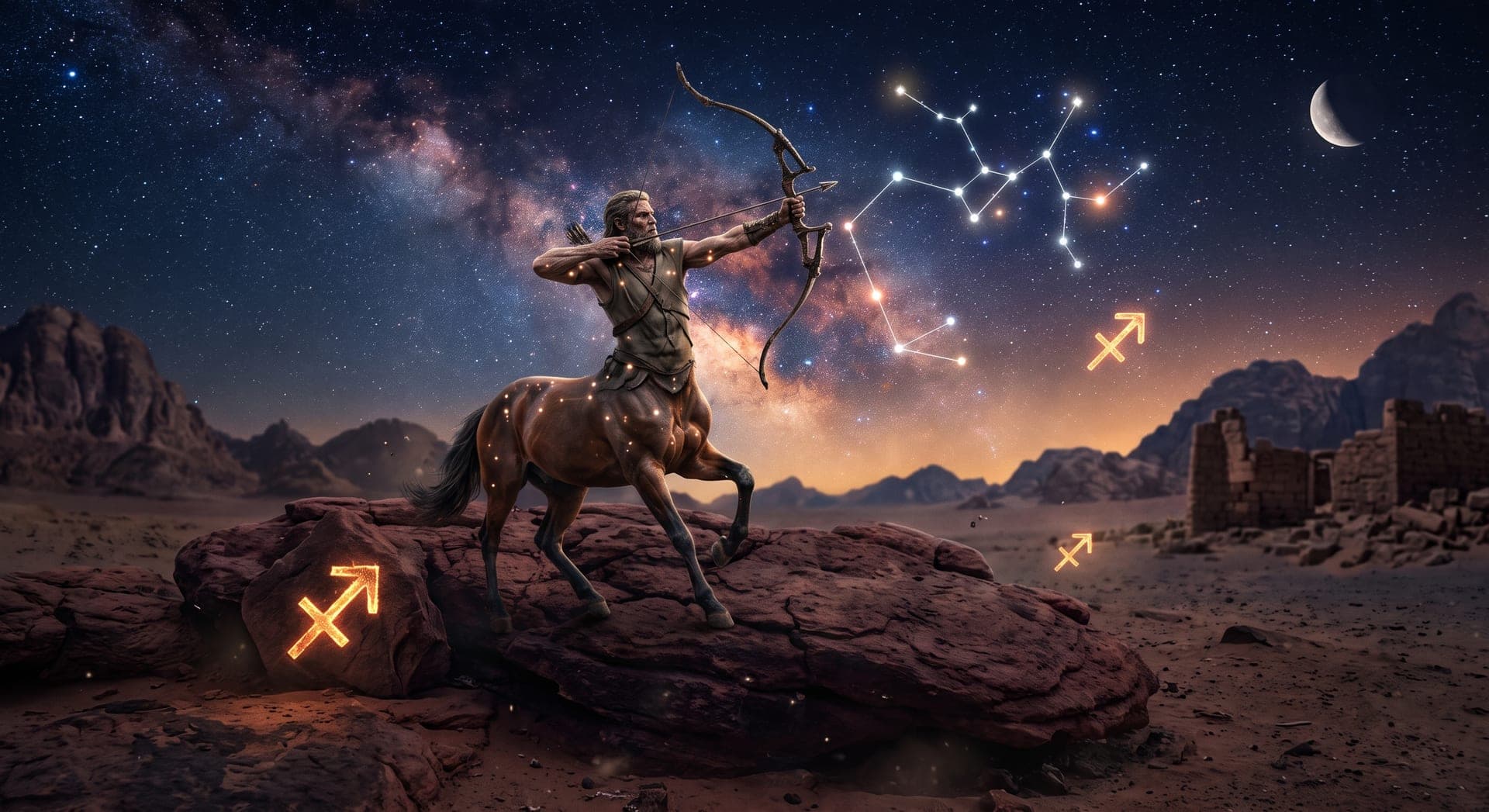
Sagittarius, the ninth sign of the zodiac, spans November 22 to December 21 and is symbolized by the archer, typically depicted as a centaur drawing a bow, representing a restless pursuit of knowledge, adventure, and far-off horizons. Ruled by Jupiter, the largest planet in the solar system and a symbol of growth, luck, and abundance, Sagittarius is widely regarded as one of the most optimistic and freedom-loving signs of the zodiac. As a Fire sign, Sagittarius approaches life with enthusiasm and a genuine hunger for new experiences, whether through literal travel or intellectual and philosophical exploration. Its Mutable modality reflects a deep aversion to routine and confinement, always looking toward the next adventure rather than settling into fixed patterns. People born under this sign are often drawn to travel, higher education, philosophy, or any pursuit that broadens their horizons and understanding of the world. Sagittarius's honesty and optimism make it excellent company, though its blunt directness and restless need for freedom can sometimes come across as tactless or noncommittal to those seeking more stability.
Personality Traits
Strengths
- Adventurous and open to new experiences
- Optimistic and enthusiastic
- Honest and direct
- Philosophical and broad-minded
- Generous and good-humored
Weaknesses
- Tactlessly blunt
- Impatient with routine
- Prone to overpromising
- Restless and commitment-averse
- Careless with details
Compatible Signs
Fun Facts
- Sagittarius's symbol, a centaur drawing a bow and arrow, connects to the Greek myth of Chiron, a wise and scholarly centaur unlike the more unruly members of his kind.
- Jupiter, Sagittarius' ruling planet, is the largest planet in the solar system, reflecting the sign's association with expansion, abundance, and big-picture thinking.
- Sagittarius is one of two zodiac signs, along with Capricorn, represented by a hybrid creature combining human and animal features.
- Notable Sagittarians include Taylor Swift, Walt Disney, Winston Churchill, and Jimi Hendrix.
- Sagittarius season spans the lead-up to the winter solstice, a period historically associated with travel, feasting, and philosophical reflection in many cultures.
Born on November 30
- 1554
Philip Sidney
English poet, courtier and soldier regarded as the model Elizabethan gentleman, celebrated for his sonnet sequence Astrophil and Stella and the prose romance Arcadia; he died from a battle wound sustained fighting the Spanish in the Netherlands.
- 1835
Mark Twain
American novelist known for "The Adventures of Huckleberry Finn"
- 1874
Lucy Maud Montgomery
Canadian author of "Anne of Green Gables"
- 1874
Winston Churchill
British statesman who served as Prime Minister during the Second World War, rallying the nation with his wartime speeches and later leading a second government in the 1950s; he was also awarded the Nobel Prize in Literature in 1953.
- 1889
Edgar Adrian, 1st Baron Adrian
English physiologist who shared the 1932 Nobel Prize in Physiology or Medicine with Charles Sherrington for pioneering work recording the electrical activity of individual nerve cells, foundational to modern neuroscience.
- 1929
Dick Clark
American television personality and producer
- 1935
Woody Allen
American filmmaker and actor
- 1937
Ridley Scott
English film director from South Shields whose genre-defining films include Alien, Blade Runner and Gladiator, the latter winning the Academy Award for Best Picture.
- 1955
Billy Idol
English rock musician
- 1959
Lorraine Kelly
Scottish television presenter and journalist who has hosted ITV's daytime show Lorraine for decades, becoming one of British breakfast television's most familiar faces after beginning her career as a news reporter in Scotland.
- 1960
Gary Lineker
English former footballer who won the Golden Boot as the 1986 World Cup's top scorer and later became the long-running host of the BBC's Match of the Day, one of British television's most recognizable sports presenters.
- 1966
John Bishop
English stand-up comedian from Liverpool who rose to mainstream fame in the late 2000s and went on to host BBC entertainment shows including Sunday Night at the Palladium.
- 1990
Magnus Carlsen
Norwegian chess grandmaster and World Chess Champion
On This Day in History
- 1707
British forces and their Creek allies fail to capture the Spanish outpost of Pensacola during Queen Anne's War.
British colonial forces and their Creek Native American allies attempted to seize the Spanish-held outpost of Pensacola during the broader conflict of Queen Anne's War but were ultimately repelled by the fort's defenders. The failed assault reflected the ongoing imperial rivalry between Britain, Spain, and France for control of contested territory along the southeastern edges of colonial North America.
- 1718
King Charles XII of Sweden is killed while besieging a fortress in Norway.
King Charles XII of Sweden, one of history's most celebrated warrior monarchs, was killed by a stray shot while inspecting frontline trenches during a siege in Norway, though the exact circumstances of his death remain debated by historians. His death effectively ended Sweden's era as a dominant European military power following decades of costly warfare.
- 1782
American and British representatives sign preliminary peace articles in Paris, laying the groundwork for ending the Revolutionary War.
American negotiators Benjamin Franklin, John Adams, and John Jay reached preliminary agreement with British representatives on terms ending the Revolutionary War, securing recognition of American independence along with generous territorial boundaries. These preliminary articles formed the basis for the definitive Treaty of Paris signed the following year.
- 1782
Representatives from the United States and Great Britain sign preliminary peace articles in Paris, effectively ending the American Revolutionary War.
The preliminary treaty, negotiated by American commissioners including Benjamin Franklin, John Adams and John Jay, recognized US independence and set the boundaries of the new nation. It formed the basis of the definitive Treaty of Paris signed the following September, formally concluding Britain's war against its rebellious American colonies.
- 1786
The Grand Duchy of Tuscany becomes the first modern state to formally abolish the death penalty.
The Grand Duchy of Tuscany, under the enlightened reforms of Grand Duke Leopold I, became the first modern state in the world to formally abolish capital punishment, reflecting broader Enlightenment-era ideas about justice and human dignity. The reform was influenced significantly by philosopher Cesare Beccaria's influential writings against the death penalty.
- 1803
Spanish officials formally transfer the Louisiana Territory to France in a ceremony in New Orleans.
Spanish colonial officials formally transferred control of the vast Louisiana Territory to France in a ceremony in New Orleans, honoring an earlier secret treaty, only for France to sell the same territory to the United States in the Louisiana Purchase just weeks later. The rapid succession of transfers dramatically expanded the young United States westward.
- 1853
The Russian navy destroys the Ottoman fleet at the Battle of Sinop, a key event leading to the Crimean War.
The Russian navy's decisive destruction of the Ottoman fleet at Sinop, while a significant tactical victory, alarmed European powers concerned about growing Russian influence over the strategically vital Black Sea straits. The battle became a key factor drawing Britain and France into the subsequent Crimean War against Russia.
- 1853
The Imperial Russian Navy destroys the Ottoman fleet at the Battle of Sinop, an attack that outraged British public opinion in the lead-up to the Crimean War.
Russian ships under Admiral Pavel Nakhimov annihilated the anchored Ottoman squadron at Sinop on the Black Sea coast, killing thousands of Ottoman sailors. Press coverage in Britain, an ally of the Ottoman Empire, portrayed the attack as a massacre and helped build public support for Britain's declaration of war on Russia the following spring.
- 1872
Scotland and England play the first official international football match, ending in a scoreless draw in Glasgow.
Scotland and England competed in the first officially recognized international football match in the sport's history, played before a modest crowd in Glasgow and ending in a scoreless draw. The historic match helped establish standardized rules and traditions for future international competition in what would become the world's most popular sport.
- 1872
Scotland and England play the first-ever international football match, a 0-0 draw at Hamilton Crescent in Glasgow.
Organized by the Football Association and the newly formed Scottish Football Association, the match drew around 4,000 spectators and pitted an all-English side against a Scottish team drawn entirely from Queen's Park F.C. Though goalless, the fixture is regarded as the birth of international football and launched the oldest international rivalry in the sport.
- 1936
London's Crystal Palace, the iconic glass exhibition hall, is destroyed by fire.
London's Crystal Palace, the enormous cast-iron and glass exhibition hall originally built for the Great Exhibition of 1851 and later relocated, was destroyed in a rapidly spreading fire visible for miles across the city. The loss of the beloved architectural landmark, by then a cherished entertainment venue, was mourned as the end of a Victorian-era icon.
- 1936
The Crystal Palace, the vast Victorian iron-and-glass exhibition hall, is destroyed by fire in London.
Built for the Great Exhibition of 1851 and later relocated to Sydenham Hill, the structure had become a beloved South London landmark hosting concerts and exhibitions. The blaze, visible for miles across the city, consumed the building within hours, and it was never rebuilt, leaving only the surrounding park to bear its name.
- 1939
Soviet forces invade Finland, beginning the Winter War.
The Soviet Union launched a large-scale invasion of Finland following Finnish refusal to cede strategic territory near Leningrad, expecting a swift victory given the vast disparity in military size. Finnish forces mounted a fiercely effective defense using their knowledge of the harsh winter terrain, inflicting disproportionate losses on Soviet troops before eventually being forced to accept a negotiated peace.
- 1966
Barbados becomes independent from the United Kingdom.
The Caribbean island, a British colony since the 1620s, gained full sovereignty after a decade of gradual self-governance within and beyond the West Indies Federation. Errol Barrow became the country's first prime minister, and Barbados remained a Commonwealth realm with the British monarch as head of state until becoming a republic in 2021.
- 1967
The People's Republic of Southern Yemen gains independence from the United Kingdom.
The new state emerged from the former Aden Colony and Protectorate after years of guerrilla warfare against British rule, ending more than a century of British presence in the strategically vital port of Aden. It later merged with North Yemen in 1990 to form the unified Republic of Yemen.
- 1995
US President Bill Clinton visits Northern Ireland and addresses a large rally at Belfast City Hall in support of the peace process.
Clinton's visit, the first by a sitting US president to Northern Ireland, came a year after paramilitary ceasefires had taken hold and helped sustain momentum toward what became the 1998 Good Friday Agreement. His trip, which also included stops in Derry and Dublin, underscored growing American involvement in resolving the Troubles.
- 1999
British Aerospace and Marconi Electronic Systems merge to form BAE Systems, Europe's largest defense contractor.
The £7.7 billion deal combined British Aerospace's aircraft manufacturing and land systems businesses with Marconi's electronics and naval systems arm, creating a company with global reach across military aircraft, shipbuilding and defense electronics. BAE Systems went on to become one of the world's largest arms manufacturers and a cornerstone of Britain's defense industrial base.
- 2005
John Sentamu becomes the first Black archbishop in the Church of England, enthroned as the 97th Archbishop of York.
Sentamu, born in Uganda, had fled Idi Amin's regime and settled in Britain, where he trained for the priesthood after an earlier legal career. His enthronement as the second-most senior cleric in the Church of England marked a landmark moment for diversity within one of Britain's most historic institutions.
- 2021
Barbados becomes a republic, removing the British monarch as its head of state.
The transition, marking the 55th anniversary of Barbadian independence from Britain, saw the country's governor-general Sandra Mason sworn in as its first president in a ceremony attended by Prince Charles. Barbados remained within the Commonwealth even as it completed its formal separation from the British Crown.
- 2022
OpenAI publicly launches ChatGPT, an AI chatbot that rapidly gains widespread global adoption.
OpenAI's public release of ChatGPT introduced millions of users to advanced conversational artificial intelligence capable of engaging in humanlike dialogue, writing assistance, and complex problem-solving. The chatbot's rapid, unprecedented adoption sparked intense global interest in generative AI technology and accelerated massive investment and competition across the technology industry.