
What’s Observed on October 3
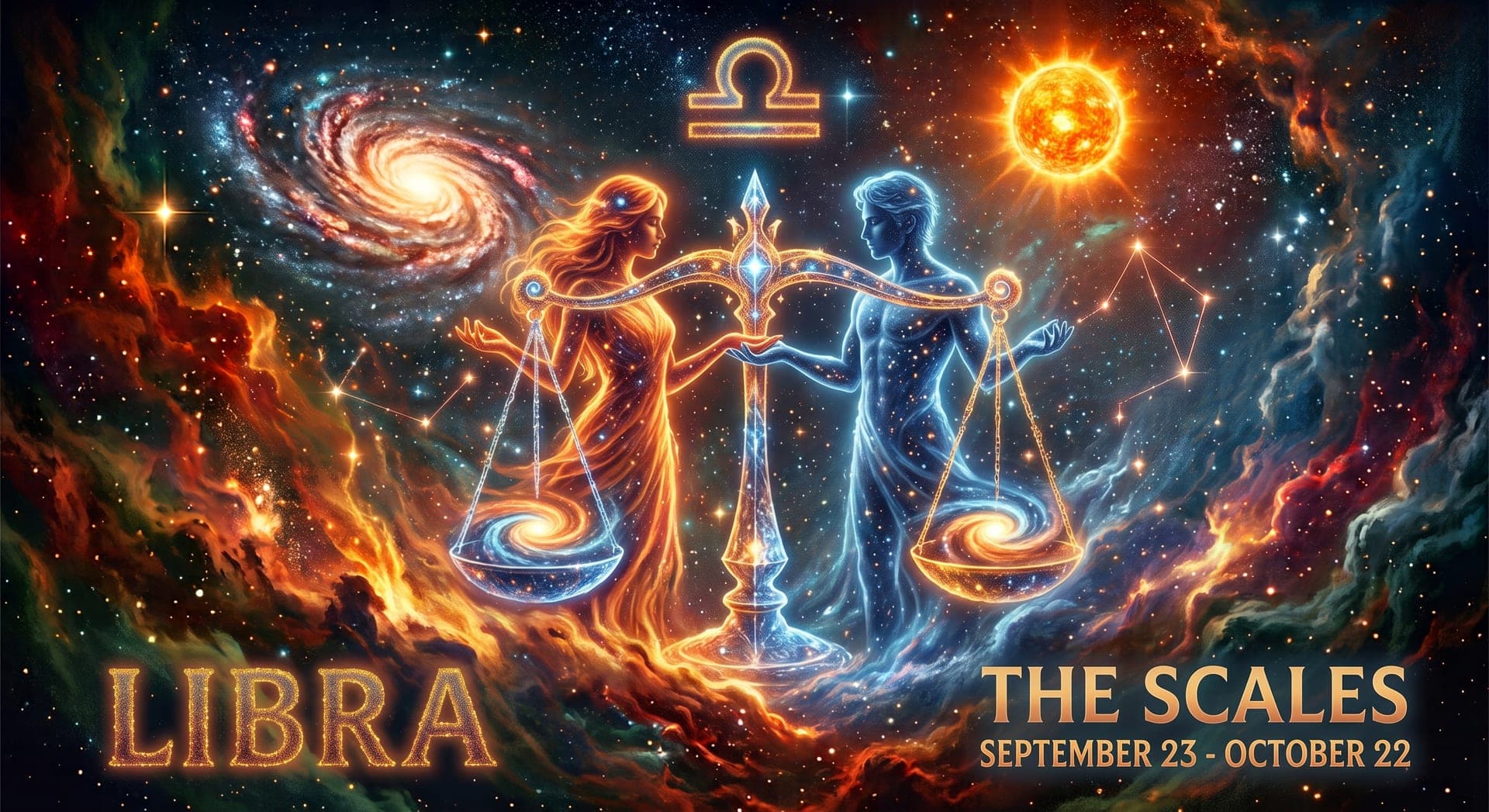
Born on October 3: Libra ♎
Libra, the seventh sign of the zodiac, spans September 23 to October 22 and is symbolized by the scales, the only zodiac symbol representing an inanimate object rather than a living creature, reflecting the sign's deep concern with balance, fairness, and justice. Ruled by Venus, the planet of love and beauty, Libra shares Taurus's appreciation for aesthetics and pleasure but channels it primarily through relationships, partnership, and social harmony. As an Air sign, Libra approaches the world intellectually and socially, valuing thoughtful conversation and diplomatic problem-solving over confrontation. Its Cardinal modality places it at the very start of autumn, beginning right at the equinox when day and night briefly achieve perfect balance. People born under this sign are often natural mediators, drawn to fairness and equilibrium in their relationships and surroundings, sometimes to the point of struggling to make decisions that might upset that balance. Libra's charm, diplomacy, and genuine desire to see all sides of an issue make it a valued friend and partner, even as its conflict-avoidance can occasionally leave real problems unresolved.
Personality Traits
Strengths
- Strong sense of fairness and justice
- Diplomatic peacemaker
- Charming and sociable
- Appreciates beauty and harmony
- Excellent at seeing multiple perspectives
Weaknesses
- Notoriously indecisive
- Conflict-avoidant to a fault
- Can be superficial
- People-pleasing tendencies
- Struggles with confrontation
Compatible Signs
Fun Facts
- Libra is the only zodiac sign represented by an inanimate object, the scales, rather than an animal or person.
- Libra's scales symbolize balance and justice, echoing the sign's association with fairness, harmony, and diplomacy.
- Venus, Libra's ruling planet, gives the sign its love of beauty, art, and romantic partnership, similar to Taurus but expressed through relationships rather than material comfort.
- As a Cardinal sign, Libra initiates autumn, beginning at the September equinox, when day and night are of equal length, fitting for a sign obsessed with balance.
- Notable Libras include Mahatma Gandhi, Kim Kardashian, John Lennon, and Will Smith.
Born on October 3
- 1900
Thomas Wolfe
American novelist
- 1911
Michael Hordern
English actor known for his distinguished stage career and character roles in films such as Where Eagles Dare and as the narrator of Paddington.
- 1916
James Herriot
English veterinary surgeon and author whose semi-autobiographical books, including All Creatures Great and Small, became beloved bestsellers and the basis for popular television adaptations.
- 1925
Gore Vidal
American novelist and essayist
- 1945
Christopher Bruce
English dancer and choreographer who led the Rambert Dance Company and created acclaimed works blending ballet with contemporary dance.
- 1949
Lindsey Buckingham
American guitarist and singer for Fleetwood Mac
- 1954
Stevie Ray Vaughan
American blues guitarist
- 1957
Tim Westwood
English radio and television presenter who championed hip hop music on BBC Radio 1 and 1Xtra for over two decades.
- 1961
Rebecca Stephens
English journalist and mountaineer who became the first British woman to reach the summit of Mount Everest, in 1993.
- 1964
Clive Owen
English actor known for films including Children of Men, Closer and Sin City.
- 1969
Gwen Stefani
American singer known for No Doubt and her solo career
- 1973
Lena Headey
British actress best known for playing Cersei Lannister in the television series Game of Thrones.
- 1981
Zlatan Ibrahimovic
Swedish professional footballer

On This Day in History
- 52 BCE
Vercingetorix, leader of the Gauls, surrenders to Julius Caesar's Roman forces, concluding the Gallic Wars.
After years of fierce resistance against Roman conquest, the Gallic chieftain Vercingetorix surrendered following the disastrous siege at Alesia, where Caesar's forces had constructed elaborate double fortifications to simultaneously besiege the Gauls and repel a relief army. Vercingetorix was later paraded through Rome as a captive before his execution, and his defeat effectively completed Rome's conquest of Gaul, a territory roughly corresponding to modern France.
- 52 BCE
The Gallic chieftain Vercingetorix surrendered to Julius Caesar following the siege of Alesia, effectively ending the Gallic Wars.
Vercingetorix had united the Gallic tribes in a last major revolt against Roman conquest, but Caesar's double siege lines at Alesia starved out the Gallic relief effort and forced surrender. Vercingetorix was imprisoned for years before being paraded in Caesar's triumph in Rome and executed, and Gaul's incorporation into the Roman Republic reshaped the ancient world for centuries.
- 42 BCE
At the Battle of Philippi, forces loyal to Mark Antony and Octavian clash with Caesar's assassins; Cassius takes his own life.
In the second and decisive engagement at Philippi in Greece, the forces of Mark Antony and Octavian, avenging Julius Caesar's assassination, overwhelmed the army led by Cassius and Brutus. Cassius, mistakenly believing the battle already lost, took his own life before the actual outcome was determined, and Brutus followed suit days later after his own subsequent defeat, effectively ending organized senatorial resistance to the Second Triumvirate.
- 1574
The siege of Leiden concludes when Dutch rebel forces lift the Spanish blockade during the Eighty Years' War.
After enduring a grueling months-long siege by Spanish forces during the Eighty Years' War, the Dutch city of Leiden was finally relieved when rebel forces deliberately flooded the surrounding countryside to float supply boats to the starving population, forcing the Spanish to withdraw. The relief is still celebrated annually in Leiden and led directly to the founding of the University of Leiden as a reward for the city's resistance.
- 1683
Qing naval forces receive the surrender of Taiwan's Kingdom of Tungning.
Qing dynasty naval forces accepted the surrender of the Kingdom of Tungning, a Ming loyalist regime that had controlled Taiwan for over two decades under the descendants of the pirate-turned-warlord Koxinga. The surrender brought Taiwan under Qing Chinese control for the first time, beginning a period of Chinese administration that lasted until the island's cession to Japan in 1895.
- 1712
The Duke of Montrose issued an arrest warrant for the Scottish outlaw Rob Roy MacGregor.
Once a legitimate cattle trader, Rob Roy was declared an outlaw after defaulting on a loan from the Duke of Montrose, sparking a long-running feud between the two. His subsequent exploits as a fugitive, cattle rustler and Jacobite sympathiser made him a folk hero of the Scottish Highlands, later romanticised in Walter Scott's 1817 novel Rob Roy.
- 1789
President George Washington proclaims the first national Thanksgiving holiday, for November 26, 1789.
Responding to a congressional request, President Washington issued a proclamation designating a day of public thanksgiving and prayer, framing it as an opportunity for citizens to express gratitude for the successful conclusion of the Revolutionary War and the establishment of the new constitutional government. The observance was not yet an annual tradition, occurring only sporadically in the following decades.
- 1863
President Lincoln designates the last Thursday in November as the permanent annual Thanksgiving observance.
After years of lobbying by magazine editor Sarah Josepha Hale, President Lincoln formally established Thanksgiving as a fixed annual national holiday amid the Civil War, intending the observance to help foster unity and healing within a deeply divided nation. The permanent late-November date remained standard until President Franklin Roosevelt briefly adjusted it for economic reasons in the 1930s before Congress fixed it by law to the fourth Thursday in November.
- 1932
Iraq gained formal independence from Britain, ending the League of Nations mandate that had governed the territory since the First World War.
Britain had administered Iraq as a mandate since the collapse of the Ottoman Empire, installing the Hashemite monarchy under King Faisal I. Independence came with a treaty preserving British military bases and influence over Iraqi foreign policy, and Iraq joined the League of Nations that same month as the first fully sovereign Middle Eastern member.
- 1935
Italy invades Ethiopia, initiating the Second Italo-Ethiopian War.
Italian dictator Benito Mussolini launched an invasion of Ethiopia, one of the few African nations to have successfully resisted earlier European colonization, using vastly superior military technology including aircraft and chemical weapons against poorly equipped Ethiopian forces. The League of Nations' ineffective response to the aggression significantly undermined confidence in the organization's ability to prevent international conflict in the years leading up to World War II.
- 1935
Italian forces under Benito Mussolini invaded Ethiopia, beginning the Second Italo-Ethiopian War.
The invasion, launched without a formal declaration of war, aimed to avenge Italy's earlier defeat at Adwa in 1896 and expand Mussolini's colonial empire in East Africa. The League of Nations condemned the aggression but failed to stop it, exposing the organisation's weakness and foreshadowing the wider collapse of collective security before World War II.
- 1952
Britain successfully tests its first nuclear weapon in Australia's Montebello Islands.
Britain successfully detonated its first atomic weapon aboard a ship anchored off Australia's remote Montebello Islands, becoming the third nation after the United States and Soviet Union to develop nuclear weapons capability. The test, conducted with Australian government cooperation, later raised significant concerns about radioactive contamination and the treatment of nearby Indigenous communities.
- 1952
The United Kingdom detonated its first atomic bomb, codenamed Operation Hurricane, off the Montebello Islands in Western Australia.
The test made Britain the third nation, after the United States and Soviet Union, to possess nuclear weapons, and it was conducted aboard a decommissioned frigate to study the effects of a ship-smuggled bomb. It was a major milestone in Britain's postwar drive for an independent nuclear deterrent and its status as a global power during the Cold War.
- 1962
American astronaut Wally Schirra launched into orbit aboard Sigma 7 as part of NASA's Mercury program.
The six-orbit mission was designed primarily as an engineering test of spacecraft systems and fuel conservation rather than scientific research, and it splashed down within five miles of its target recovery ship. Schirra's flight demonstrated growing precision in American spaceflight operations as NASA prepared for the longer missions of the Gemini and Apollo programs.
- 1981
The 1981 Irish republican hunger strike at the Maze Prison in Northern Ireland ended after seven months.
Led initially by Bobby Sands, who died in May after 66 days without food, the strike protested the British government's withdrawal of political status for paramilitary prisoners. Ten strikers died before families intervened to end the protest, and the episode significantly boosted political support for Sinn Fein while deepening bitterness over British policy in Northern Ireland.
- 1990
Germany reunifies as East Germany is dissolved and incorporated into West Germany.
Following the collapse of East Germany's Communist government and the fall of the Berlin Wall the previous year, East Germany formally dissolved and its territory was incorporated into the Federal Republic of Germany, reunifying a nation divided since the end of World War II. The reunification required enormous economic and social integration efforts that continued to shape German politics for decades afterward.
- 1990
East Germany was formally dissolved and its territory reunified with West Germany, ending 45 years of postwar division.
Reunification followed the collapse of Communist rule in East Germany the previous year and the fall of the Berlin Wall, negotiated through the Two Plus Four Agreement among the two German states and the wartime Allied powers. The date is now celebrated annually as German Unity Day, marking the end of the Cold War division of Europe's largest economy.
- 1995
O.J. Simpson is acquitted in his high-profile murder trial.
After a lengthy, intensely publicized trial covering the murders of Nicole Brown Simpson and Ron Goldman, a jury acquitted former football star O.J. Simpson of criminal charges, a verdict that exposed deep and lasting racial divisions in American public opinion regarding the case and the broader criminal justice system. Simpson was later found liable for the deaths in a subsequent civil trial.
- 1995
Former football star O.J. Simpson was acquitted of the murders of Nicole Brown Simpson and Ron Goldman.
The verdict, delivered after a lengthy and highly publicised trial that exposed deep racial divisions in American attitudes toward the police and justice system, was watched live by an estimated 100 million Americans. The case remains one of the most scrutinised criminal trials in U.S. history and later inspired numerous documentaries and dramatisations.
- 2013
A boat carrying migrants from Libya sank off the Italian island of Lampedusa, killing more than 360 people.
The overcrowded vessel, carrying mostly Eritrean and Somali migrants, caught fire and capsized within sight of the shore, becoming one of the deadliest incidents of the Mediterranean migration crisis. The disaster prompted Italy to launch the Mare Nostrum search-and-rescue operation and intensified European debate over migration policy.