
What’s Observed on October 26
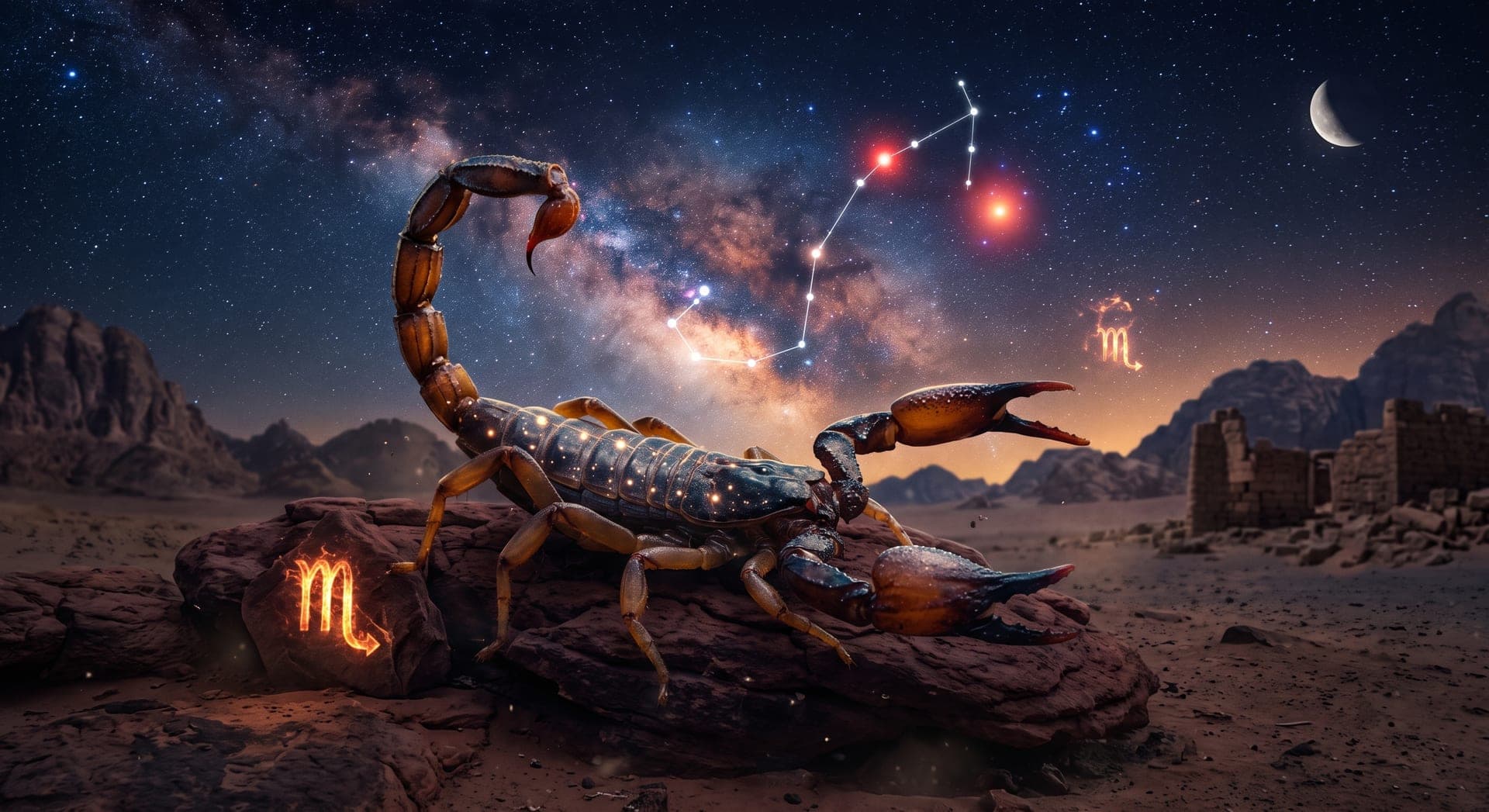
Born on October 26: Scorpio ♏
Scorpio, the eighth sign of the zodiac, spans October 23 to November 21 and is symbolized by the scorpion, a creature known for its defensive intensity and the sting it delivers when provoked. Traditionally ruled by Mars and, in modern astrology, by Pluto, the planet of transformation and the underworld, Scorpio carries a reputation as one of the most intense and emotionally powerful signs of the zodiac. As a Water sign, Scorpio experiences the world through deep, often hidden, emotion, guarding its inner life carefully while remaining acutely perceptive of others. Its Fixed modality gives Scorpio remarkable determination and resilience, able to endure hardship and pursue long-term goals with singular focus. People born under this sign are often drawn to work involving psychology, investigation, transformation, or anything requiring the ability to see beneath the surface. Scorpio's loyalty and passion run deep for those it trusts, but that same intensity can curdle into jealousy, suspicion, or an unwillingness to forgive when trust is broken.
Personality Traits
Strengths
- Deeply passionate and determined
- Fiercely loyal to those they trust
- Resourceful and strategic
- Highly perceptive
- Emotionally resilient
Weaknesses
- Prone to jealousy and possessiveness
- Secretive and guarded
- Can be vindictive when wronged
- Distrustful of others
- Prone to obsessiveness
Compatible Signs
Fun Facts
- Scorpio's scorpion symbol connects to the Greek myth of the scorpion sent by Gaia to kill the hunter Orion, with both later placed among the stars.
- Scorpio has two ruling planets: Mars in traditional astrology, and Pluto, discovered in 1930, in the modern system.
- Scorpio is often mistakenly grouped with the Fire signs due to its intensity, but it is actually a Water sign, driven by deep emotion rather than raw aggression.
- Notable Scorpios include Pablo Picasso, Marie Curie, Leonardo DiCaprio, and Hillary Clinton.
- Some astrological traditions associate Scorpio with a secondary, more elevated symbol, the eagle or phoenix, representing transformation and rebirth.
Born on October 26
- 1685
Domenico Scarlatti
Italian Baroque composer
- 1759
Georges Danton
French Revolutionary leader
- 1800
Helmuth von Moltke the Elder
Prussian field marshal
- 1803
Joseph Hansom
English architect and inventor who designed Birmingham Town Hall and patented the horse-drawn Hansom cab.
- 1854
C. W. Post
American founder of Post Foods
- 1874
Martin Lowry
English chemist known for his work on molecular optical rotation and for co-developing the Bronsted-Lowry theory of acids and bases.
- 1894
Florence Nagle
English racehorse owner and trainer who fought a landmark legal battle to win women the right to hold their own training licences.
- 1911
Mahalia Jackson
American gospel singer
- 1911
Sorley MacLean
Scottish Gaelic poet widely regarded as one of the most important Gaelic-language writers of the 20th century.
- 1916
Francois Mitterrand
President of France
- 1942
Bob Hoskins
English actor celebrated for roles in Mona Lisa and Who Framed Roger Rabbit.
- 1947
Hillary Clinton
American Secretary of State and senator
- 1952
Andrew Motion
English poet and biographer who served as Poet Laureate of the United Kingdom from 1999 to 2009.
- 1962
Cary Elwes
English actor best known for starring as Westley in The Princess Bride.
- 1967
Keith Urban
Australian country music singer
- 1982
Nicola Adams
English boxer who became the first woman to win an Olympic gold medal in boxing, at the 2012 London Games.

On This Day in History
- 1341
A Byzantine civil war formally begins as John VI Kantakouzenos is proclaimed rival emperor.
Byzantine noble John VI Kantakouzenos had himself proclaimed emperor in opposition to the young reigning Emperor John V Palaiologos, launching a destructive civil war that significantly weakened the already declining Byzantine Empire in the years before Constantinople's eventual fall to the Ottomans.
- 1597
Korean Admiral Yi Sun-sin achieves a remarkable naval victory, routing a Japanese fleet of roughly 300 ships with only 13 vessels.
Korean naval commander Yi Sun-sin employed superior tactics and knowledge of local currents to achieve one of history's most lopsided naval victories, destroying dozens of Japanese ships during the Battle of Myeongnyang despite being vastly outnumbered, a triumph still celebrated as a defining moment in Korean military history.
- 1640
The Treaty of Ripon restores peaceful relations between Scotland and King Charles I of England.
The Treaty of Ripon concluded the Bishops' Wars between Scotland and England, requiring King Charles I to pay Scottish forces occupying northern England, a financial burden that forced Charles to summon what became known as the Long Parliament, setting in motion events leading toward the English Civil War.
- 1640
The Treaty of Ripon is signed, ending the Second Bishops' War and restoring peace between Covenanter Scotland and King Charles I.
The treaty concluded a brief but humiliating campaign for Charles I, whose army had been driven back by a Scottish force protesting his attempts to impose Anglican-style worship on the Scottish church. Under its terms England agreed to pay the occupying Scots a daily allowance while they held Northumberland and County Durham. The costly settlement forced Charles to recall Parliament after eleven years of personal rule, setting in motion the crisis that led to the English Civil War.
- 1774
The First Continental Congress concludes its initial proceedings in Philadelphia.
Having drafted a formal petition to King George III and established initial coordinated colonial resistance measures, the First Continental Congress adjourned, agreeing to reconvene the following spring if grievances remained unaddressed, a meeting that ultimately took place amid the outbreak of actual armed conflict.
- 1813
A force of British regulars, Canadian militia and Mohawk warriors defeats an invading United States Army at the Battle of Chateauguay during the War of 1812.
Fought south of Montreal, the battle was part of a larger American campaign aimed at seizing the city and cutting British Canada in two. Lieutenant-Colonel Charles de Salaberry's outnumbered defenders used the wooded terrain and a barrage of bugle calls to convince the Americans they faced a much larger force. The rout helped preserve British control of Lower Canada and became a celebrated moment in Canadian military memory.
- 1825
The Erie Canal opens, establishing a direct water passage from the Hudson River to Lake Erie.
The Erie Canal officially opened after eight years of construction, creating a vital water transportation link between the Great Lakes region and the Atlantic seaboard via the Hudson River, dramatically reducing shipping costs and spurring rapid economic development throughout New York State and the broader Midwest.
- 1825
The Erie Canal officially opens, linking the Hudson River to Lake Erie and connecting the Atlantic seaboard to the Great Lakes.
Governor DeWitt Clinton's 363-mile waterway, dug largely by hand across upstate New York, cut freight costs between the Midwest and New York City by more than ninety percent. Its success spurred a canal-building boom across the United States and turned New York into the country's leading commercial port, cementing its position ahead of rival cities on the Eastern Seaboard.
- 1859
The Royal Charter Storm kills at least eight hundred people across the British Isles, including hundreds aboard the steam clipper Royal Charter wrecked off the Welsh coast.
The hurricane-force storm struck as the Royal Charter, returning from the Australian gold fields, was driven onto rocks near Anglesey within sight of land. Meteorologist Robert FitzRoy, struck by the scale of the disaster, used it to help develop Britain's first storm-warning system and coined the term 'weather forecast.' The Met Office's later severe-weather naming convention traces its origins to this storm.
- 1863
The Football Association is founded in London, establishing the first governing body for association football and formalising a common set of rules.
Representatives of a dozen London-area clubs and schools met at the Freemasons' Tavern to settle disputes over handling the ball and hacking opponents, disagreements that would soon split the game into football and rugby codes. The rules the FA drew up became the basis for the modern sport of soccer, which spread from England across the British Empire and eventually the world.
- 1881
Wyatt Earp and Doc Holliday participate in the famous Gunfight at the O.K. Corral in Tombstone, Arizona.
Lawmen Wyatt Earp, his brothers, and Doc Holliday confronted a group of outlaw cowboys in a brief but intensely violent gunfight near the O.K. Corral in Tombstone, Arizona Territory, an event that became one of the most mythologized confrontations in the popular imagination of the American Old West.
- 1881
The Gunfight at the O.K. Corral erupts in Tombstone, Arizona, as lawmen led by Wyatt Earp face off against a group of outlaw cowboys.
The thirty-second shootout near a livery corral left three of the Clanton-McLaury faction dead and became the most famous gun battle of the American frontier. It capped a long-running feud between the Earp brothers, backed by Doc Holliday, and a loose gang accused of cattle rustling and stagecoach robbery. The episode was later mythologised in countless films and westerns.
- 1944
The Battle of Leyte Gulf concludes with an overwhelming American naval victory over Japan.
American naval forces achieved a decisive victory over the Imperial Japanese Navy in the largest naval battle in history by tonnage engaged, effectively destroying Japan's remaining offensive naval capability and securing Allied control of the Philippines during World War II's Pacific campaign.
- 1955
Austria's parliament passes a constitutional law declaring the country's permanent military neutrality, months after the withdrawal of Allied occupation forces.
The declaration fulfilled a condition of the Austrian State Treaty signed earlier that year, under which the four wartime Allied powers agreed to restore full Austrian sovereignty in exchange for a pledge that Austria would never join a military alliance or allow foreign bases on its soil. The anniversary is still celebrated as Austria's National Day.
- 1977
The last known natural case of smallpox is identified in Somalia, marking the beginning of the disease's global eradication.
A young boy in Somalia developed the last known case of naturally occurring smallpox, marking the effective end of the disease's natural transmission chain following an intensive global vaccination campaign, leading to smallpox becoming the first, and so far only, human disease successfully eradicated worldwide.
- 1977
Ali Maow Maalin, a hospital cook in Merca, Somalia, becomes the last person in the world to contract smallpox through natural transmission.
Maalin's recovery marked the effective end of a disease that had killed hundreds of millions of people across history. His case came after a global eradication campaign led by the World Health Organization, which combined mass vaccination with aggressive contact tracing. Smallpox was formally declared eradicated in 1980, the only human disease ever eliminated through deliberate intervention.
- 1979
South Korean President Park Chung-hee is assassinated by his own intelligence chief, Kim Jae-gyu, during a dinner in Seoul.
Park had ruled South Korea for eighteen years after seizing power in a military coup, presiding over rapid industrialisation alongside authoritarian crackdowns on dissent. His killing, by the head of the Korean Central Intelligence Agency after an argument over handling protests, plunged the country into political turmoil and eventually paved the way for another military strongman, Chun Doo-hwan, to seize power.
- 1999
The United Kingdom's House of Lords votes to end the automatic right of most hereditary peers to sit and vote in the chamber.
The vote implemented a compromise brokered between the Blair government and the Lords, allowing 92 hereditary peers to remain as an interim measure while a fuller reform was worked out. It marked the biggest shake-up of the upper house since the Parliament Act of 1911 and dramatically reduced a body whose membership had been passed down through families for centuries, formalised soon after in the House of Lords Act 1999.
- 2001
The United States enacts the USA PATRIOT Act following the September 11 attacks.
In response to the September 11 terrorist attacks, Congress passed sweeping legislation expanding federal law enforcement and intelligence agencies' surveillance, wiretapping, and investigative powers with relatively little debate amid the national climate of fear and urgency. The controversial measure sparked ongoing, lasting debate over the appropriate balance between national security imperatives and constitutional civil liberties protections.