
What’s Observed on September 30
Born on September 30: Libra ♎
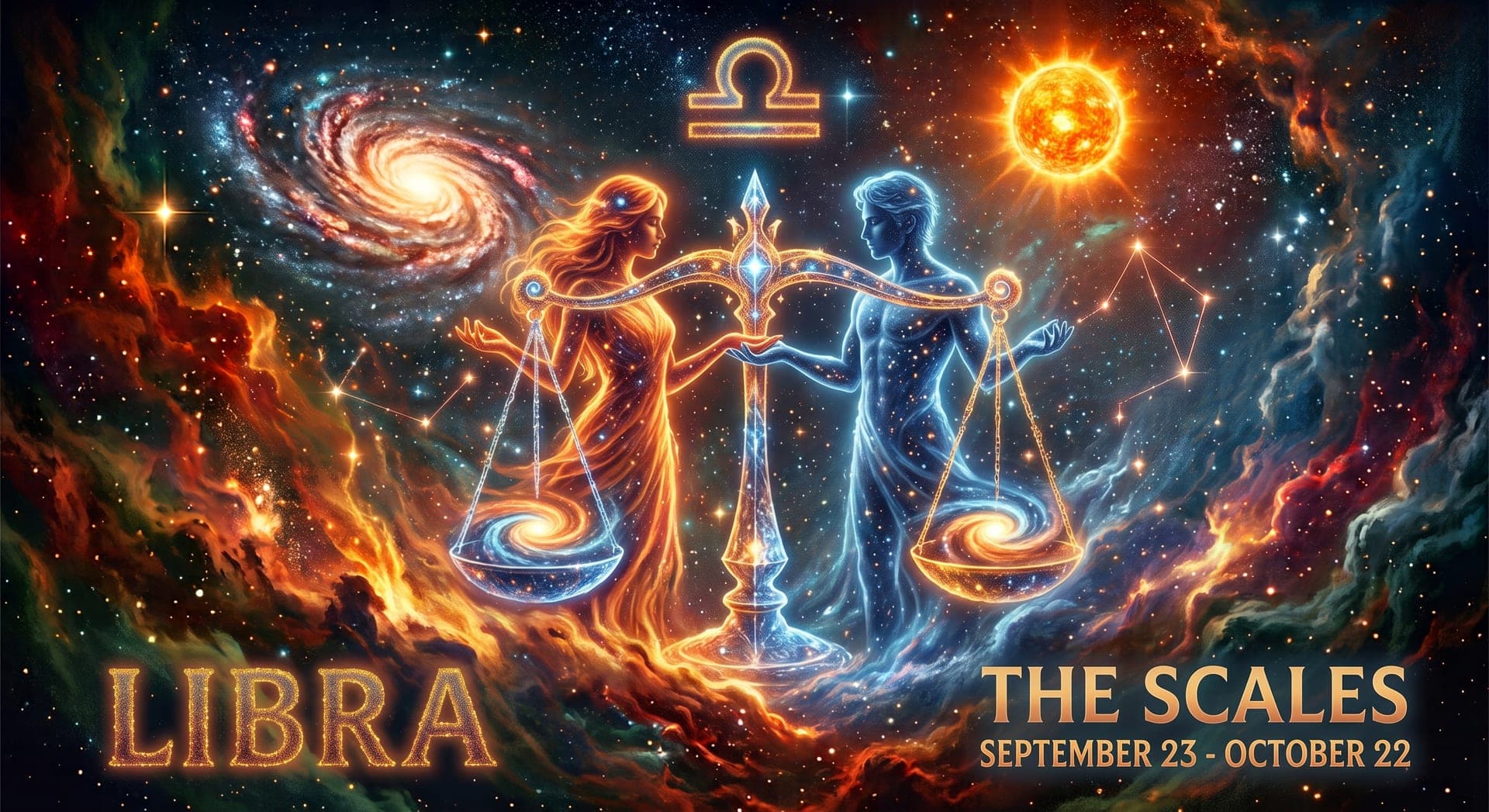
Libra, the seventh sign of the zodiac, spans September 23 to October 22 and is symbolized by the scales, the only zodiac symbol representing an inanimate object rather than a living creature, reflecting the sign's deep concern with balance, fairness, and justice. Ruled by Venus, the planet of love and beauty, Libra shares Taurus's appreciation for aesthetics and pleasure but channels it primarily through relationships, partnership, and social harmony. As an Air sign, Libra approaches the world intellectually and socially, valuing thoughtful conversation and diplomatic problem-solving over confrontation. Its Cardinal modality places it at the very start of autumn, beginning right at the equinox when day and night briefly achieve perfect balance. People born under this sign are often natural mediators, drawn to fairness and equilibrium in their relationships and surroundings, sometimes to the point of struggling to make decisions that might upset that balance. Libra's charm, diplomacy, and genuine desire to see all sides of an issue make it a valued friend and partner, even as its conflict-avoidance can occasionally leave real problems unresolved.
Personality Traits
Strengths
- Strong sense of fairness and justice
- Diplomatic peacemaker
- Charming and sociable
- Appreciates beauty and harmony
- Excellent at seeing multiple perspectives
Weaknesses
- Notoriously indecisive
- Conflict-avoidant to a fault
- Can be superficial
- People-pleasing tendencies
- Struggles with confrontation
Compatible Signs
Fun Facts
- Libra is the only zodiac sign represented by an inanimate object, the scales, rather than an animal or person.
- Libra's scales symbolize balance and justice, echoing the sign's association with fairness, harmony, and diplomacy.
- Venus, Libra's ruling planet, gives the sign its love of beauty, art, and romantic partnership, similar to Taurus but expressed through relationships rather than material comfort.
- As a Cardinal sign, Libra initiates autumn, beginning at the September equinox, when day and night are of equal length, fitting for a sign obsessed with balance.
- Notable Libras include Mahatma Gandhi, Kim Kardashian, John Lennon, and Will Smith.
Born on September 30
- 1207
Rumi
Persian poet and mystic
- 1813
John Rae
Scottish physician and Arctic explorer who discovered evidence of the fate of the lost Franklin expedition.
- 1852
Charles Villiers Stanford
Anglo-Irish composer and teacher best known for his choral and church music, and for training composers such as Vaughan Williams and Holst
- 1861
William Wrigley Jr.
American businessman who founded the Wrigley chewing gum company
- 1897
Charlotte Wolff
German-born British physician and sexologist known for pioneering research on lesbianism and bisexuality
- 1905
Nevill Francis Mott
English physicist awarded the Nobel Prize for his research into the electronic structure of disordered materials.
- 1905
Michael Powell
English film director known for his acclaimed collaborations with Emeric Pressburger, including The Red Shoes.
- 1921
Deborah Kerr
Scottish actress known for films including From Here to Eternity and The King and I.
- 1923
Donald Swann
Welsh composer and pianist best known as one half of the musical comedy duo Flanders and Swann.
- 1924
Truman Capote
American writer known for "In Cold Blood"
- 1928
Elie Wiesel
Romanian-American Holocaust survivor and Nobel Peace Prize laureate
- 1935
Johnny Mathis
American singer
- 1947
Marc Bolan
English singer-songwriter and guitarist who fronted the glam rock band T. Rex.
- 1965
Omid Djalili
English comedian and actor known for stand-up comedy and film roles including The Mummy.
- 1977
Roy Carroll
Northern Irish footballer who played as goalkeeper for Manchester United and the Northern Ireland national team.
- 1980
Martina Hingis
Swiss tennis champion
- 1982
Kieran Culkin
American actor known for "Succession"
- 1997
Max Verstappen
Dutch Formula One racing driver

On This Day in History
- 489
Ostrogothic forces under Theoderic the Great defeat Odoacer for the second time near the Isonzo River.
Ostrogothic King Theoderic the Great won a second decisive victory over rival Germanic leader Odoacer near the Isonzo River, continuing his successful multi-year campaign to conquer Italy on behalf of the Eastern Roman Emperor. Theoderic eventually captured Ravenna and established Ostrogothic rule over the Italian peninsula, ruling as a relatively enlightened king for nearly four decades.
- 1139
A powerful earthquake devastates the Caucasus region, killing an estimated tens of thousands to hundreds of thousands of people.
A catastrophic earthquake struck the Caucasus region, with contemporary and later historical estimates of the death toll varying enormously, some as high as 300,000 people, reflecting immense destruction across the densely populated area. The disaster remains, according to some estimates, among the deadliest recorded seismic events in human history, though exact casualty figures from the medieval period remain difficult to verify.
- 1342
An English army defeats French forces at the Battle of Morlaix during the Hundred Years' War.
Fought in Brittany as part of the War of the Breton Succession, the battle saw English longbowmen under the Earl of Northampton use defensive tactics and terrain to repel a much larger French force. Though not decisive on its own, the victory demonstrated the growing effectiveness of English battlefield tactics that would later prove devastating at Crécy and Poitiers.
- 1399
Henry IV is proclaimed King of England, deposing his cousin Richard II.
Henry Bolingbroke was proclaimed King Henry IV of England after forcing the abdication of his cousin, Richard II, a usurpation that ended the senior Plantagenet line's direct succession and set in motion dynastic tensions that later erupted into the Wars of the Roses.
- 1399
Henry IV is proclaimed King of England after deposing his cousin Richard II.
Henry, who had been exiled by Richard II, returned to England to reclaim his confiscated inheritance and instead found widespread support to seize the throne itself. His accession established the House of Lancaster as England's ruling dynasty and set a precedent for parliamentary involvement in royal succession, though it also sowed the seeds of dynastic conflict that erupted decades later in the Wars of the Roses.
- 1520
Suleiman the Magnificent becomes sultan of the Ottoman Empire, beginning a reign considered its golden age.
Following the death of his father Selim I, Suleiman ascended to the Ottoman throne, beginning a nearly 46-year reign later remembered as the empire's golden age. His rule was marked by significant military conquests across three continents, extensive legal reforms that earned him the title "the Lawgiver," and a remarkable flourishing of art, architecture, and culture.
- 1791
Mozart's opera "The Magic Flute" premieres in Vienna, just two months before the composer's death.
Wolfgang Amadeus Mozart's final opera, "The Magic Flute," premiered in Vienna to popular acclaim, blending elements of fairy tale fantasy with Masonic symbolism, and it remains one of his most beloved and frequently performed works despite his death just weeks after its debut.
- 1791
The first performance of Mozart's opera The Magic Flute takes place in Vienna, just two months before his death.
Composed to a libretto by Emanuel Schikaneder, the opera blends fairy-tale fantasy with Masonic symbolism and was written for a popular suburban theater rather than an aristocratic court. It became an immediate success and remains one of Mozart's most beloved and frequently performed works, celebrated for melodies ranging from the comic to the sublime.
- 1888
Jack the Ripper murders his third and fourth victims, Elizabeth Stride and Catherine Eddowes, in London.
Known as the 'double event,' the killings took place within an hour of each other in Whitechapel and the City of London, intensifying public panic and press coverage of the unidentified serial killer. The murders, part of a series that terrorized London's East End that autumn, remain unsolved and have made Jack the Ripper one of the most infamous unidentified criminals in history.
- 1909
Cunard's RMS Mauretania sets a record-breaking westbound crossing of the Atlantic that would stand for twenty years.
Built on the Tyne in England, the Mauretania was among the largest and fastest ocean liners of her era, powered by innovative steam turbine engines. Her record Atlantic crossing showcased British shipbuilding and marine engineering prowess, and she held the Blue Riband for speed for two decades, becoming one of the most celebrated liners in Cunard's history before her retirement in 1934.
- 1938
Britain, France, Germany, and Italy sign the Munich Agreement, allowing Germany to annex the Sudetenland.
British, French, German, and Italian leaders signed the Munich Agreement, permitting Nazi Germany to annex the Sudetenland region of Czechoslovakia in a failed attempt at appeasement that historians widely regard as having emboldened further German aggression rather than preventing war.
- 1938
Britain, France, Germany, and Italy sign the Munich Agreement, allowing Germany to annex the Sudetenland region of Czechoslovakia.
British Prime Minister Neville Chamberlain negotiated the agreement alongside French, German, and Italian leaders in an effort to avert war by appeasing Hitler's territorial demands, with Czechoslovakia itself excluded from the talks. Chamberlain famously declared it secured 'peace for our time,' but the agreement failed to prevent further German aggression and is now widely regarded as a disastrous act of appeasement.
- 1945
The Bourne End rail crash in Hertfordshire, England, kills 43 people.
An express train derailed at high speed while passing through a junction where speed restrictions had been temporarily lifted in error, causing several carriages to overturn. The disaster, one of the deadliest British rail accidents of the era, prompted investigations into signalling and permanent-way procedures and led to changes in how temporary speed restrictions were communicated to train crews.
- 1954
The USS Nautilus is commissioned as the world's first nuclear-powered vessel.
Powered by a compact nuclear reactor rather than diesel engines, the submarine could remain submerged for extended periods without surfacing to refuel or recharge, a revolutionary capability for undersea warfare. Nautilus went on to complete the first submerged transit of the North Pole in 1958, demonstrating the strategic potential of nuclear propulsion for the US Navy.
- 1966
Bechuanaland achieves independence from Britain and becomes the Republic of Botswana.
The former British protectorate of Bechuanaland achieved independence and adopted the new name Botswana, going on to become one of Africa's most stable, well-governed democracies. Following the later discovery of extensive diamond deposits, the country also became one of the continent's fastest-growing economies, defying predictions that it would remain among the world's poorest nations.
- 1966
The British protectorate of Bechuanaland gains independence and becomes the Republic of Botswana.
The transition ended more than eighty years of British colonial administration and came amid a wave of African decolonization sweeping the continent in the 1960s. Seretse Khama, who had faced controversy over his marriage to a white British woman during the colonial period, became the new republic's first president, going on to lead one of postcolonial Africa's most stable and prosperous democracies.
- 1968
Boeing publicly unveils the first 747 jumbo jet.
Boeing publicly rolled out its first 747 aircraft, an enormous wide-body jet with a distinctive upper deck hump that dramatically expanded commercial airline passenger capacity. The aircraft helped make international air travel more affordable and accessible to a much broader segment of the traveling public, earning it the enduring nickname "Queen of the Skies."
- 1980
Xerox, Intel, and Digital Equipment Corporation jointly publish the first Ethernet networking specifications.
Researchers from Xerox, Intel, and Digital Equipment Corporation jointly published the technical specifications for Ethernet networking technology, building on earlier experimental work conducted at Xerox's Palo Alto Research Center. The resulting standard became foundational to local computer networking and, eventually, the physical infrastructure underlying much of the modern internet.
- 1980
Ethernet specifications are published jointly by Xerox, Intel, and Digital Equipment Corporation.
Developed originally at Xerox's Palo Alto Research Center, Ethernet provided a standardized method for connecting computers over local networks using coaxial cable. The joint publication by the three companies helped establish it as an open industry standard rather than a proprietary technology, and it went on to become the dominant networking technology underpinning most wired local area networks worldwide.
- 2016
Hurricane Matthew strengthens to Category 5 status in the Caribbean, becoming one of the region's most powerful storms in years.
Hurricane Matthew rapidly intensified into a Category 5 storm in the Caribbean, becoming one of the region's most powerful hurricanes in nearly a decade before striking Haiti and other nearby nations with devastating, deadly force, causing widespread flooding, destroyed infrastructure, and hundreds of fatalities in already vulnerable and impoverished communities.